

Antimicrobial Agent
Antimicrobial agent; In medicine, antibiotics and antiseptics are important in protecting from harmful microbes. Antibiotics help with treating inner body infections, while antiseptics protect from outer body threats through the prevention of infections, whether it be on a wound or during surgery.
This article helps to deconstruct the two most important features of antimicrobial agents, antibiotics and antiseptics, what they are, how they work, and where they are used.
Table of Contents
- What are Antimicrobial Agents?
- How Do Antibiotics Help Us Fight Infections?
- What are Antiseptics?
- Antiseptics and Disinfectants: What’s the Difference?
- Everyday Uses of Antimicrobial Agents Around Us
- Frequently Asked Questions on Antimicrobial Agent

What are Antimicrobial Agents?
Antimicrobial agents refer to chemicals which kill or inhibit the growth of harmful microorganisms like bacteria, fungi (yeasts and moulds), viruses, and protozoa. Antimicrobial agents are used to control infections and prevent the spread of disease in both clinical and non-clinical environments.
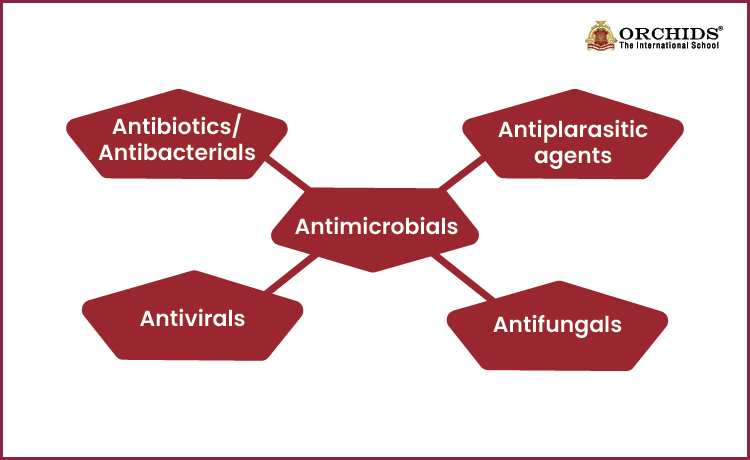
Antimicrobial agents can be divided into three categories: antibiotics, antiseptics, and disinfectants; each category works differently, but they all serve the same function - protect our health from invasive, undesired microbes.
How Do Antibiotics Help Us Fight Infections?
Antibiotics are powerful medicinal agents designed to fight bacterial infections inside the body. They work by either stopping bacteria from multiplying or by killing them outright.
Antibiotics are specific to bacteria and don’t work against viruses, which is why they aren’t used for illnesses like the common cold or flu. Overusing or misusing antibiotics can lead to antibiotic resistance, a serious global health concern.
Therefore, antibiotics must only be taken under a doctor’s supervision and for the prescribed duration!
➔ Classifications of Antibiotics
- A broad-spectrum antibiotic:
It is an antibiotic type that can work for many different types of bacteria, both gram-negative and gram-positive.
Example: Tetracycline, Chloramphenicol.
- Narrow-spectrum antibiotics:
These target specific types of bacteria.
Example: Penicillin G is effective mainly against gram-positive bacteria.
➔ Examples of Common Antibiotics
|
Antibiotic |
Action |
Target |
|
Penicillin |
Inhibits bacterial cell wall synthesis |
Gram-positive bacteria |
|
Tetracycline |
Inhibits protein synthesis |
Broad-spectrum |
|
Streptomycin |
Affects bacterial ribosomes |
Tuberculosis bacterium |
➔ Antibiotic Applications
-
Antibiotics can treat bacterial infections, including pneumonia, urinary tract infections, and strep throat.
-
They can be used to prevent infections during surgery.
-
They can be used to manage chronic bacterial infections such as tuberculosis.
Note:
➔ Antibiotics are not effective against viruses (e.g., flu, cold, COVID-19).
➔ Misuse or overuse of antibiotics can lead to antibiotic resistance, as bacteria adapt and become resistant to existing medications, making it harder to treat infections.
What are Antiseptics?
Antiseptics are chemical agents that are applied to living tissue (skin, wounds, mucous membranes, etc.) to destroy or inhibit the growth of microorganisms. Antiseptics are used to prevent infection, especially in the case of medical procedures, surgeries, and first aid treatment.
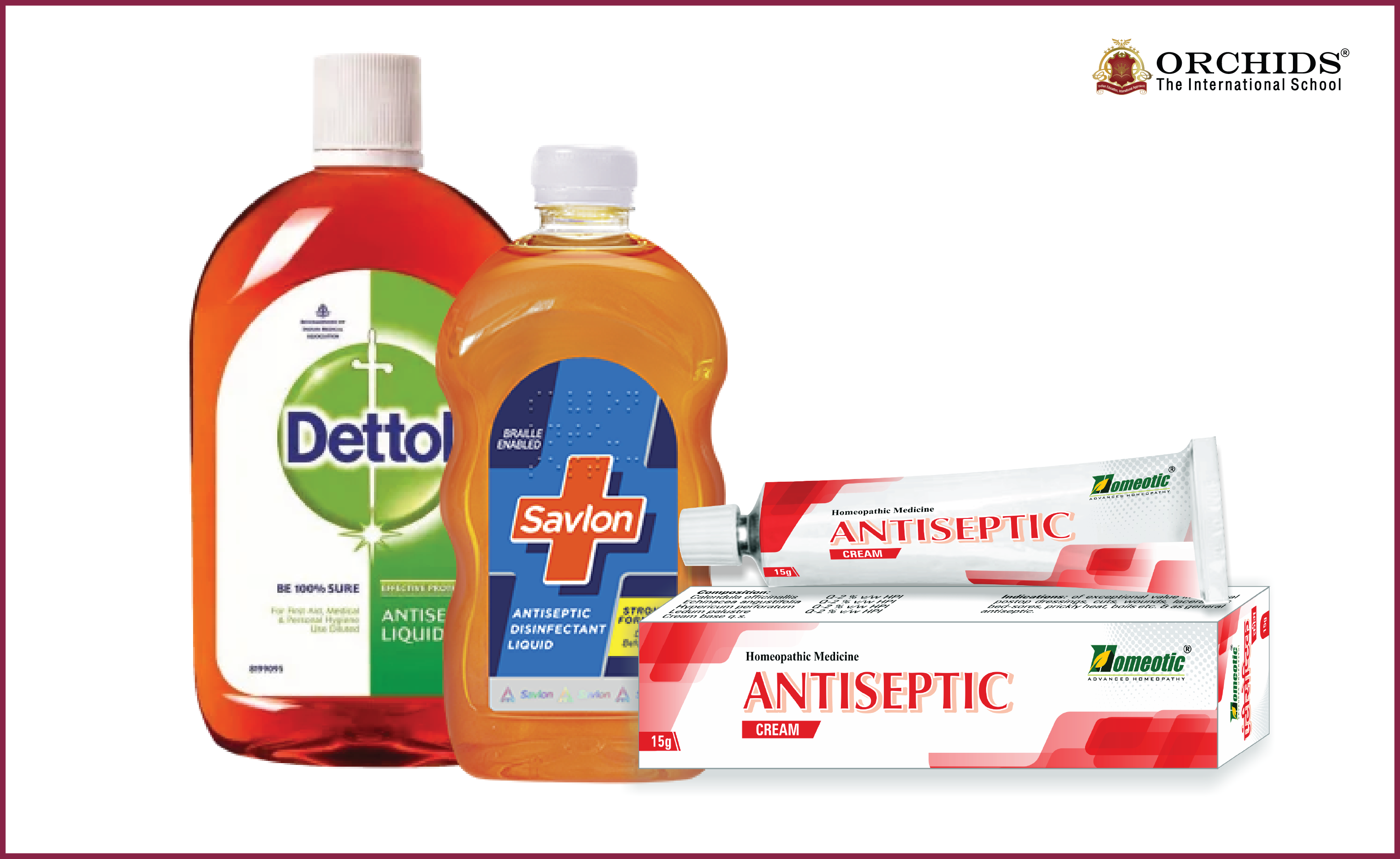
➔ How Antiseptics Work:
Antiseptics destroy microbes or inhibit their growth by disrupting their metabolism or damaging their cell membranes.
➔ Examples of Common Antiseptics
|
Antiseptic |
Use |
|
Hydrogen peroxide |
Cleansing wounds, mouthwash |
|
Iodine (tincture) |
Skin disinfection before surgeries |
|
Boric acid |
Eye washes, skin creams |
|
Alcohol (ethanol) |
Hand sanitisers, skin prep before injections |
|
Dettol (chloroxylenol) |
Disinfecting minor cuts and bruises |
➔ Uses of Antiseptics
-
Disinfecting wounds and cuts.
-
Pre-surgical skin preparation.
-
Cleaning hands and medical tools.
-
Treating fungal infections like athlete’s foot.
Antiseptics and Disinfectants: What’s the Difference?
|
Feature |
Antiseptics |
Disinfectants |
|
Application Area |
Used on living tissues (e.g., skin, wounds) |
Used on non-living surfaces (e.g., floors, instruments) |
|
Purpose |
Prevents infections by killing or inhibiting microbes |
Destroys microbes to maintain hygiene and prevent contamination |
|
Strength |
Milder, safe for use on skin and body tissues |
Stronger, not safe for use on the human body |
|
Examples |
Hydrogen peroxide, iodine solutions |
Phenol, bleach |
|
Usage |
Personal care, wound cleaning, surgical prep |
Hospitals, homes, and industrial sanitation |
Everyday Uses of Antimicrobial Agents Around Us
Antimicrobial agents are prevalent in everyday life and, depending on the case, they play many important roles:
-
In Medicine, preventing and treating infection during surgeries, wound treatment, and management of disease, i.e. chronic disease.
-
In Hospitals, Antimicrobial disinfectants sterilise patient areas, sterilise surgical instruments.
-
In Agriculture and Food Processing, Antimicrobial agents reduce the risk of microbial contamination in livestock, produce from the plant, or packaged food.
-
In Water Treatment, Antimicrobial agents are used to purify drinking water and to ensure the safety of consumption.
Till now, we have learned how antibiotics and antiseptics are integral components of contemporary healthcare. Antibiotic medications deal with Figure and other internal bacterial infections, whereas antiseptics deal with preventing microbes from leading to infections on surfaces. Good, responsible use of both these medical entities will continue to save lives every day.
Frequently Asked Questions on Antimicrobial Agent
1. Why are antimicrobial agents important?
Antimicrobial agents help fight infections by stopping harmful microbes from growing or spreading. They are key to keeping us safe from serious diseases.
2. What are the two most important factors with antimicrobial agents?
Their effectiveness and correct usage are most important in how well they work and whether they’re used in the right way to avoid resistance.
3. How do antimicrobial control agents work?
They either kill harmful microbes directly or slow their growth so the body’s immune system can take over and fight the infection more easily.
4. What is the mode of action of antimicrobial agents?
These agents work by targeting vital functions of microbes, like damaging their cell walls or stopping their protein production, so they can’t survive or multiply.
5. Can microbes become resistant to antimicrobial agents?
Yes, over time, microbes can adapt and become resistant, especially when these agents are overused or misused, making infections harder to treat.
Science isn't just a subject, it's the way of seeing the world. Curious how Orchids The International School teaches it that way? Talk to our admissions team.
Admissions Open for 2026-27
What type of concept pages would you prefer?
CBSE Schools In Popular Cities
- CBSE Schools in Bangalore
- CBSE Schools in Mumbai
- CBSE Schools in Pune
- CBSE Schools in Hyderabad
- CBSE Schools in Chennai
- CBSE Schools in Gurgaon
- CBSE Schools in Kolkata
- CBSE Schools in Indore
- CBSE Schools in Sonipat
- CBSE Schools in Delhi
- CBSE Schools in Rohtak
- CBSE Schools in Bhopal
- CBSE Schools in Aurangabad
- CBSE Schools in Jabalpur
- CBSE Schools in Jaipur
- CBSE Schools in Jodhpur
- CBSE Schools in Nagpur
- CBSE Schools in Ahmednagar
- CBSE School In Tumkur











Orchids The International School is one of India's leading chains of CBSE and ICSE schools, with 110+ schools across the country.