

Carbon monoxide (CO)
“Carbon monoxide” Imagine a gas that you can’t see, smell, or taste, but one that can quietly take over the air you breathe. That’s carbon monoxide. Often released when fuels like wood, coal, or gas don’t burn completely, this invisible gas has earned the title of the “silent killer.”
This article provides the complete details on carbon monoxide struture, properties, and all necessary information explained crisply.
Table of Contents
- What is Carbon Monoxide?
- Properties of Carbon Monoxide
- Applications of Carbon Monoxide
- Safety and Prevention
- Frequently Asked Questions on Carbon monoxide (CO)

What Is Carbon Monoxide?
Carbon monoxide is also referred to as the "silent killer", but why? It is a gas that consists of a single carbon atom and an oxygen atom. It is colourless, odourless, and has no taste, and because of this, it is almost impossible to smell, unless one uses special equipment.
Let's get an insight into how the Carbon monoxide Structure Looks!!
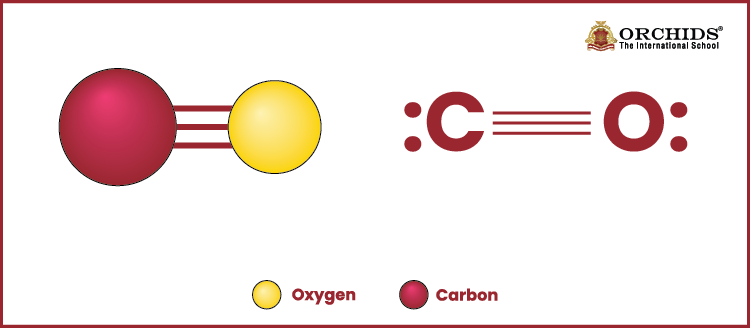
Interestingly!! It does not provide any warning signals, unlike oxygen or carbon dioxide, but it can be dangerous in very small concentrations. CO is primarily produced when fuels such as wood, coal, petrol, or gas burn in a lack of sufficient oxygen, a reaction referred to as incomplete combustion.
Properties of Carbon Monoxide
|
Property |
Details |
|
Chemical Formula |
CO |
|
Molar Mass |
~28.01 g/mol |
|
Bonding |
A strong triple bond (two covalent + one coordinate covalent) |
|
Appearance |
Invisible, colourless gas |
|
Odour/Taste |
None |
|
Density |
Slightly lighter than air (~1.14 kg/m³) |
|
Melting Point |
–205 °C |
|
Boiling Point |
–191.5 °C |
|
Solubility |
Slightly soluble in water, highly soluble in blood |
Triple bond renders CO very stable, but its compactness and bonding enable it to attach itself very easily to metals and haemoglobin in the blood.
But One Big Question is, How Is Carbon Monoxide Produced?
Carbon monoxide is produced when carbon-containing fuels don't receive sufficient oxygen during combustion.
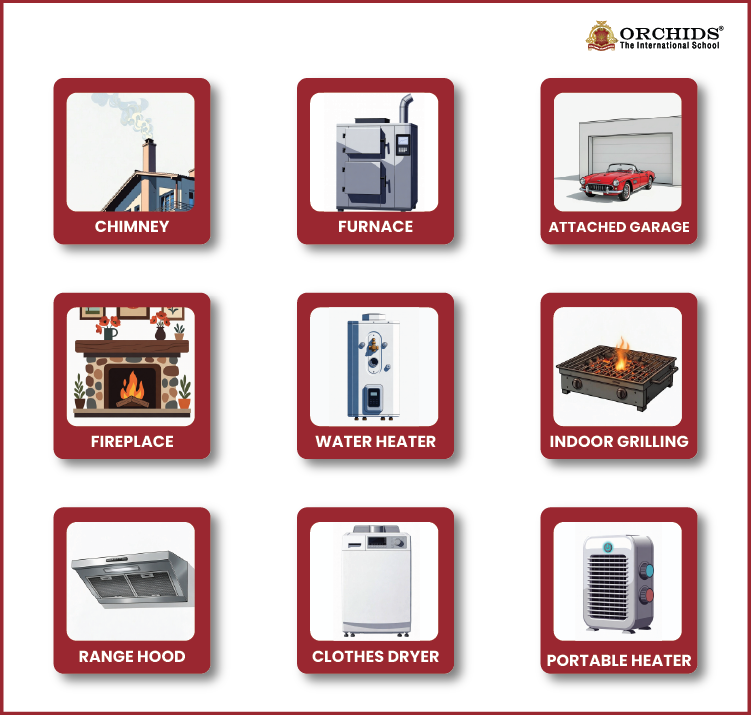
Typical scenarios include:
- Operation of stoves, fireplaces, or heaters without adequate ventilation.
- Operation of automobile engines in enclosed garages.
- Operation of charcoal grills or gas appliances indoors.
- Industrial furnaces and manufacturing plants where oxygen levels are low.
That is why CO accidents occur more frequently during winter, when individuals lock their houses and heating units operate for hours on end.
The fact that CO is very dangerous since it displaces oxygen in the blood. When breathed in, it binds with haemoglobin more than 200 times more efficiently than oxygen does.
This results in oxygen being unable to supply vital organs, causing symptoms such as:
- Headache, dizziness, and nausea
- Shortness of breath and confusion
- Fainting, unconsciousness, and exposure can lead to prolonged death
Small quantities, when breathed in over a long period of time, can lead to chronic health problems like memory loss, heart damage, or neurological disorders.
Applications of Carbon Monoxide
Carbon monoxide, although perilous, is also used with significant uses in research and industries:
- In the Chemical Industry, Carbon monoxide is used for producing methanol, acetic acid, and other organic chemicals.
- Carbon Monoxide contributes to Metallurgy as it serves as a reducing agent when iron and other metals are extracted from ores.
- Carbon Monoxide is an important element of synthesis gas (syngas), which is employed in the generation of fuels and chemicals.
- It assists several in Organic Synthesis, leading to the formation of plastics, medicines, and crop protection chemicals.
- InMedical Research, it is highly regulated quantities; CO is utilised in tests for the function of lungs to assess how effectively lungs exchange gases.
Safety and Prevention to Consider While Handling CO
CO can't be detected or smelled, so prevention is the best defence.
- Install carbon monoxide detectors in residences, particularly around sleeping quarters.
- Make sure chimneys, heaters, and stoves are cleaned and serviced on a regular basis.
- Never burn charcoal grills, gas stoves, or generators indoors.
- Always provide adequate ventilation for enclosed spaces.
- At the onset of CO poisoning, such as dizziness or unexpected weakness, get away from the area immediately and seek medical assistance.
Carbon monoxide can appear innocent, but it is the most sneaky and risky of all gases. Everything depends on awareness and caution. With due knowledge and protection, we can have respect for its commercial worth without exposing ourselves to its lurking danger.
Frequently Asked Questions on Carbon monoxide (CO)
1. What is carbon monoxide?
Carbon monoxide is a colourless, odourless gas formed when fuels like wood, coal, or gas burn without enough oxygen. It’s often called the “silent killer” because it’s hard to detect without special devices.
2. What is the carbon monoxide formula?
The carbon monoxide formula is CO, which means it contains one carbon atom bonded to one oxygen atom. This simple structure makes it stable yet highly dangerous when inhaled.
3. What is the carbon monoxide structure?
The carbon monoxide structure has a triple bond between carbon and oxygen, giving it strong stability. This bond also allows it to attach quickly to metals and haemoglobin in the blood.
4. How does carbon monoxide affect us?
When breathed in, carbon monoxide replaces oxygen in the blood, leading to headaches, dizziness, and in severe cases, unconsciousness or death. Even low levels can harm health over time.
5. What level of carbon monoxide is harmful?
Even small amounts of carbon monoxide can be harmful if exposure is prolonged. Concentrations above 50 ppm (parts per million) are considered dangerous and need immediate action.
6. What gives off carbon monoxide in the home?
Common home sources of carbon monoxide include gas stoves, fireplaces, heaters, and car engines left running in enclosed spaces. Poor ventilation makes the risk much higher.
Science isn't just a subject, it's the way of seeing the world. Curious how Orchids The International School teaches it that way? Talk to our admissions team.
Admissions Open for 2026-27
What type of concept pages would you prefer?
CBSE Schools In Popular Cities
- CBSE Schools in Bangalore
- CBSE Schools in Mumbai
- CBSE Schools in Pune
- CBSE Schools in Hyderabad
- CBSE Schools in Chennai
- CBSE Schools in Gurgaon
- CBSE Schools in Kolkata
- CBSE Schools in Indore
- CBSE Schools in Sonipat
- CBSE Schools in Delhi
- CBSE Schools in Rohtak
- CBSE Schools in Bhopal
- CBSE Schools in Aurangabad
- CBSE Schools in Jabalpur
- CBSE Schools in Jaipur
- CBSE Schools in Jodhpur
- CBSE Schools in Nagpur
- CBSE Schools in Ahmednagar
- CBSE School In Tumkur











Orchids The International School is one of India's leading chains of CBSE and ICSE schools, with 110+ schools across the country.