

Hydrogen Gas: Characteristics, Properties and Uses Explained
Hydrogen gas: Everyone knows the very first element born after the Big Bang, the one that lights up stars and fuels rockets, is Hydrogen. Wandering the element is hydrogen, a gas so light that it escapes Earth’s gravity, yet it is powerful enough to hold a future in clean energy. Though it's all around us, hidden in water and organic matter, hydrogen doesn’t usually float freely in the air. But we get to know its endless possibilities.
This article provides insight into what hydrogen gas is, how we prepare it, and why it’s more than just the first name on the periodic table.
Table of Contents
- What Is Hydrogen Gas
- Physical Properties of Hydrogen Gas
- Chemical Properties of Hydrogen Gas
- Synthesis of Hydrogen Gas
- How Is Hydrogen Used in Real Life
- Frequently Asked Questions on Hydrogen Gas

What is Hydrogen Gas?
The interesting thing about hydrogen gas(H₂) is that it’s the simplest and lightest element in the universe, yet also the most abundant and is identified by its properties like colourless, odourless, tasteless gas made up of two hydrogen atoms.
The fact that you won’t usually find hydrogen gas just floating around on Earth is because it has an urge to bond with other elements like oxygen (in water) or carbon (in fuels).
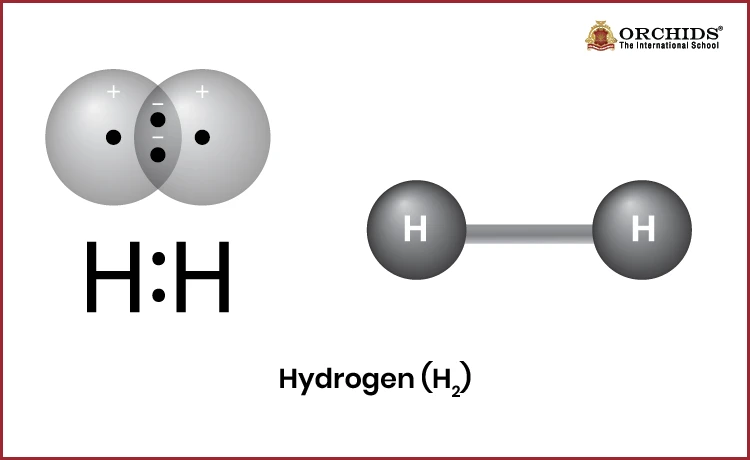
In its atomic form, hydrogen has 1 proton and 1 electron, making it a chemistry favourite because of its unique simplicity.
Physical Properties of Hydrogen Gas
Here’s a glance at what makes hydrogen gas stand out:
|
Property |
Details |
|
Physical State |
Gas (at room temperature) |
|
Appearance |
Colourless and invisible |
|
Smell and Taste |
Odourless and tasteless |
|
Weight |
Lightest of all gases |
|
Solubility |
Slightly soluble in water |
|
Flammability |
Extremely flammable |
|
Boiling Point |
–252.87 °C |
|
Melting Point |
–259.16 °C |
Hydrogen is so light that if you filled a balloon with it, it would rise faster than one filled with helium!
Chemical Properties of Hydrogen Gas
Hydrogen often reacts with great energy and contributes to many reactions.
Combustion in Air (Reaction with Oxygen)
The basic need of everyday life is combustion. Hydrogen reacts explosively with oxygen when ignited, forming water. This is a highly exothermic reaction, meaning it releases a large amount of energy.
Hydrogen + Oxygen → Water + Energy
Reaction with Metal Oxides (Reducing Property)
Hydrogen gas acts as a reducing agent, meaning it can remove oxygen from metal oxides to yield the pure metal and water. This is widely used in metallurgy.
Hydrogen + Copper(II) oxide → Copper + Water
Reaction with Non-Metals
Reaction with Chlorine
When it comes to non-metallic elements, interestingly, hydrogen combines with chlorine in the presence of sunlight or a spark to form hydrogen chloride gas.
Hydrogen + Chlorine → Hydrogen chloride
Reaction with Nitrogen (Haber Process)
In the Haber Process, under high pressure and temperature, and in the presence of a catalyst, hydrogen reacts with nitrogen to produce ammonia.
Nitrogen + Hydrogen → Ammonia
Synthesis of Hydrogen Gas
There are some common techniques utilised for the production of hydrogen in laboratories as well as industrially.
Laboratory Preparation (Metal + Acid) is carried out where Hydrogen is formed when metals (e.g., zinc) react with dilute acids (e.g., HCl or H2SO4).
In Lab Preparation (Alkali + Metal), some metals, such as zinc, also react with concentrated alkalis (e.g., NaOH) to liberate hydrogen.
Electrolysis of Water (Industrial) Water may be decomposed into hydrogen and oxygen by the passage of electricity.
Steam Reforming of Methane (Industrial) involves natural gas reacting with steam in the presence of a catalyst to yield hydrogen.
Bosch Process (Steam + Coke): Coke (carbon) is heated with steam to produce hydrogen.
How Is Hydrogen Used in Real Life?
We have always wondered about how hydrogen is the lightest invisible element, but serves us the best.
1. Hydrogen contributes to Clean Fuel as it runs cars, buses, and even buildings. The best part? They emit only water.
2. In the fertiliser industry, it is used in making Ammonia through the Haber process, as hydrogen helps make ammonia, which is essential for growing food.
3. In the Hydrogenation of Oils, Hydrogen turns liquid oils into semi-solid fats to make them spreadable, serving a remarkable role.
4. Liquid hydrogen, paired with liquid oxygen, is used to launch rockets into space. It packs a punch in terms of energy.
Let's Discuss What is Hydrogen’s Role in a Cleaner Future?
Hydrogen is drawing global attention as a green energy hero. When used as a fuel, it doesn’t pollute; it produces only water. The good part about this hydrogen gas is that many current production methods still rely on fossil fuels.
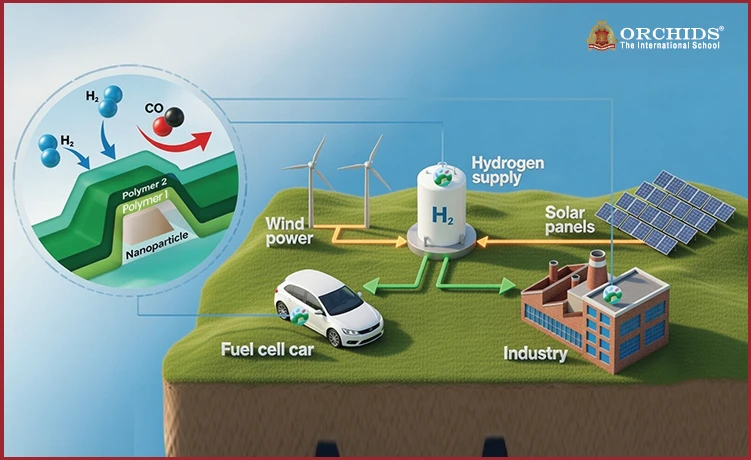
Scientists are now working hard to improve clean hydrogen production through solar-powered electrolysis and biological methods.
But safety is a concern too!! Hydrogen is highly flammable and must be stored and handled with extreme care, especially in compressed or liquid form.
Also Read: Hydrogen Fuel
As discussed, from lighting up stars to fueling your vehicle, hydrogen is more than just the first element on the periodic table; it's the building block of possibility.Whether you're a student, a scientist, or someone who just likes to wonder about how the world works, hydrogen is a great place to start. Because sometimes, the smallest things have the biggest impact.
Frequently Asked Questions on Hydrogen Gas
1. What are some questions regarding hydrogen?
There are many questions about how hydrogen is produced, why it's so combustible, and if it can ever replace fossil fuels. It raises questions because it's ubiquitous yet strong.
2. What are 5 facts regarding hydrogen?
As such, hydrogen serves many applications in our daily lives, as this is the lightest thing on earth, burns with no emissions, powers rockets, constitutes water, and energises the sun. It's omnipresent from the air you breathe to the liquid in your glass.
3. What is the biggest problem with hydrogen?
The main challenge is storing and transporting it safely, as it’s highly flammable and leaks easily. Plus, most hydrogen today is made using polluting methods.
4. Is hydrogen gas safe to use?
Hydrogen is safe when handled correctly, but its high flammability means it must be stored and used with care. It’s lighter than air, so it disperses quickly if leaked.
5. Can hydrogen be the fuel of the future?
Yes, With the right technology and green production methods, hydrogen could power cars, homes, and cities with zero emissions. It’s a clean dream we’re getting closer to.
Science isn't just a subject, it's the way of seeing the world. Curious how Orchids The International School teaches it that way? Talk to our admissions team.
Admissions Open for 2026-27
What type of concept pages would you prefer?
CBSE Schools In Popular Cities
- CBSE Schools in Bangalore
- CBSE Schools in Mumbai
- CBSE Schools in Pune
- CBSE Schools in Hyderabad
- CBSE Schools in Chennai
- CBSE Schools in Gurgaon
- CBSE Schools in Kolkata
- CBSE Schools in Indore
- CBSE Schools in Sonipat
- CBSE Schools in Delhi
- CBSE Schools in Rohtak
- CBSE Schools in Bhopal
- CBSE Schools in Aurangabad
- CBSE Schools in Jabalpur
- CBSE Schools in Jaipur
- CBSE Schools in Jodhpur
- CBSE Schools in Nagpur
- CBSE Schools in Ahmednagar
- CBSE School In Tumkur











Orchids The International School is one of India's leading chains of CBSE and ICSE schools, with 110+ schools across the country.