

What is Hydrogen Fuel: Description, Structure and Real-Life Applications
Hydrogen fuel is at the forefront of the clean energy revolution. It's interesting and exciting to study how Hydrogen fuel cells generate electricity through a quiet, efficient chemical reaction, producing only water as a by-product, making them an environmentally friendly alternative to conventional fossil fuels.
As the world seeks sustainable energy solutions, hydrogen fuel offers a promising path, powering vehicles, homes, and industries while reducing carbon emissions. This article breaks down what hydrogen fuel is, how it works, its production, uses, and more and provides your expertise in the topic.
Table of Contents
- Production of Hydrogen Fuel
- Understanding the Hydrogen Economy
- Hydrogen Fuel Cell Uses in the Real World
- Advantages of Hydrogen Fuel
- Frequently Asked Questions on Hydrogen Fuel

What is a Hydrogen Fuel Cell?
A hydrogen fuel cell can be simplified into an apparatus that produces electricity by a chemical reaction between hydrogen and oxygen. Unlike burning fuel as in conventional engines, this cell operates silently and the sole by-product is water. Because of the eco-friendly, efficient, and clean method of powering cars, buildings, and even space ships, it has come to great demand.
Let's discuss the mechanism of the Fuel Cell !!
It is curious to know that a hydrogen fuel cell is a straightforward but effective process which runs on electrochemical conversion, in which electric energy is used to facilitate the chemical reactions. Here's how it works:
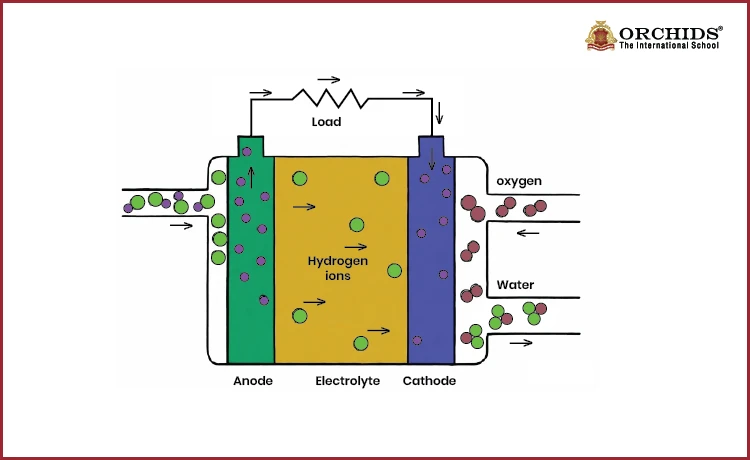
- At first, Hydrogen gas (H₂) flows into one end of the fuel cell (the anode), and Oxygen (from the air) flows into the other end (the cathode).
- A proton exchange membrane (PEM) is separated into two sides but permits only protons (H⁺ ions) to pass through.
- The hydrogen electrons are compelled to travel through an outside circuit to arrive at the cathode, producing electricity in the process.
- At last, on the cathode, the oxygen, hydrogen ions, and electrons come together to produce water (H₂O).
The net reaction in a hydrogen fuel cell:
Isn't this emission-free and efficient process that makes hydrogen fuel with great value compared to other fossil fuel technology?
Production of Hydrogen Fuel
The fact that everyone is aware of is that hydrogen is the universe's most abundant element, but it's seldom encountered on Earth in its elemental form. To do this, one must extract it from compounds such as water or hydrocarbons to use it as fuel.
The most common techniques are:
- Electrolysis of WaterHere, in the electrolysis process, the electricity is used to decompose water (H₂O) into hydrogen and oxygen.
Interestingly!! If renewable energy, such as wind or sunlight, energises the electrolysis, the resulting hydrogen is green.
- Steam Methane Reforming (SMR), the process involving reacting natural gas (predominantly methane) with steam to produce hydrogen.
Despite its extensive usage, this process emits carbon dioxide and is not as eco-friendly as electrolysis.
- Do you know thatin Biomass Gasification & Other Emerging Methods
Researchers are also investigating hydrogen generation from algae and organic waste through biological means. Isn't it interesting to study?
Read More: Fuel Types and Effects of burning fossil fuels
Understanding the Hydrogen Economy
The hydrogen economy is a vision for a hydrogen-based world where fossil fuels are replaced with hydrogen as the major energy source because Hydrogen are better in many ways than fossil fuels, like its efficiency, eco-friendly nature and more.
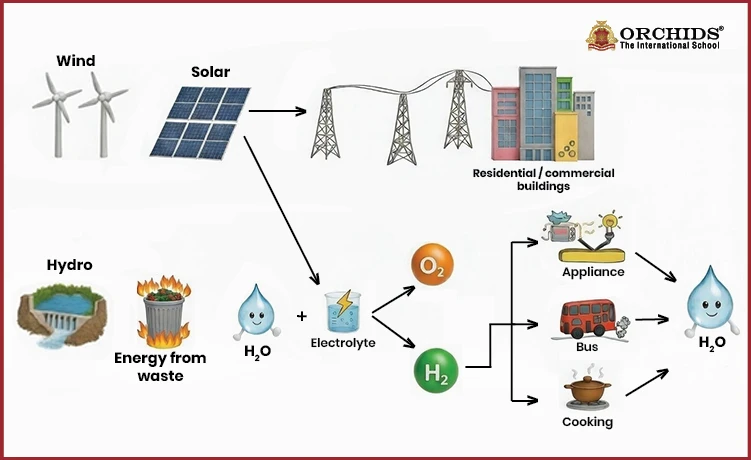
The major Question here is, Why Hydrogen Fuel?
Here's the answer :
- Hydrogen is an energy carrier with no pollution.
- Fuel cells drive cars, households, and industries.
- Emissions are significantly minimised as water is the sole significant by-product.
This concept aims to build a sustainable future by integrating hydrogen into every stage of energy from production and storage to transport and consumption.
Hydrogen Fuel Cell Uses in the Real World
Hydrogen fuel cells are used across various industries:
- In Transportation, Hydrogen plays a significant role; Hydrogen cars, buses, trains, and even aeroplanes are under development as eco-friendly substitutes for petrol and diesel vehicles.
- Hydrogen's significant contribution in Power Generation as Fuel cells can energise homes, companies, and even villages without the need for a grid connection.
- Hydrogen is best used in Industrial Applications as it is used in steel production, refining of petroleum, and chemical manufacturing, especially ammonia and methanol.
- In Backup Power Systems, hydrogen fuel cells are used by hospitals, data centres, and emergency services as a reliable backup when there are power outages.
Advantages of Hydrogen Fuel
The following are some of the most important reasons why hydrogen fuel is becoming popular worldwide:
- Just heat and water are generated, no greenhouse gases, leading to zero Harmful Emissions.
- Fuel cells can be even more efficient than internal combustion engines.
- It is considered to be renewable-friendlywhen generated through electrolysis, as it is friendly to green energy use as compared to other fuel cells.
- From automobiles to space rockets, hydrogen has varied and had versatile uses.
Read More: Battery and Battery Types
As learnt above, hydrogen fuel is a technology that has capabilities as a clean solution for a world threatened by climate change and declining fossil fuels. With improving production technology and decreasing costs, hydrogen could soon become an integral component of how the world is powered. From powering cars to powering cities, the transition to hydrogen power has already started.
Frequently Asked Questions on Hydrogen Fuel
1. What is the primary function of a fuel cell?
The primary work of a fuel cell is to produce electricity by mixing hydrogen and oxygen without burning fuel. It energises vehicles, homes, and gadgets, but only leaves water as a waste product.
2. What are the primary disadvantages of hydrogen fuel cells?
Hydrogen Fuel cells use are clean but costly to construct and maintain. Safe storage and transportation of hydrogen are also huge challenges.
3. What type of fuel is used in fuel cells?
The majority of fuel cells operate using hydrogen gas since it's clean and only leaves water behind. Others can also operate on fuels such as methanol after being converted to hydrogen.
4. What is the primary fuel source for cells?
The main source of fuel is hydrogen, typically made from water (electrolysis) or natural gas. Hydrogen then combines with oxygen to produce power.
5. How long will a hydrogen fuel cell last?
A fuel cell that is properly maintained can last for 5,000 to 10,000 hours in automobiles and even longer for stationary installations before requiring replacement.
6. Why are hydrogen fuel cells eco‑friendly?
They produce merely water and heat rather than smoke or greenhouse gases. They are thus an ideal solution to cut down pollution and combat climate change.
Science isn't just a subject, it's the way of seeing the world. Curious how Orchids The International School teaches it that way? Talk to our admissions team.
Admissions Open for 2026-27
What type of concept pages would you prefer?
CBSE Schools In Popular Cities
- CBSE Schools in Bangalore
- CBSE Schools in Mumbai
- CBSE Schools in Pune
- CBSE Schools in Hyderabad
- CBSE Schools in Chennai
- CBSE Schools in Gurgaon
- CBSE Schools in Kolkata
- CBSE Schools in Indore
- CBSE Schools in Sonipat
- CBSE Schools in Delhi
- CBSE Schools in Rohtak
- CBSE Schools in Bhopal
- CBSE Schools in Aurangabad
- CBSE Schools in Jabalpur
- CBSE Schools in Jaipur
- CBSE Schools in Jodhpur
- CBSE Schools in Nagpur
- CBSE Schools in Ahmednagar
- CBSE School In Tumkur











Orchids The International School is one of India's leading chains of CBSE and ICSE schools, with 110+ schools across the country.