

Understanding Protein Definition, Structure and Its Functions Explained
Proteins are essential molecules that keep every part of our body working smoothly, from building muscles and tissues to carrying oxygen and fighting diseases.
This article helps to explain their structure, types, and functions. Students will gain a clear understanding of how these tiny yet powerful molecules support growth, repair, and metabolism and learn the chemistry behind it.
Table of Contents
- What is Protein Definition
- Functions of Proteins in the Body
- Proteins in Daily Life
- Frequently Asked Questions on Proteins

What is Protein Definition?
Proteins are large, complex molecules made up of long chains of amino acids. It's curious to note that there are approximately 20 different amino acids that can combine in various ways, resulting in thousands of distinct proteins in living organisms.
Interestingly, each amino acid contains the elements carbon (C), hydrogen (H), oxygen (O), and nitrogen (N).
How exactly do the proteins look?
A protein is composed of a linear chain of amino acids linked together by peptide bonds (−CO−NH−), forming a polypeptide chain, which is the basic structural unit of proteins.
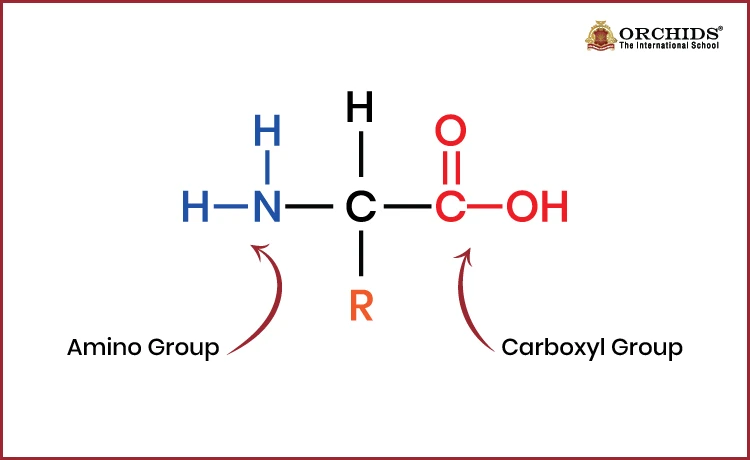
Each amino acid consists of a central carbon atom bonded to an amino group (−NH₂), a carboxyl group (−COOH), a hydrogen atom, and a variable side chain (R-group) that determines its chemical properties.
The sequence of amino acids in the chain constitutes the primary structure of the protein, while interactions between atoms in the chain lead to higher-order structures (secondary, tertiary, and quaternary).
The peptide bonds provide a stable backbone, and the side chains confer the protein its unique shape and function.
The fact that when these amino acids link together through peptide bonds, they form chains called polypeptides.
The basic bond between two amino acids can be shown as:
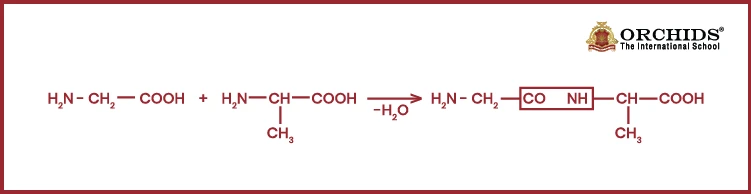
Peptide bond:
When many such bonds connect, they create a long chain that folds into specific shapes, and that’s how a functional protein is born!
But the question is, what are the sources of proteins?
Our bodies can make some amino acids, but not all. The ones we cannot make are called essential amino acids, and we must get them from food.
Let's know how these rich sources of protein include:
- Animal sources: Eggs, milk, cheese, fish, chicken, and meat
- Plant sources: Lentils, beans, peas, soybeans, nuts, and whole grains
A balanced diet with sufficient protein supports growth, muscle repair, and enzyme production, and maintains an energy balance.
Next is the Structure of Proteins, which is like a layered design; each level adds complexity and function.
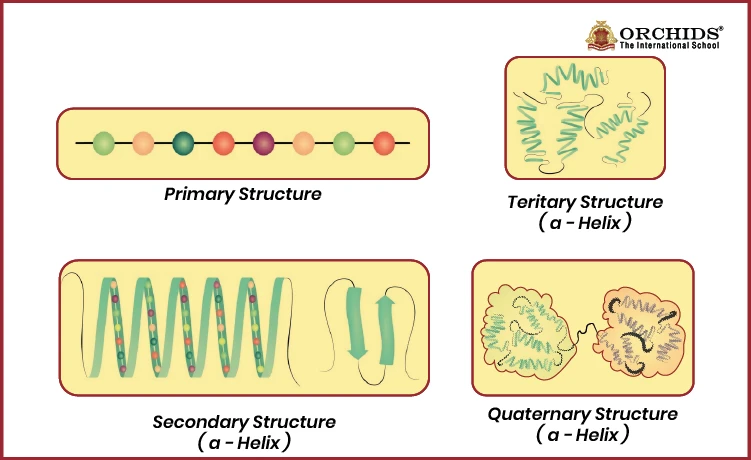
- Primary Structure is the sequence of amino acids joined by peptide bonds. Even a small change here can affect the protein’s overall function.
- Secondary structures are the long chain coils or folds into patterns such as α-helix or β-pleated sheet, stabilised by hydrogen bonds.
- Tertiary structures are the secondary structures that bend and twist further to form a compact, three-dimensional shape.
This 3D shape determines how the protein interacts with other molecules.
- Quaternary structures are some proteins that consist of more than one amino acid chain.
These chains come together to form a complete, functional protein, like how four subunits combine to create haemoglobin, the oxygen-carrying protein in blood.
Learn More: Amino Acid Chain and Amines
But have you ever wondered how proteins are formed?
Proteins are synthesised inside cells through a process called protein synthesis, which happens in two major stages:
- Transcription: The information for making a protein is stored in DNA.
- Translation: The mRNA travels to the ribosome, where it guides the order in which amino acids are linked together.
The final amino acid chain folds into its unique shape. This shape decides how the protein will behave and what job it will perform inside the cell.
Functions of Proteins in the Body
Every protein has a specific purpose, and together they make life possible.
Proteins act as builders, messengers, defenders, and catalysts within our bodies. They give cells their shape, allow muscles to move, and speed up chemical reactions that would otherwise take ages.
For example:
- Enzymes like amylase and lipase help digest food.
- Haemoglobin in blood carries oxygen from the lungs to the body’s tissues.
- Antibodies protect the body from infections.
- Collagen and keratin provide strength to skin, hair, and bones.
- Hormones like insulin control blood sugar levels.
The working principle behind all these proteins is simple yet powerful:
Structure→Function
If a protein loses its shape (for example, due to heat or pH changes), it can no longer function. This is called denaturation of proteins.
Proteins in Daily Life
- Proteins are not just important for athletes or bodybuilders; they are crucial for everyone. They help the body recover after injuries, maintain healthy skin and hair, and keep the immune system strong.
- Proteins also regulate how the body uses and stores other nutrients. For example, enzymes and hormones, both proteins, help manage metabolism, digestion, and energy use.
- In short, every heartbeat, breath, and movement depends on proteins quietly doing their work behind the scenes.
As we learned, these Proteins are at the heart of life; they build, protect, and power our bodies. From the strength of your hair to the rhythm of your heartbeat, every biological process relies on these incredible molecules.
Frequently Asked Questions on Proteins
1. What is the protein definition?
Proteins are large, complex molecules made up of amino acids that perform vital functions in the body. They help build tissues, repair cells, and support overall growth and health.
2. What are 5 interesting facts about proteins?
Proteins make up about 15% of your body weight and are found in every cell. They can act as enzymes, hormones, and even antibodies, making them life’s true multitaskers.
3. What is the 10 rule for protein?
The 10% rule means around ten per cent of your daily calories should come from protein. It’s a simple guideline to ensure your body gets enough for muscle repair and energy.
4. What are the 5 importances of protein?
Proteins build and repair tissues, produce enzymes and hormones, strengthen immunity, provide energy, and support healthy muscles and skin. They are essential for every life process.
5. Which is the highest source of protein?
Animal foods like eggs, chicken, and fish are among the richest protein sources. Among plants, soybeans and lentils provide the highest protein content.
6. Which is the king of protein?
Eggs are often called the “king of protein” because they contain all nine essential amino acids. They’re easy to digest and highly nutritious for the body.
7. Which organ has the highest protein?
The muscles contain the highest amount of protein in the body. They store and use protein continuously for movement, strength, and repair.
Science isn't just a subject, it's the way of seeing the world. Curious how Orchids The International School teaches it that way? Talk to our admissions team.
Admissions Open for 2026-27
What type of concept pages would you prefer?
CBSE Schools In Popular Cities
- CBSE Schools in Bangalore
- CBSE Schools in Mumbai
- CBSE Schools in Pune
- CBSE Schools in Hyderabad
- CBSE Schools in Chennai
- CBSE Schools in Gurgaon
- CBSE Schools in Kolkata
- CBSE Schools in Indore
- CBSE Schools in Sonipat
- CBSE Schools in Delhi
- CBSE Schools in Rohtak
- CBSE Schools in Bhopal
- CBSE Schools in Aurangabad
- CBSE Schools in Jabalpur
- CBSE Schools in Jaipur
- CBSE Schools in Jodhpur
- CBSE Schools in Nagpur
- CBSE Schools in Ahmednagar
- CBSE School In Tumkur











Orchids The International School is one of India's leading chains of CBSE and ICSE schools, with 110+ schools across the country.