

Aluminum Sulfate - Al₂(SO₄)₃
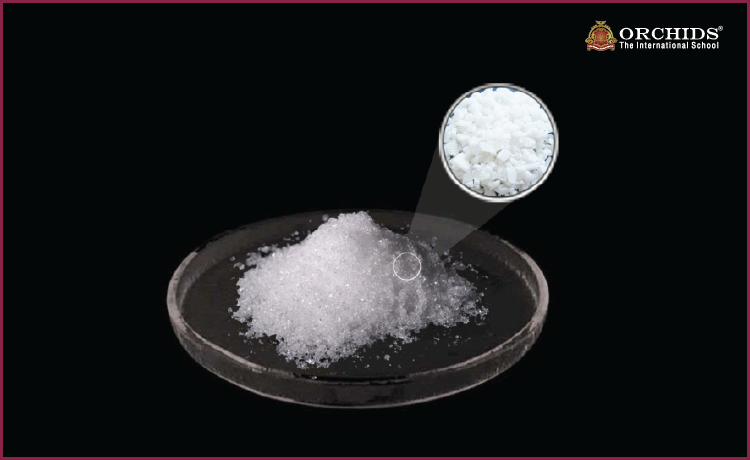
Aluminium sulfate is the specific compound used in some important but usually invisible processes, such as those involved in water purification, paper manufacture, and gardening. Although it looks like a simple white solid, aluminium sulfate is playing a major role unseen in several industries.
This article provides insights into how to identify its structure, properties, how it is prepared, and its uses.
Table of Contents
- Aluminium Sulphate and Its Formula
- Properties of Aluminium Sulphate
- Preparation of Aluminium Sulphate
- Aluminium Sulphate Uses
- Frequently Asked Questions On Aluminum Sulfate - Al₂(SO₄)₃
Aluminium Sulphate and Its Formula
Aluminium sulphate looks like a white, water-soluble salt made from aluminium, sulphur, and oxygen. It's widely used to purify water, manufacture paper, fix dyes in textiles, and even improve soil acidity in gardening.
Al₂(SO₄)₃ is the chemical formula for aluminium sulphate. It contains:

-
Two aluminium ions (Al³⁺)
-
Three sulphate ions (SO₄²⁻
The ions clump together in a stable build under strong ionic bonds in a crystalline lattice, and aluminium sulphate is often found in hydrated forms, often as Al₂(SO₄)₃·18H₂O with a colourless to white crystalline appearance. When the compound dissolves in water, it dissociates completely into its constituent ions, which is important in water treatment.
Properties of Aluminium Sulphate
Physical Properties:
-
Physical State: White crystalline solid or powder
-
Solubility: Easily soluble in water; insoluble in alcohol
-
Density: Approximately 2.7 g/cm³
-
Melting Point: Decomposes before melting
-
Odour/Taste: Odourless but tastes slightly astringent
Chemical Properties:
-
Produces a slightly acidic solution when dissolved in water, stated to be due to hydrolysis
-
Forms aluminium hydroxide (Al(OH)₃) when it reacts with bases such as NaOH
-
Decomposes into aluminium oxide (Al₂O₃), sulphur dioxide (SO₂), and sulphur trioxide (SO₃) when heated
Preparation of Aluminium Sulphate
1. From Aluminium Hydroxide and Sulphuric Acid
Aluminium sulphate is commonly made by reacting aluminium hydroxide with sulphuric acid. The solution formed is evaporated to obtain the salt in crystalline or powdered form.
-
Reaction:
2. From Aluminium Metal and Sulphuric Acid
Another method involves heating aluminium metal with sulphuric acid, producing aluminium sulphate and releasing hydrogen gas.
-
Reaction:
Both methods are straightforward and show aluminium’s reactivity with acids to form stable salts.
Aluminium Sulphate Uses
-
Acts as a coagulant that allows suspended particles to be removed from water
-
Helps in producing better conscience inks and improving the texture of the paper
-
Used during the dyeing process to fix certain dyes to the fabric
-
Used as a firming agent (E520) and in some baking powders
In today's world, it is a quiet giant of industry. From keeping the drinking water clear to helping the flowers bloom in acidic soil, aluminium sulphate has many applications. Knowing the properties and helping you understand the behaviour not only of the chemistry at play, but also the overall role aluminium sulphate plays in everyday situations.
Frequently Asked Questions On Aluminum Sulfate - Al₂(SO₄)₃
1. Why is aluminium sulphate important?
It plays a key role in water purification, helping to clear out impurities quickly. It's also widely used in the paper, textile, and dye industries.
2. Is aluminium sulphate safe for humans?
In small, regulated amounts, it’s safe and commonly used in water treatment. However, high exposure should be avoided to prevent skin or respiratory irritation.
3. How is aluminium sulphate formed?
It’s usually made by reacting aluminium hydroxide or metal with sulphuric acid. This reaction produces the salt along with water or hydrogen gas.
4. What is the pH of aluminium sulphate?
When dissolved in water, it forms a mildly acidic solution with a pH typically between 3 and 4.
Science isn't just a subject, it's the way of seeing the world. Curious how Orchids The International School teaches it that way? Talk to our admissions team.
Admissions Open for 2026-27
What type of concept pages would you prefer?
CBSE Schools In Popular Cities
- CBSE Schools in Bangalore
- CBSE Schools in Mumbai
- CBSE Schools in Pune
- CBSE Schools in Hyderabad
- CBSE Schools in Chennai
- CBSE Schools in Gurgaon
- CBSE Schools in Kolkata
- CBSE Schools in Indore
- CBSE Schools in Sonipat
- CBSE Schools in Delhi
- CBSE Schools in Rohtak
- CBSE Schools in Bhopal
- CBSE Schools in Aurangabad
- CBSE Schools in Jabalpur
- CBSE Schools in Jaipur
- CBSE Schools in Jodhpur
- CBSE Schools in Nagpur
- CBSE Schools in Ahmednagar
- CBSE School In Tumkur











Orchids The International School is one of India's leading chains of CBSE and ICSE schools, with 130+ schools across the country.