

Oxygen: Structure, Properties, and Everyday Uses Explained
Oxygen is one of the most critical elements for life on Earth. From the atmosphere we breathe to the chemical processes that fuel our bodies and industries, oxygen is centrally involved and it is curious to know the chemistry behind.
The article covers what oxygen is, how it behaves physically and chemically, and the various roles it plays on Earth.
Table of Contents
- Must-Know Facts About Oxygen!
- What is Oxygen?
- Physical Properties of Oxygen
- Chemical Properties of Oxygen
- Uses of Oxygen
- Frequently Asked Questions on Oxygen

Must Know Facts About Oxygen!
|
What is Oxygen?
Oxygen is a colourless, odourless, and tasteless gas. Oxygen is necessary for life on Earth, and comprises about 21% of the atmosphere. plays a vital role in combustion and respiration in living things.
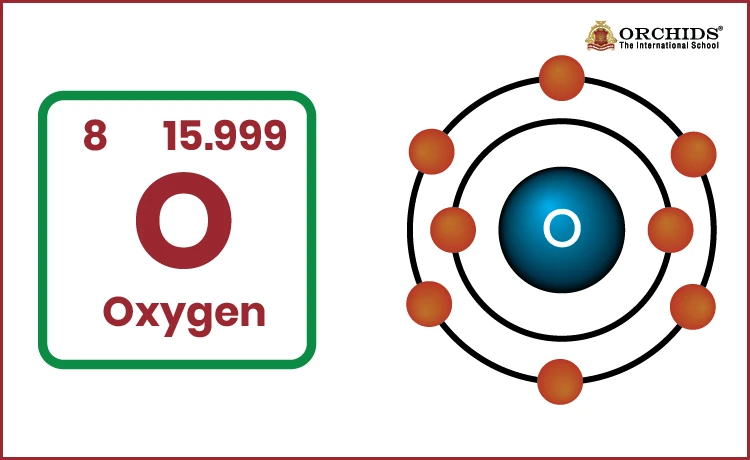
At room temperature, oxygen is a diatomic molecule (O₂), which means it exists as two oxygen atoms bonded together to form a stable molecule.
The major Question that comes is, Who discovered oxygen?
The answer is that Oxygen was discovered in 1774 by Joseph Priestley, who found that a special gas supported combustion much better than normal air.
Oxygen exists naturally both in the air we breathe and in water (H₂O), rocks, and other minerals. Oxygen is the most reactive nonmetal and reacts readily with nearly every other element to form compounds.
Read More: Combustion reaction
Physical Properties of Oxygen
|
Property |
Value |
|
Group |
16 |
|
Period |
2 |
|
Block |
p |
|
Atomic Number |
8 |
|
State at 20°C |
Gas |
|
Electron Configuration |
[He]2s²2p⁴ |
|
Melting Point |
-219 °C |
|
Boiling Point |
-183 °C |
|
Density (g/cm³) |
0.001308 |
|
Relative Atomic Mass |
15.999 |
|
Key Isotopes |
¹⁶O |
Chemical Properties of Oxygen
Oxygen is a highly reactive non-metal and forms compounds with almost all elements. Its chemical properties are essential to many processes in nature and industry:
- Combustion: While oxygen facilitates combustion, it itself does not combust. It responds spontaneously with combustible materials...so as to release heat and light energy.
.webp)
For example, when wood combusts, it is the oxygen that is combining with the carbon in the wood that results in both carbon dioxide and water vapour.
- Oxidising Agent: Oxygen's primary role in nature is as an oxidizing agent. Oxygen is an electron acceptor and in nature it will readily accept electrons from other materials in a redox chemical reaction.
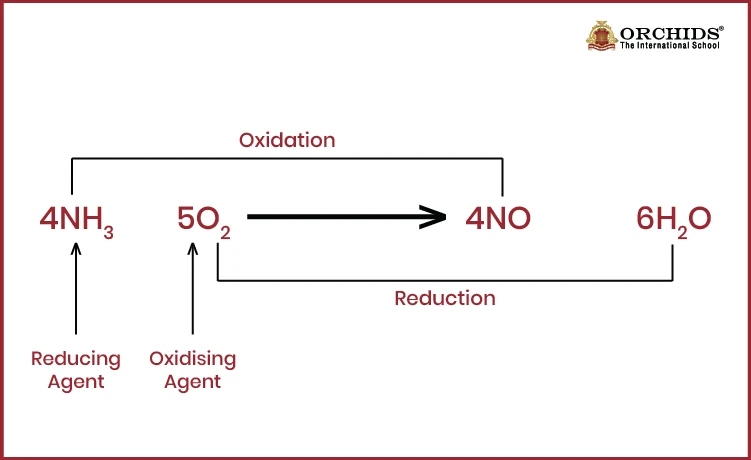
This oxidizing property of oxygen is responsible for rusting, respiration, and fuel combustion.
- Formation of Oxides: Oxygen readily reacts with both metals and non-metals to form oxides.
For example:
4Na + O₂ → 2Na₂O (Sodium Oxide)
C + O₂ → CO₂ (Carbon Dioxide)
- Reactivity with Hydrogen: When oxygen reacts with hydrogen, water is produced (H₂O) and energy is released. Oxygen is a reactant in the following reaction:2H₂ + O₂ → 2H₂O + energy
- Ozone Formation: Oxygen can react to form ozone (O₃), this reaction occurs naturally when the oxygen atom interacts with photons (ultraviolet radiation).
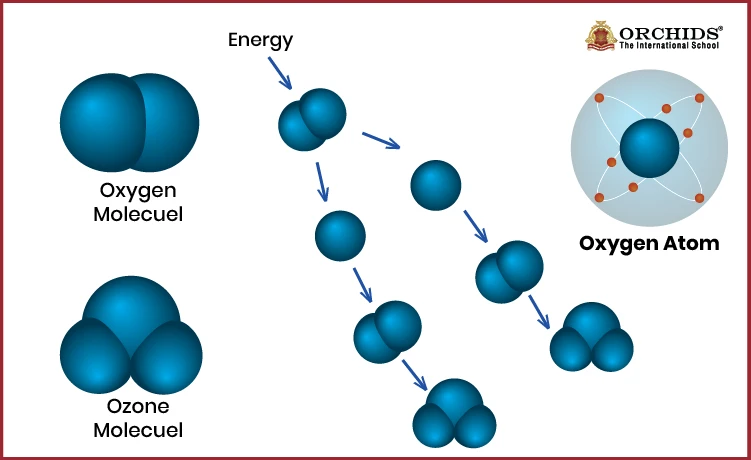
Ozone is a triatomic form of oxygen, and in the stratosphere, it absorbs harmful ultraviolet rays.
Uses of Oxygen
Oxygen is essential for biological and industrial applications:
- Biological uses: Oxygen is essential for cellular respiration, which is how cells produce energy.
- Medical uses: In hospitals and emergency care settings, patients are provided oxygen if they have difficulty breathing or when receiving anaesthesia during surgery.
- Industrial uses: Oxygen is important for the production of steel, for welding, cutting, and smelting operations.
- Aerospace and underwater operations; Oxygen is stored in a high-pressure tank for astronauts and scuba divers.
Learn More : Actinum and Aluminium
Till now, we know that oxygen is more than the air we breathe; it is one of the most important elements that support life, help combustion, and promote many chemical reactions. Oxygen is used for many things. The science that leads to a deeper understanding of its properties and behaviour provides us with insight into the chemical principles around us, which reinforces our understanding of life.
Frequently Asked Questions on Oxygen
1. What are 5 interesting facts about oxygen?
Oxygen is essential for life, makes up 21% of our air, and fuels both breathing and fire. It even helps form the ozone layer that shields us from harmful UV rays.
2. How many litres of oxygen is safe?
A healthy adult typically uses around 550 litres of oxygen a day at rest. For medical use, up to 15 litres per minute is considered safe when supervised.
3. What are three rules for oxygen use?
Keep oxygen away from anything flammable, don’t use oily creams near it, and store it upright and secured to prevent accidents.
4. How much oxygen is required per day?
On average, we breathe in about 550–600 litres of oxygen daily, just by going about our usual activities.
5. Why is oxygen vital in hospitals?
In hospitals, oxygen supports patients who struggle to breathe, making it a critical tool during surgeries, emergencies, and recovery.
Science isn't just a subject, it's the way of seeing the world. Curious how Orchids The International School teaches it that way? Talk to our admissions team.
Admissions Open for 2026-27
What type of concept pages would you prefer?
CBSE Schools In Popular Cities
- CBSE Schools in Bangalore
- CBSE Schools in Mumbai
- CBSE Schools in Pune
- CBSE Schools in Hyderabad
- CBSE Schools in Chennai
- CBSE Schools in Gurgaon
- CBSE Schools in Kolkata
- CBSE Schools in Indore
- CBSE Schools in Sonipat
- CBSE Schools in Delhi
- CBSE Schools in Rohtak
- CBSE Schools in Bhopal
- CBSE Schools in Aurangabad
- CBSE Schools in Jabalpur
- CBSE Schools in Jaipur
- CBSE Schools in Jodhpur
- CBSE Schools in Nagpur
- CBSE Schools in Ahmednagar
- CBSE School In Tumkur











Orchids The International School is one of India's leading chains of CBSE and ICSE schools, with 110+ schools across the country.