

Aluminium: Properties, Uses, and Importance in Daily Life
Aluminium is a shiny, silver metal that has light and strong characteristics that make it extremely valuable in our daily lives. We encounter it so often, from soda cans to aeroplanes. Have you ever wondered why aluminium is so versatile? Lets learn about the chemistry behind aluminium.
The article provides insights into the unique characteristics, chemical features, and common uses of aluminium.
Table of Contents
- What is an Aluminum
- Properties of Aluminium
- Chemical Properties of Aluminium
- Uses of Aluminium
- Quick Recap about Aluminium
- Frequently Asked Questions on Aluminium

What is an Aluminium ?
Aluminium is a bright silver-colored metal that feels light but is deceptively strong. It is the third most abundant element in the Earth's crust. The chemical symbol is Al, and its atomic number is 13.
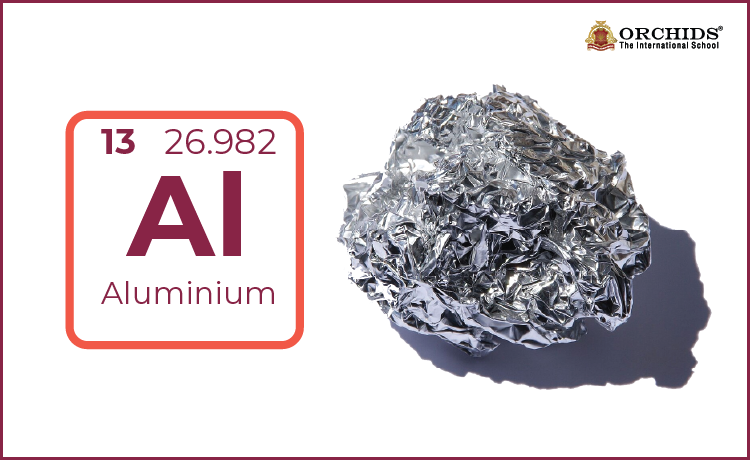
You will see aluminium in everyday products such as:
- Kitchen foil
- Soda cans
- Bicycle frames
- Airplane bodies
- Electrical power cables
Aluminium is admired for its:
- Low density
- Resistance to corrosion
- Conductive properties
However, aluminium is not found in its free state in nature. Instead, it is typically reduced from the bauxite mineral, which has been refined using the Bayer process.
One of the great advantages of aluminium is that it can be recycled over and over again without losing its properties. This is highly beneficial for industries focused on sustainability and caring for the environment.
Properties of Aluminium
Aluminium’s many physical and chemical properties enable it to function in a wide range of applications:
|
Property |
Description |
|
Appearance |
Silvery white with luster |
|
Density |
About 2.7 grams per cubic centimeter is very light |
|
Melting Point |
About 660 degrees Celsius |
|
Boiling Point |
About 2470 degrees Celsius |
|
Flexibility |
Easily rolled into thin sheets or drawn into wires without breaking |
|
Conductivity |
Good conductor of heat and electricity |
|
Corrosion Resistance |
Forms a naturally protective oxide layer that inhibits rust |
Chemical Properties of Aluminium
Although aluminium looks stable, it is actually reactive. It reacts with oxygen rapidly when exposed to air, forming a protective aluminium oxide coating that prevents further reactions.
-
Reaction with Oxygen
Aluminium reacts quickly with oxygen to form a thin aluminium oxide coating, which prevents corrosion of the metal underneath.
Reaction:
4Al + 3O₂ → 2Al₂O₃
-
Reaction with Acids
It reacts with dilute acids like hydrochloric acid, releasing hydrogen gas and forming aluminium salts.
Reaction:
2Al + 6HCl → 2AlCl₃ + 3H₂↑
-
Reaction with Bases
Aluminium reacts with strong bases like sodium hydroxide to form soluble aluminates and hydrogen gas.
Reaction:
Aluminium is amphoteric, meaning it reacts with both acids and bases. This property is also shared by aluminium oxide and aluminium hydroxide.
Uses of Aluminium
Aluminium is used in countless applications across various industries due to its strength, lightweight, and non-reactive nature:
- It isused in cars, aeroplanes, trains, and boats because it is both lightweight and strong.
- In the Food Packaging industry, it is found in beverage cans, aluminium foil, and food containers due to its non-toxicity and non-reactivity with food.
- It is very common and noticeable in Household Items,such as found in kitchen utensils, ladders, furniture, tools, and home fixtures.
- In Medical and Pharmaceutical aspects, Aluminium compounds, like aluminium hydroxide, are used in antacids and vaccines.
Aluminium is a key asset in sustainable development, as it can be recycled endlessly with only a fraction of the energy required to make it from raw ore.
Quick Recap about Aluminium
- Aluminium (Al) is a light, silvery metal with an atomic number of 13
- It’s strong, corrosion-resistant, and a good conductor
- Reacts with acids, bases, and oxygen (forms protective oxide)
- Used in transport, packaging, construction, wiring, and medicine
- 100% recyclable key to sustainable development
We learned that Aluminium is everywhere, like in our food packaging, vehicles, buildings, and even in medicine. Without it, modern life would be far more challenging. Most importantly, its ability to be recycled endlessly makes aluminium a truly sustainable metal for the future.
Frequently Asked Questions on Aluminium
1. What is Aluminium?
Aluminium is a lightweight, silvery-white metal known for being strong yet flexible. It’s widely used in transport, packaging, and construction due to its versatility.
2. What is aluminium foil used for?
Aluminium foil is commonly used to wrap food, keep it fresh, and protect it from heat or moisture. It’s also used in insulation and electronics.
3. What are the uses of aluminium metal?
Aluminium metal is used in making vehicles, aircraft, kitchen utensils, and even power lines because it's strong, light, and resists corrosion.
4. What is an aluminium alloy?
An aluminium alloy is a blend of aluminium with other metals to improve its strength, hardness, or resistance. It’s often used in engineering and aerospace applications.
5. What are the important facts about aluminium?
Aluminium is the most abundant metal in Earth’s crust and is known for being lightweight, strong, and rust-resistant. It’s also fully recyclable without losing quality.
6. What is the importance of aluminium?
From aeroplanes to soda cans, aluminium plays a vital role in modern life due to its strength, flexibility, and low weight. It’s a go-to material in industries worldwide.
7. What is special about aluminium?
What makes aluminium unique is that it forms a natural protective layer against rust, making it durable and low-maintenance. Plus, it's super lightweight and versatile.
8. What is the most important part of aluminium?
The most remarkable feature of aluminium is its protective oxide layer, which shields it from corrosion. That’s why it's so valuable in harsh environments.
Science isn't just a subject, it's the way of seeing the world. Curious how Orchids The International School teaches it that way? Talk to our admissions team.
Admissions Open for 2026-27
What type of concept pages would you prefer?
CBSE Schools In Popular Cities
- CBSE Schools in Bangalore
- CBSE Schools in Mumbai
- CBSE Schools in Pune
- CBSE Schools in Hyderabad
- CBSE Schools in Chennai
- CBSE Schools in Gurgaon
- CBSE Schools in Kolkata
- CBSE Schools in Indore
- CBSE Schools in Sonipat
- CBSE Schools in Delhi
- CBSE Schools in Rohtak
- CBSE Schools in Bhopal
- CBSE Schools in Aurangabad
- CBSE Schools in Jabalpur
- CBSE Schools in Jaipur
- CBSE Schools in Jodhpur
- CBSE Schools in Nagpur
- CBSE Schools in Ahmednagar
- CBSE School In Tumkur











Orchids The International School is one of India's leading chains of CBSE and ICSE schools, with 130+ schools across the country.