

Copper
Copper is one of humanity’s oldest companions in the world of metals. Its warm reddish glow has lit up history, from ancient tools and coins to modern electric wires. Copper has invested so much in our lives, right?
This article provides a complete guide from the history of Copper to modern properties and its uses in a more understandable way.
Table of Contents
- History of Copper and What Is Copper?
- Properties of Copper
- Important Reactions of Copper in Chemistry
- Uses of Copper
- Frequently Asked Questions on Copper
Must-Know Facts About Copper!
|

History of Copper and What Is Copper?
It was always a wonder how people got to know about the precious metal Copper ! Thousands of years ago, humans first discovered pieces of native copper lying in riverbeds. Early civilisations such as the Egyptians and Mesopotamians used copper to craft ornaments, tools, and the first metal weapons.
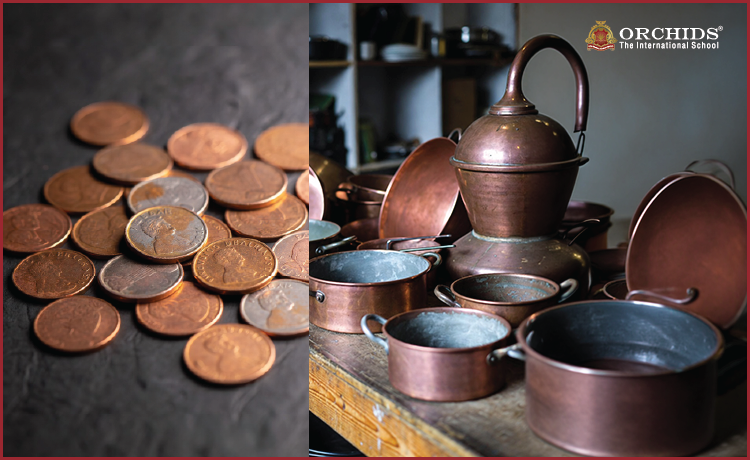
The Bronze Age began when people learned to mix copper with tin, creating bronze, harder and more versatile than pure copper. Even today, ancient copper artefacts are displayed in museums, a testament to their durability and cultural significance.
But how exactly does Copper look like
Copper is a reddish-brown transition metal that belongs to Group 11 of the periodic table. It is soft, malleable, and highly ductile, which means it can be stretched into wires or beaten into sheets without breaking.
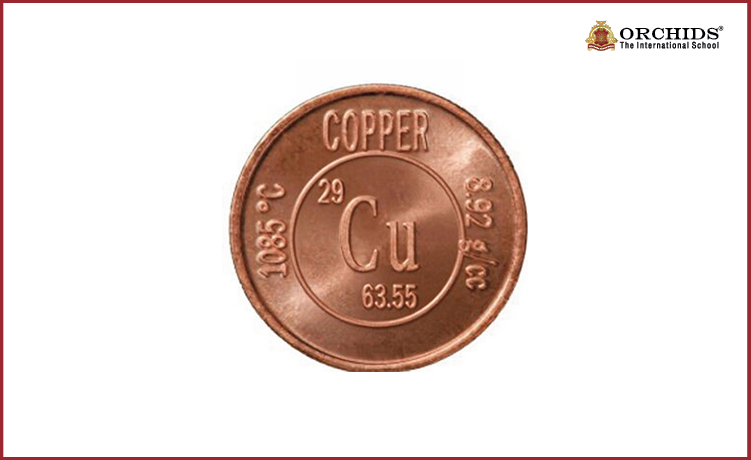
The well-known fact that it's a remarkable ability to carry electricity and heat makes it a favourite for electrical wiring, motors, and heat exchangers.
In nature, copper is found both as pure metal and in minerals like chalcopyrite and malachite. This easy accessibility has made copper one of the earliest and most widely used metals in human history.
Have you heard about Alloys of Copper?
Two well-known copper alloys are
-
Bronze (copper and tin)
-
Brass (copper and zinc).
When it comes to Bronze, it is stronger and more durable than pure copper, making it ideal for tools, sculptures, and coins. The Brass, with its gold-like appearance and resistance to tarnish, is widely used in musical instruments, decorative items, and plumbing fixtures.
These alloys expand copper’s usefulness far beyond its natural form. Bronze ushered in a new era of stronger tools and weapons.
At the same time, brass remains popular for musical instruments and decorative pieces thanks to its bright gold-like appearance and resistance to tarnishing.
Properties of Copper
Copper possesses the physical and chemical properties that help them to study their significance, also making it easy to identify them among the vast elements.
Physical Properties
|
Fact |
Detail |
|
Symbol |
Cu |
|
Atomic Number |
29 |
|
Apperance |
Reddish-brown, shiny metal with metallic lustre |
|
Atomic Mass |
~63.546 u |
|
Density |
8.96 g/cm³ |
|
Melting Point |
~1084.6 °C |
|
Boiling Point |
~2560 °C |
|
Electron Configuration |
[Ar] 3d104s1\mathrm{[Ar]\,3d^{10}4s^1}[Ar]3d104s1 |
|
Common Oxidation States |
+1, +2 |
|
Natural Occurrence |
Native copper and ores |
Chemical Properties
|
Property/Reaction |
Description |
|
Reaction with Air |
Slowly reacts with oxygen to form copper oxide (CuO), giving a dull surface. |
|
Reaction with Water |
Does not react with pure water but can corrode in moist air. |
|
Reaction with Acids |
Reacts with nitric acid and hot concentrated sulfuric acid, producing copper salts. |
|
Reaction with Bases |
Does not react directly with strong bases but forms complex salts with ammonia. |
|
Alloy Formation |
Forms alloys like bronze (copper + tin) and brass (copper + zinc). |
|
Corrosion Resistance |
Forms a protective patina, preventing further corrosion. |
Important Reactions of Copper in Chemistry
1.Oxidation to Copper(II) Oxide: When heated strongly in oxygen, copper forms a black oxide:
2. Formation of Copper(I) Oxide: With limited oxygen, it gives a red oxide:
3. Reaction with Sulphur: Copper combines with sulphur on heating to form copper(II) sulphide:
4. Reaction with Nitric Acid: Copper dissolves in concentrated nitric acid, producing copper nitrate and nitrogen monoxide:
5. Reaction with Hot Concentrated Sulphuric Acid: Copper forms copper sulphate, releasing sulphur dioxide:
These reactions are important in refining copper, producing compounds for industrial use, and understanding transition-metal chemistry.
Uses of Copper
-
Copper’s versatility means it touches nearly every part of modern life. We can consider it as thebackbone of electrical powergrids and electronic circuits because of its high conductivity.
-
Plumbersfavour copper pipes for their resistance to corrosion and bacteria.
-
Architects use copper for roofing and cladding, where its patina adds beauty and protection.
-
Inhealthcare, copper surfaces reduce bacterial contamination, making them useful in hospitals.
-
Copper is also essential in renewable energy technologies, including wind turbines and solar panels.
Now, let's study the Environmental and Biological Importance of Copper
-
Copper is a vital trace element for living organisms. In humans, it helps enzymes that produce energy, form connective tissue, and maintain the nervous system.
-
Too little copper can cause health issues, but too much can be toxic, so balance is essential.
-
Environmentally, copper is highly recyclable, reducing the need for extensive mining and helping conserve natural resources.
We learned that Copper is more than just a metal; it is part of humanity’s past, present, and future. From ancient tools to modern electronics, copper’s durability, beauty, and unique chemical behaviour have kept it relevant through the ages.
Frequently Asked Questions on Copper
1. What are some interesting facts about copper?
Copper was the first metal widely used by humans, dating back over 10,000 years. It develops a green patina over time, which actually protects it from further corrosion.
2. Why is copper so important?
Copper is vital for electrical wiring, plumbing, and renewable energy systems. It’s also an essential trace element for human health and many living organisms.
3. What are the 10 uses of copper?
Copper is used in electrical wiring, plumbing, coins, electronics, roofing, cookware, musical instruments, renewable energy, industrial machinery, and decorative art. These uses show its versatility and importance.
4. How is copper formed?
Copper forms naturally in the Earth’s crust, often in ores like chalcopyrite. It is extracted through mining, smelting, and refining or recycled from used products.
5. What colour is copper?
Fresh copper is a shiny reddish-orange metal. Over time, it can turn green due to a protective patina that forms on its surface.
6. How many types of copper are there?
Copper is commonly classified into types like pure copper, electrolytic tough pitch (ETP), oxygen-free copper, and alloyed forms such as brass and bronze. These types serve different industrial needs.
7. What are copper's uses?
Copper is widely used in wiring, electronics, plumbing, and renewable energy technologies. Its conductivity and resistance to corrosion make it ideal for countless applications.
8. What is copper?
Copper is a reddish-brown metallic element with the symbol Cu and atomic number 29. It’s valued for its conductivity, malleability, and role in both technology and biology.
Science isn't just a subject, it's the way of seeing the world. Curious how Orchids The International School teaches it that way? Talk to our admissions team.
Admissions Open for 2026-27
What type of concept pages would you prefer?
CBSE Schools In Popular Cities
- CBSE Schools in Bangalore
- CBSE Schools in Mumbai
- CBSE Schools in Pune
- CBSE Schools in Hyderabad
- CBSE Schools in Chennai
- CBSE Schools in Gurgaon
- CBSE Schools in Kolkata
- CBSE Schools in Indore
- CBSE Schools in Sonipat
- CBSE Schools in Delhi
- CBSE Schools in Rohtak
- CBSE Schools in Bhopal
- CBSE Schools in Aurangabad
- CBSE Schools in Jabalpur
- CBSE Schools in Jaipur
- CBSE Schools in Jodhpur
- CBSE Schools in Nagpur
- CBSE Schools in Ahmednagar
- CBSE School In Tumkur











Orchids The International School is one of India's leading chains of CBSE and ICSE schools, with 110+ schools across the country.