

Chlorine Gas (Cl₂)
Chlorine gas (Cl₂) is one of those chemicals that most of us have heard of but don’t fully understand. We usually think of it as the strong-smelling chemical added to swimming pools or drinking water.
But chlorine has a much bigger story. It is a powerful disinfectant, an important industrial chemical, and even a lifesaver when it comes to ensuring safe drinking water for millions of people.
In this article, what chlorine gas is, its reactivity, and its applications related to daily life are explained in an easy way.
Table of Contents
- Understanding Chlorine Gas and Its Structure
- Physical Properties of Chlorine Gas (Cl₂)
- Chemical Properties of Chlorine Gas (Cl₂)
- Chlorine Gas (Cl₂) Uses
- Frequently Asked Questions on Chlorine Gas (Cl₂)

Understanding Chlorine Gas and Its Structure
The interesting fact about chlorine gas was it was discovered in 1774 by the Swedish chemist Carl Wilhelm Scheele, who noticed its unusual smell and colour. However, it was only later that scientists confirmed it was actually a new element.
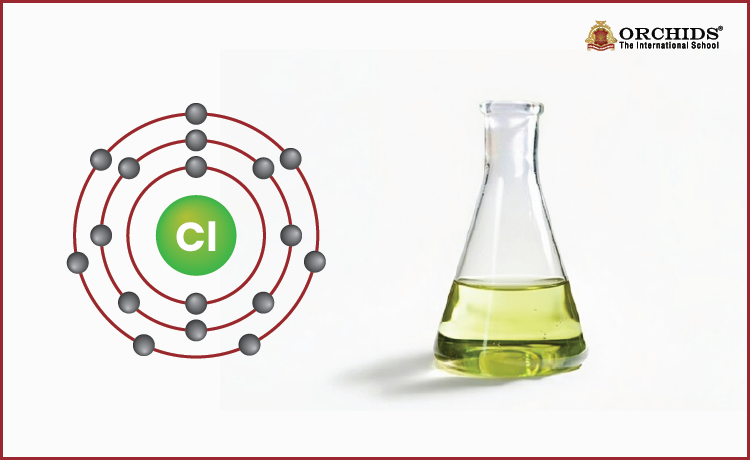
Chlorine gas is a simple molecule made of two chlorine atoms bonded together, represented by the formula Cl₂. It belongs to the halogen family of elements, which are known for being very reactive.
Chlorine itself is never found freely in nature because of this reactivity. Instead, it exists in compounds such as sodium chloride, which we know better as table salt.
Today, chlorine is both feared and valued is dangerous if inhaled, yet essential in keeping our surroundings safe and clean.
Let's look into the structure of Chlorine gas !!
Chlorine gas is made up of two chlorine atoms held together by a single covalent bond. This means that each atom shares one electron with the other, making the molecule stable enough to exist in normal conditions.
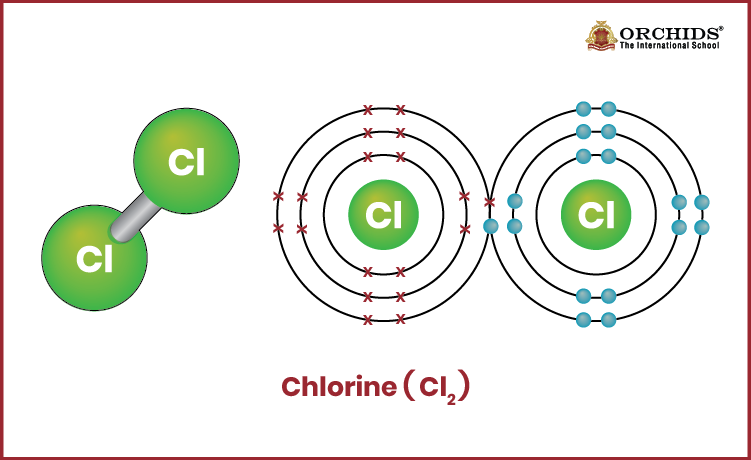
The structure is very simple: just two atoms connected in a straight line. Although simple in design, this molecule exhibits a strong tendency to react with other substances, which accounts for its wide range of chemical applications.
Physical Properties of Chlorine Gas (Cl₂)
| Property | Value |
| Odour | Odour of bleach |
| Appearance | Yellow-green gas |
| Covalently-Bonded Unit | 1 |
| Vapour Pressure | 85.3 psig |
| pH | 7.4 |
| Solubility | Slightly soluble in water |
Chemical Properties of Chlorine Gas Cl₂
- A strong oxidising agent, Chlorine has a high tendency to gain electrons, which makes it a powerful oxidising agent. This property allows it to react quickly with many elements and compounds.
Its strong oxidising ability is the reason chlorine is widely used in bleaching and disinfection.
- Reaction with Metals, Chlorine reacts vigorously with metals to form metal chlorides, which are usually ionic compounds.
For example, sodium reacts with chlorine to form sodium chloride:
- Reaction with Non-Metals,Chlorine also reacts with several non-metals. In the presence of sunlight, it reacts with hydrogen to produce hydrogen chloride gas.
This is an explosive reaction in direct sunlight, which highlights chlorine’s reactivity.
- Reaction with Water, When chlorine dissolves in water, it forms hydrochloric acid and hypochlorous acid:
- Bleaching Action,In water, chlorine forms hypochlorous acid, which releases nascent oxygen:
- Disinfecting Property,Chlorine disinfects water by forming hypochlorous acid and hypochlorite ions:
The OCl− ion and nascent oxygen [O] act as strong germicidal agents.
Chlorine Gas (Cl₂) Uses
The uses of chlorine gas touch almost every part of our daily lives, though we may not always notice it.
- One of its most important uses is in water treatment. Adding small amounts of chlorine to drinking water destroys harmful germs, making it safe to drink. The same principle is applied in swimming pools to keep the water fresh and hygienic.
- Industries rely heavily on chlorine as well. It is used to make hydrochloric acid, chlorinated solvents, and plastics like PVC, which is found in pipes, packaging, and even flooring.
- The paper and textile industries use chlorine for bleaching, while the medical field depends on it to manufacture antiseptics and disinfectants.
- Agriculture also benefits, as chlorine is an ingredient in several pesticides and fertilisers.
- Even in the food industry, chlorine plays a role in preserving and sanitising products, though always in carefully controlled amounts.
As we have learned how Chlorine gas may appear as just a greenish-yellow cloud with a harsh smell, but behind its toxic nature lies a chemical that has shaped modern life in countless ways.
It ensures that the water we drink is safe, it helps produce essential medicines and plastics, and it supports industries from textiles to agriculture.
Frequently Asked Questions on Chlorine Gas (Cl₂)
1. What is Chlorine Gas?
Chlorine gas is a yellow-green chemical element with a sharp smell, widely used for disinfection and industrial purposes. It naturally exists as Cl₂ molecules.
2. What is the chlorine gas formula?
The chemical formula of chlorine gas is Cl₂, showing that it is made of two chlorine atoms bonded together.
3. What is the purpose of chlorine gas?
The main purpose of chlorine gas is to disinfect water, kill germs, and act as a raw material in industries like plastics, paper, and textiles.
4. What colour is chlorine gas?
Chlorine gas has a yellowish-green hue, making it distinct from most other common gases.
5. What are the effects of chlorine gas?
Short exposure to chlorine gas can irritate the eyes, throat, and lungs, while long exposure can be harmful to health.
6. What are 5 uses of chlorine gas?
Chlorine gas is used in water treatment, paper bleaching, making plastics like PVC, producing medicines, and cleaning swimming pools.
7. Is chlorine gas harmful to humans?
Yes, chlorine gas is harmful if inhaled in high concentrations, but in controlled amounts, it protects public health by disinfecting water.
Science isn't just a subject, it's the way of seeing the world. Curious how Orchids The International School teaches it that way? Talk to our admissions team.
Admissions Open for 2026-27
What type of concept pages would you prefer?
CBSE Schools In Popular Cities
- CBSE Schools in Bangalore
- CBSE Schools in Mumbai
- CBSE Schools in Pune
- CBSE Schools in Hyderabad
- CBSE Schools in Chennai
- CBSE Schools in Gurgaon
- CBSE Schools in Kolkata
- CBSE Schools in Indore
- CBSE Schools in Sonipat
- CBSE Schools in Delhi
- CBSE Schools in Rohtak
- CBSE Schools in Bhopal
- CBSE Schools in Aurangabad
- CBSE Schools in Jabalpur
- CBSE Schools in Jaipur
- CBSE Schools in Jodhpur
- CBSE Schools in Nagpur
- CBSE Schools in Ahmednagar
- CBSE School In Tumkur











Orchids The International School is one of India's leading chains of CBSE and ICSE schools, with 110+ schools across the country.