

Air Around Us
Air is something we can't see, but it's always with us in our homes, schools, and outside in nature. It fills every space and plays a huge role in helping us live and grow. We can say that there is “Air Around Us”.
This article will guide you through what air really is, what it contains, and why it's so important for all living things.
Table of Contents
- Why Do We Call the Surrounding Air?
- Air and Its Presence
- Elements of Air
- What Does Air Around Us Have?
- Tips and Tricks To learn about Air
- Conclusion
- Frequently Asked Questions on Air Around Us

Why Do We Call the Surrounding Air?
The air that surrounds our planet is referred to as the atmosphere. It is a blanket of gases surrounding the Earth and extending way beyond the surface. Although it is invisible to us, the atmosphere is always there.
It sustains life by giving us oxygen to breathe, plants oxygen for carbon dioxide, and keeping us safe from the Sun's harmful radiation. Without air, there would be no life on Earth.
Air and Its Presence
We cannot see air, but we can definitely feel air around us. When there is wind or when the fan blows, we can feel air passing by us. Although we cannot see air, it takes up space and weighs something.
Let's experiment with a simple one!!
Use an empty glass and put it upside down into a bowl of water. You will find that water doesn't fill the glass. This is due to the air in the glass blocking the water from entering. This demonstrates that air takes up space.
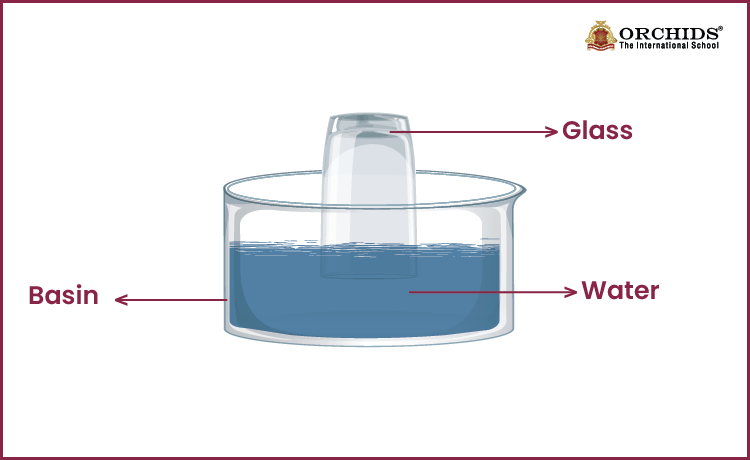
The fact is that everyone observes the air surrounds us everywhere in houses, classrooms, gardens, and even within the pores of the ground, breathing, combustion, and even assists flying objects like kites, birds, and aeroplanes.
Elements of Air
Air isn't a lone gas. It is rather a combination of various gases, each one with a function of its own.
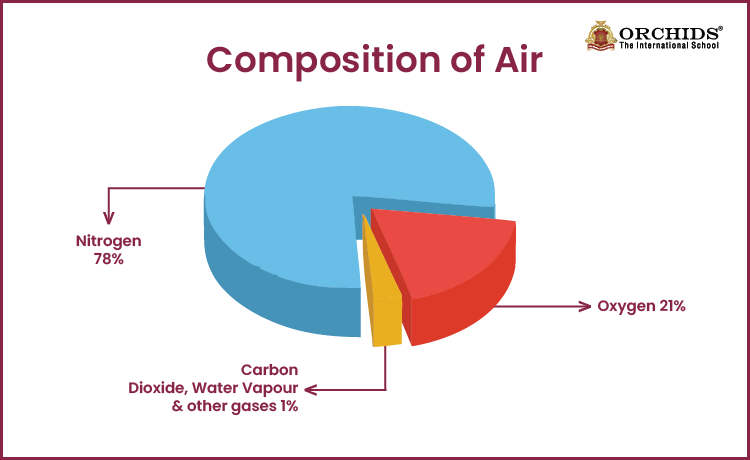
The primary elements of air are:
- Nitrogen (78%)
Nitrogen is the largest gas present in the atmosphere. Although it's not utilised for respiration, it is necessary for the growth of plants and maintains nature in balance.
- Oxygen (21%)
This is the most vital gas for humans and animals. Oxygen aids breathing and is also required to burn things.
- Carbon Dioxide (0.04%)
Although found in limited quantities, carbon dioxide is quite significant for plants. They utilise it to produce food through photosynthesis. It is also emitted when we exhale.
- Argon and Other Inert Gases (Less than 1%)
Gases such as argon, neon, and helium are found in very minute quantities and hardly participate in chemical reactions.
These gases combined form the air we inhale. The composition is the same in nearly all parts of the planet, but some differences occur near industrialisation or pollution.
What Does the Air Around Us Have?
Apart from gases, the air has some other minute things that we can't observe with our naked eye, but they exist in the air.
- Water Vapour
The atmosphere surrounding us always has some quantity of water in the form of vapour. Water vapour is a result of the evaporation of water from oceans, lakes, and rivers. Water vapour forms clouds and causes rain.
- Dust Particles
Dust is suspended in the air, particularly in dry spaces or around roads and building construction sites. They don't necessarily appear visible, but they are always suspended in the air. Occasionally, they are clearly visible when sunlight enters a dark space.
- Smoke and Pollutants
Air may also have smoke, particularly in cities or areas where fuel is ignited. Car exhausts, factories, and burning trash contribute to air pollution and make it unhealthy to breathe.
- Microorganisms
Air also transports minute living organisms such as bacteria and fungal spores. They are invisible but can lead to infection and allergies.
Tips and Tricks: To learn about Air
- Remember “NOCA” which stands for Nitrogen, Oxygen, Carbon dioxide, Argon in order of amount.
- Draw a pie chart to remember gas percentages.
- Notice air daily, like blowing curtains, flying kites, or inflating balloons.
- Make a rhyme and practice “Nitrogen is most, oxygen we breathe, carbon helps plants, argon takes the least.”
Conclusion
From gases such as oxygen and nitrogen to minuscule dust particles and water vapour, air contains so many things that we usually take for granted. Through the knowledge of what is in the air and how it sustains life, we come to appreciate and defend it not only for ourselves, but for the world.
Frequently Asked Questions on Air Around Us
1. Why do we need air around us?
Air keeps us alive by helping us breathe and grow food. It also supports burning and keeps the Earth’s temperature just right.
2. How can we know that air is around us?
We can feel air when the wind blows or see it move things. Simple actions like inflating a balloon also show that air is present.
3. What is the general condition of the air around us?
Air can be clean in nature or polluted in busy cities.
4. What is the most common element in the air around us?
Nitrogen is the most common gas in the atmosphere. It's vital for nature.
5. Which element is the highest in the air?
The element found most in the air is nitrogen. It quietly supports plant growth and helps balance the environment.
6. Is the air around us always transparent?
Air is usually transparent, allowing us to see through it clearly. However, it can appear hazy or opaque when it contains dust, smoke, fog, or pollutants, which scatter or block light.
7. Is air present everywhere around us?
Yes, air is present all around, even in places we might not expect, like inside empty bottles or between soil particles. It surrounds the Earth and fills every space unless removed in a vacuum.
8. How can we keep the air around us clean?
We can keep the air clean by reducing pollution using public transport, planting trees, avoiding burning waste, conserving energy, and supporting eco-friendly practices like recycling and renewable energy.
Science isn't just a subject, it's the way of seeing the world. Curious how Orchids The International School teaches it that way? Talk to our admissions team.
Admissions Open for 2026-27
What type of concept pages would you prefer?
CBSE Schools In Popular Cities
- CBSE Schools in Bangalore
- CBSE Schools in Mumbai
- CBSE Schools in Pune
- CBSE Schools in Hyderabad
- CBSE Schools in Chennai
- CBSE Schools in Gurgaon
- CBSE Schools in Kolkata
- CBSE Schools in Indore
- CBSE Schools in Sonipat
- CBSE Schools in Delhi
- CBSE Schools in Rohtak
- CBSE Schools in Bhopal
- CBSE Schools in Aurangabad
- CBSE Schools in Jabalpur
- CBSE Schools in Jaipur
- CBSE Schools in Jodhpur
- CBSE Schools in Nagpur
- CBSE Schools in Ahmednagar
- CBSE School In Tumkur











Orchids The International School is one of India's leading chains of CBSE and ICSE schools, with 110+ schools across the country.