

Benzoic Acid
Benzoic acid is one of the simplest and most useful aromatic acids known in organic chemistry. You might be surprised to know that it’s commonly used as a food preservative, in cosmetics, and even in medicines.
This article provides insights into what benzoic acid is, its structure, properties, methods of preparation, and a wide range of uses in everyday life.
Table of Contents
- What is Benzoic Acid And its Structure
- Properties of Benzoic Acid
- Chemical Properties of Benzoic Acid
- Methods of Preparation of Benzoic Acid
- Uses of Benzoic Acid
- Frequently Asked Questions on Benzoic Acid

What is Benzoic Acid And its Structure
Benzoic acid is an organic compound with the chemical formula It belongs to the family of aromatic carboxylic acids, meaning it contains a benzene ring ,When it comes to its existence, it occurs naturally in some plants, especially in gum benzoin (from which its name is derived). It's observed that under normal conditions, benzoic acid appears as colourless, needle-like crystals with a faint, pleasant smell.
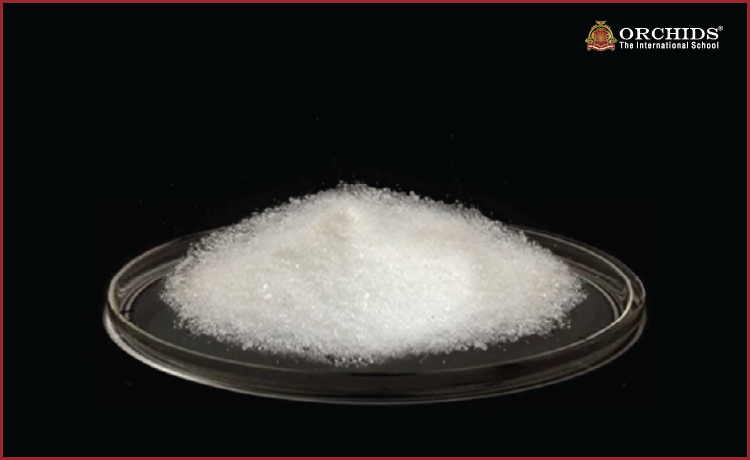
The term “benzoate” refers to salts and esters derived from benzoic acid, for example, sodium benzoate, which is widely used as a food preservative.
Now, let's have a closer look at the structure of benzoic acid
Chemically, as discussed the structure of benzoic acid includes a benzene ring (C₆H₅–) bonded to a carboxylic acid group (-COOH).
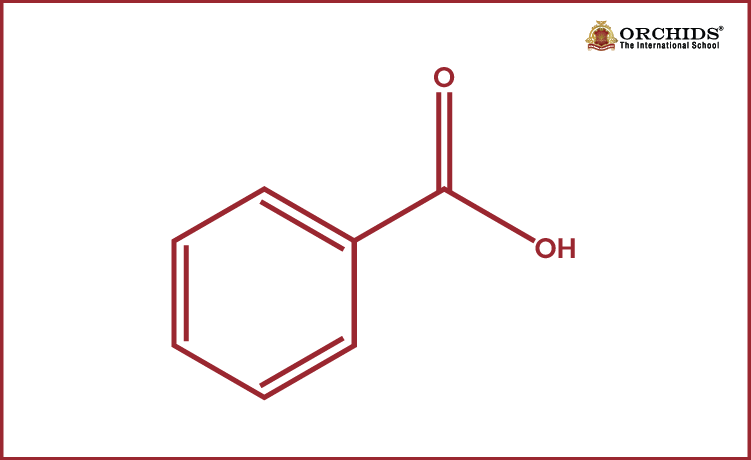
In molecular form, it can be written as:
It contains 7 carbon atoms, 6 hydrogen atoms, and 2 oxygen atoms. This structure allows benzoic acid to exhibit both acidic and aromatic properties:
- The -COOH group gives it an acidic nature.
- The benzene ring adds aromatic stability.
Next is Benzoic acid shows the specifically some specific physical and chemical trends which help us to identify them among all.
Properties of Benzoic Acid
Physical Properties:
|
Property |
Description |
|
Molecular Formula |
C₆H₅COOH or C₇H₆O₂ |
|
Molar Mass |
122.12 g/mol |
|
Appearance |
Colourless crystalline solid |
|
Odour |
Slightly pleasant (aromatic) |
|
Melting Point |
395 K (122°C) |
|
Boiling Point |
523 K (250°C) |
|
Density |
1.27 g/cm³ (at 15°C) |
|
Solubility in Water |
3.4 g/L at 25°C; 56 g/L at 100°C |
|
pKa |
4.2 (weak acid) |
Benzoic acid dissolves better in organic solvents such as ethanol, acetone, and benzene than in water.
Chemical Properties of Benzoic Acid
Chemical Properties :
- Benzoic acid shows an acidic nature in that it releases hydrogen ions in water, behaving as a weak acid.
- It also helps in the formation of salts as it reacts with bases like NaOH to form sodium benzoate,
- It shows an esterification reaction that iswith alcohols, forming esters that are used in perfumes.
- Interestingly, it also shows Halogenation reaction, which occurs when substituted halogens enter the benzene ring in the meta position due to the –COOH group being an electron-withdrawing group.
Methods of Preparation of Benzoic Acid
1. Industrial Preparation from Toluene
Industrially, benzoic acid is prepared by partial oxidation of toluene in the presence of air and catalysts like manganese or cobalt naphthenate.
This reaction is cost-effective and widely used for large-scale production.
2. Laboratory Preparation from Benzonitrile or Benzaldehyde
Benzoic acid can also be prepared in the lab:
- From Benzonitrile:
- From Benzaldehyde:
Uses of Benzoic Acid
Benzoic acid has numerous applications in daily life, medicine, and industry:
-
In the Food Industry, it is used as a food preservative (E210) to prevent the growth of mould, yeast, and bacteria in acidic foods like soft drinks, jams, and pickles.
-
Majorly in Pharmaceuticals, it acts as an ingredient in ointments and creams for treating fungal skin infections.
-
Have you ever wondered about Cosmetics and Personal Care in our daily lives? This benzoic acid is added to toothpaste, mouthwash, face creams, and lipsticks for its antimicrobial properties.
-
It is used in manufacturing phenol, dyes, perfumes, and insect repellents in the chemical industry.
-
In the organic world, it is used as an intermediate for organic synthesis, where Benzoic acid is converted to benzoyl chloride, which is used in making benzyl benzoate (a common medicinal compound).
So far, we have read that benzoic acid (C₆H₅COOH) is a versatile aromatic acid with significant uses in food, medicine, and manufacturing. Though Its simplicity and importance make it a key topic in organic chemistry, showing how one compound can impact so many areas of everyday life.
Frequently Asked Questions on Benzoic Acid
1. What is the importance of benzoic acid?
Benzoic acid is widely used in food, cosmetics, and medicines because of its preservative and antibacterial properties. Understanding what is benzoic acid, its benzoic acid structure, and its benzoic acid molar mass helps students relate chemistry to real-life uses.
2. Which type of acid is benzoic acid?
Benzoic acid is an aromatic carboxylic acid with the benzoic acid formula C₆H₅COOH. Knowing what benzoic acid is and its benzoic acid molecular weight (122.12 g/mol) helps explain its weak acidic nature.
3. What are the two reactions of benzoic acid?
Two major reactions of benzoic acid are esterification and salt formation. These show how the benzoic acid structure reacts with alcohols or bases while keeping its benzoic acid formula intact, highlighting its chemical versatility
4. What is the colour of benzoic acid?
Benzoic acid appears as a colourless, crystalline solid under normal conditions. Its benzoic acid structure and benzoic acid molecular weight give it a stable, pleasant-smelling form that’s easy to recognise in labs.
5. Why is it called benzoic acid?
It is called benzoic acid because it was first obtained from gum benzoin, a natural resin. Learning what benzoic acid is and its benzoic acid formula helps understand how its name reflects its aromatic benzoic acid structure.
Science isn't just a subject, it's the way of seeing the world. Curious how Orchids The International School teaches it that way? Talk to our admissions team.
Admissions Open for 2026-27
What type of concept pages would you prefer?
CBSE Schools In Popular Cities
- CBSE Schools in Bangalore
- CBSE Schools in Mumbai
- CBSE Schools in Pune
- CBSE Schools in Hyderabad
- CBSE Schools in Chennai
- CBSE Schools in Gurgaon
- CBSE Schools in Kolkata
- CBSE Schools in Indore
- CBSE Schools in Sonipat
- CBSE Schools in Delhi
- CBSE Schools in Rohtak
- CBSE Schools in Bhopal
- CBSE Schools in Aurangabad
- CBSE Schools in Jabalpur
- CBSE Schools in Jaipur
- CBSE Schools in Jodhpur
- CBSE Schools in Nagpur
- CBSE Schools in Ahmednagar
- CBSE School In Tumkur











Orchids The International School is one of India's leading chains of CBSE and ICSE schools, with 110+ schools across the country.