

Element Silver (Ag): Occurrence, Properties and Uses Explained
Silver (Ag) is a bright, shiny metal that has fascinated humans for centuries. Silver has a remarkable presence and is Known for its beauty as is used in jewellery, coins that everyone is aware of and Also its exceptional conductivity and apart from it serving many applications in electronics is even more.
This article provides a clear chemistry of silver covering its properties, reactions, uses, and environmental impact.
Table of Content
- What is Silver
- Occurrence and Extraction of Silver
- Physical Properties of Silver
- Chemical Properties of Silver

What is Silver ?
Silver belongs to Group 11, alongside copper and gold. These three metals are known as “coinage metals” because they’ve been widely used to make coins throughout history.
.webp)
It is positioned in the periodic table it sits in Period 5 and is part of the d-block of transition metals.
But the question comes is why is Silver considered the second precious metal after gold?
The answer lies in its rarity, beauty, and long-standing value in human history. Like gold, silver doesn’t corrode or rust easily, which makes it ideal for coins, jewellery, and ornaments that can last for centuries.
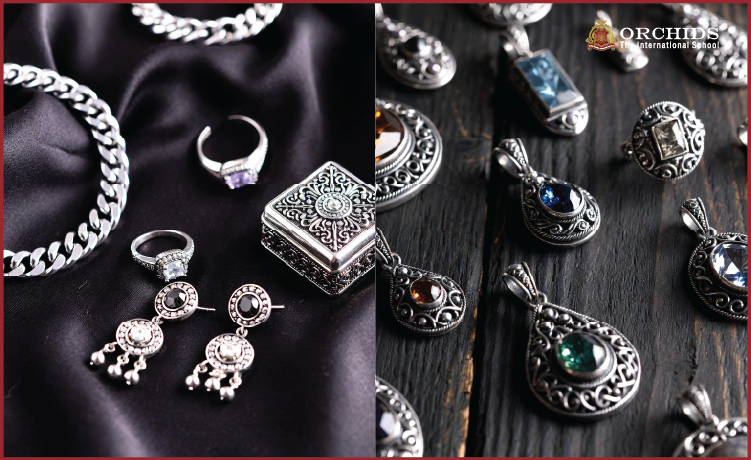
Silver’s excellent electrical and thermal conductivity makes it vital for electronics. Its malleability means it can be stretched into thin wires or beaten into delicate sheets without breaking, making it ideal for industrial importance in electronics, solar panels, and medical devices.
Although silver is slightly more abundant and less costly than gold, its historical use as currency, investment value, and cultural significance firmly place it as the next most treasured metal after gold.
Also can check Gold
Occurrence and Extraction of Silver
Silver is found in ores like argentite (Ag₂S), chlorargyrite (AgCl), and often alongside lead, copper, and zinc. The common industrial process for extracting silver from its sulfide ore involves roasting and leaching:
- Roasting argentite with sodium carbonate:
- Displacement with zinc to release silver:
Physical Properties of Silver
Here's below the properties that are showcased by silver which helps easily to identify it.
|
Property |
Details |
|
Atomic Number |
47 |
|
Symbol |
Ag |
|
Appearance |
Bright, metallic white |
|
Density |
~10.49 g/cm³ |
|
Melting Point |
961.8 °C (1763.2 °F, 1234.93 K) |
|
Boiling Point |
2162 °C (3924 °F, 2435 K) |
|
Conductivity |
Best among all metals |
|
Malleability / Ductility |
Hammered into thin sheets and drawn into fine wires |
|
Relative Atomic Mass |
107.868 |
|
State at 20 °C |
Solid |
|
Key Isotopes |
¹⁰⁷Ag, ¹⁰⁹Ag |
|
Electron Configuration |
[Kr] 4d¹⁰5s¹ |
Chemical Properties of Silver
When it comes to its reactivity, silver is less reactive than many metals as it does not rust or react with oxygen and water at room temperature, which is why silver objects last for years.
But it tarnishes when exposed to sulfur in the air:
But what happens? This reaction forms a thin, black layer of silver sulfide on the surface. Silver can also react with halogens like chlorine:
And with strong acids, such as nitric acid:
Next, lets learn about its occurrence and extraction of Silver:
Uses of Silver
- Silver’s jewelry shine and durability make it a favorite for rings, necklaces, and decorative items.
- Silver wiring and connectors are used in high-performance devices due to its unmatched conductivity in electronics.
- Solar Panels like Photovoltaic cells use silver paste to improve efficiency.
- The commonly used Mirrors like Silver coatings provide excellent reflectivity for high-quality mirrors.
- Silver compounds and nanoparticles are used in wound dressings and antibacterial coatings mainly for medical purposes.
- Silver halides play a role in traditional film photography.
- It is used in Coins and Bullion as silver has long been used as money and a store of value.
Read More: Arsenic
Lets Discuss its environmental impact of silver
Environmental and Health Considerations While Handling Silver
Pure silver is generally safe for humans. However, silver compounds or excessive exposure can lead to argyria, a harmless but permanent blue-grey discoloration of the skin. But when it comes to improper disposal of silver waste it can harm aquatic life and the environment. Recycling silver from electronics and jewellery helps reduce environmental impact.
Frequently Asked Questions on Silver Element
1. What is Silver element?
Silver is called a transition element because it has a partially filled d-subshell in its atomic structure. This gives it unique properties like high conductivity and the ability to form colored compounds.
2. What is the color of elemental silver?
Elemental silver is bright, shiny, and metallic white in color. Its reflective surface makes it popular for jewellery, mirrors, and ornaments.
3. Why is a silver atom a transition element?
A silver atom qualifies as a transition element because it belongs to the d-block of the periodic table and can show variable oxidation states. This is typical of transition metals.
4. Is silver an element or compound?
Silver is a pure chemical element with the symbol Ag and atomic number 47. It is not a compound.
5. Is silver an element, compound, or mixture?
Silver is an element because it consists of only one type of atom. It is neither a compound nor a mixture.
6. What are facts about silver?
Silver is the best conductor of electricity among metals. It has been used as currency for thousands of years.The symbol Ag comes from the Latin “argentum.”Silver is reflective, bouncing back about 95% of visible light.
Sterling silver is 92.5% silver mixed with copper.Silver is used in solar panels and electronics.
7. What is the importance of silver?
Silver is important because it’s essential in jewellery, electronics, medicine, and renewable energy. Its conductivity and beauty make it valuable in both industry and art.
8. What food is high in silver?
No natural food is considered “high in silver” because silver isn’t a nutrient for humans. Trace amounts may occur in very small quantities in some plants or water but have no dietary role.
9. How is silver formed?
Silver is formed deep inside the Earth through geological processes like cooling magma and hydrothermal activity. It often appears in ores mixed with other metals such as lead, copper, and zinc.
Science isn't just a subject, it's the way of seeing the world. Curious how Orchids The International School teaches it that way? Talk to our admissions team.
Admissions Open for 2026-27
What type of concept pages would you prefer?
CBSE Schools In Popular Cities
- CBSE Schools in Bangalore
- CBSE Schools in Mumbai
- CBSE Schools in Pune
- CBSE Schools in Hyderabad
- CBSE Schools in Chennai
- CBSE Schools in Gurgaon
- CBSE Schools in Kolkata
- CBSE Schools in Indore
- CBSE Schools in Sonipat
- CBSE Schools in Delhi
- CBSE Schools in Rohtak
- CBSE Schools in Bhopal
- CBSE Schools in Aurangabad
- CBSE Schools in Jabalpur
- CBSE Schools in Jaipur
- CBSE Schools in Jodhpur
- CBSE Schools in Nagpur
- CBSE Schools in Ahmednagar
- CBSE School In Tumkur











Orchids The International School is one of India's leading chains of CBSE and ICSE schools, with 130+ schools across the country.