

Aluminium Hydroxide
Aluminium hydroxide may look like yet another white powder, but it's full of fascinating chemistry and common applications. It occurs naturally in minerals such as gibbsite, and it is responsible for everything from pharmaceuticals to fire products.
This article provides what aluminium hydroxide is, its structure, how it is produced, its applications, and the precautions associated with it.
Table of Contents
- Aluminium Hydroxide
- Understanding Aluminium and the Structure of Aluminium Hydroxide
- Properties of Aluminium Hydroxide
- How is Aluminium Hydroxide Made?
- Common Uses of Aluminium Hydroxide
- Health Risks of Aluminium Hydroxide
- Quick Tricks to Learn Aluminium Hydroxide
- Conclusion
- Frequently Asked Questions on Aluminium Hydroxide

Aluminium Hydroxide
Aluminium hydroxide appears to be just another white powder; however, there is some interesting chemistry and completely normal uses associated with it.
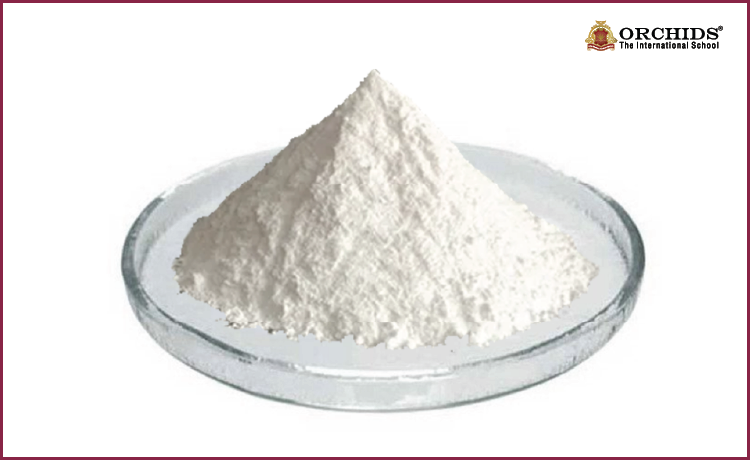
It occurs naturally in minerals such as gibbsite. How aluminium hydroxide is used in various products we see every day, as medicines, flame-retardants and as a filler in many other formats.
Understanding Aluminium and the Structure of Aluminium Hydroxide
To fully learn about the aluminium hydroxide, we need to start with aluminium itself - a light, silvery metal known for its strength and resistance to corrosion. When aluminium comes into contact with moisture or air, it forms a protective layer, often in the form of aluminium hydroxide.
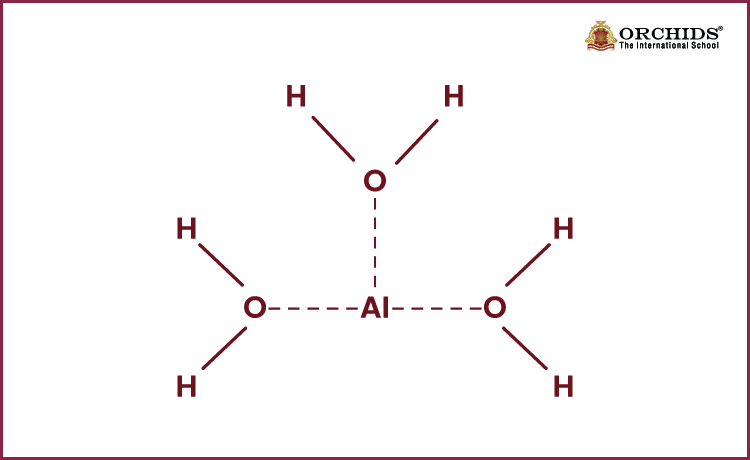
Now, Al(OH)₃ has a layered structure typical of many metal hydroxides. Imagine it as double layers of hydroxyl (OH⁻) groups, with aluminium ions neatly packed in between.
-
These aluminium ions settle into two-thirds of the octahedral spaces - the small, six-sided cavities formed between the hydroxide layers.
-
These hydrogen bonds help keep the structure stable, giving the compound its unique physical and chemical behaviour.
One naturally occurring form of aluminium hydroxide is gibbsite. Gibbsite has an amphoteric nature, which means it can react with both acids and bases:
- As a Brønsted-Lowry base, when reacting with acids (such as hydrochloric acid), it gains a hydrogen ion, creating salts and water:
- It can also react with bases, such as hydroxide ions, as a Lewis acid, with the substance accepting a pair of electrons:
As such, aluminium hydroxide is versatile with both acid and base reactions.
Properties of Aluminium Hydroxide
Aluminium hydroxide contains both physical and chemical properties that meet different industrial and pharmaceutical contexts. Here are the distinguishing properties:
|
Property |
Details |
|
Physical Characteristics |
White, inert powder with a soft, chalky feel, similar to talcum powder |
|
Water Solubility |
Insoluble in water, but dissolves easily in acids and strong bases |
|
Amphoteric Nature |
Acts as both an acid and a base depending on the environment |
|
Stability |
Chemically and thermally stable under normal conditions |
|
Density |
Approximately 2.42 g/cm³ |
|
Thermal Decomposition |
Breaks down into aluminium oxide and water when heated |
|
pH Level |
Slightly basic when suspended in water |
These characteristics help to understand why aluminium hydroxide is often used for thermal stability, safety, and chemical resistance.
How is Aluminium Hydroxide Made?
Commercial aluminium hydroxide is primarily produced using the Bayer process, the most common way to extract aluminium from bauxite ore.
The Bayer Process – Step by Step:
- Digestion:
Bauxite ore is mixed with hot sodium hydroxide (up to 270°C), which dissolves the aluminium compounds:
- Separation:
Residual impurities are filtered from the sodium aluminate solution which is cooled. - Precipitation:
Aluminium hydroxide will crystallise out:
- Calcination (for Alumina):
If required, the aluminium hydroxide is now heated to drive off water and convert to aluminium oxide (Al₂O₃):
This process will ensure industrial-grade high-purity aluminium hydroxide that can be used for anything from pharmaceuticals to ceramics.
Common Uses of Aluminium Hydroxide
You might not see it, but aluminium hydroxide is everywhere - quietly working in the background. Here's how it's used across different fields:
-
Relieves heartburn and indigestion by neutralising stomach acid
-
Slows down combustion in plastics by releasing water when heated
-
Used in pharmaceutical formulations for controlled drug delivery
-
Helps to clean up impurities by forming clumps for easier filtration
-
The primary raw material in the manufacture of porous aluminium oxide
-
Can wax soft materials such as plastics without damaging them
-
Improve thermal shock resistance for glass items
Health Risks of Aluminium Hydroxide
Aluminium hydroxide is harmless when used correctly. But, like every chemical, if it is used incorrectly or ingested in high levels, it could cause problems, especially in industrial environments.
-
Eye, Skin or Respiratory Tract Irritation: Some eye, skin or respiratory tract irritation/discomfort may arise after long exposure to aluminium hydroxide dry powder.
-
Too high dosing (consumers): Ingesting too much aluminium hydroxide (for example, overuse of antacids) may have some effect on constipation or uptake of nutrients.
Quick Tricks to Learn Aluminium Hydroxide
-
Link aluminium (from foil) and hydroxide (from antacids) to recall its everyday uses.
-
Imagine layers of aluminium ions between hydroxide layers - like a chemical sandwich!
-
It reacts with both acids and bases. Just remember: it plays on both teams!
-
Learn the steps with D-S-P-C - Digestion, Separation, Precipitation, Calcination.
Conclusion
Aluminium hydroxide may seem like just a simple white powder, but it’s no ordinary item. It resides in our homes, hospitals, and factories. This detailing of the topic will help you to better understand chemistry.
Frequently Asked Questions on Aluminium Hydroxide
1. What is Aluminium Hydroxide?
Aluminium Hydroxide is a white, powdery compound often used in medicines and fire retardants. It naturally occurs in minerals like gibbsite and has both acidic and basic properties, making it amphoteric in nature.
2. What is the chemical formula of aluminium trihydroxide?
The chemical formula for aluminium trihydroxide is Al(OH)₃. This simple formula represents a compound where one aluminium atom is bonded to three hydroxide groups.
3. How is Aluminium Hydroxide produced?
Aluminium Hydroxide is commonly produced using the Bayer process, where bauxite ore is treated with sodium hydroxide, eventually yielding Al(OH)₃ as a precipitate. At Orchids International School, students learn such real-world processes through engaging and practical chemistry lessons.
4. What is the importance of aluminium hydroxide?
Aluminium hydroxide plays a vital role in medicine as an antacid and in industries as a flame retardant and water-purifying agent.
5. Is aluminium hydroxide safe for the kidneys?
In small, prescribed doses, aluminium hydroxide is generally safe. However, people with kidney problems should consult a doctor, as excess aluminium can build up in the body.
6. Is aluminium hydroxide safe on the skin?
Yes, it is commonly used in cosmetics and skincare products. When used in appropriate amounts, it is safe and helps improve product texture and function.
Science isn't just a subject, it's the way of seeing the world. Curious how Orchids The International School teaches it that way? Talk to our admissions team.
Admissions Open for 2026-27
What type of concept pages would you prefer?
CBSE Schools In Popular Cities
- CBSE Schools in Bangalore
- CBSE Schools in Mumbai
- CBSE Schools in Pune
- CBSE Schools in Hyderabad
- CBSE Schools in Chennai
- CBSE Schools in Gurgaon
- CBSE Schools in Kolkata
- CBSE Schools in Indore
- CBSE Schools in Sonipat
- CBSE Schools in Delhi
- CBSE Schools in Rohtak
- CBSE Schools in Bhopal
- CBSE Schools in Aurangabad
- CBSE Schools in Jabalpur
- CBSE Schools in Jaipur
- CBSE Schools in Jodhpur
- CBSE Schools in Nagpur
- CBSE Schools in Ahmednagar
- CBSE School In Tumkur











Orchids The International School is one of India's leading chains of CBSE and ICSE schools, with 110+ schools across the country.