

Atoms and Molecules
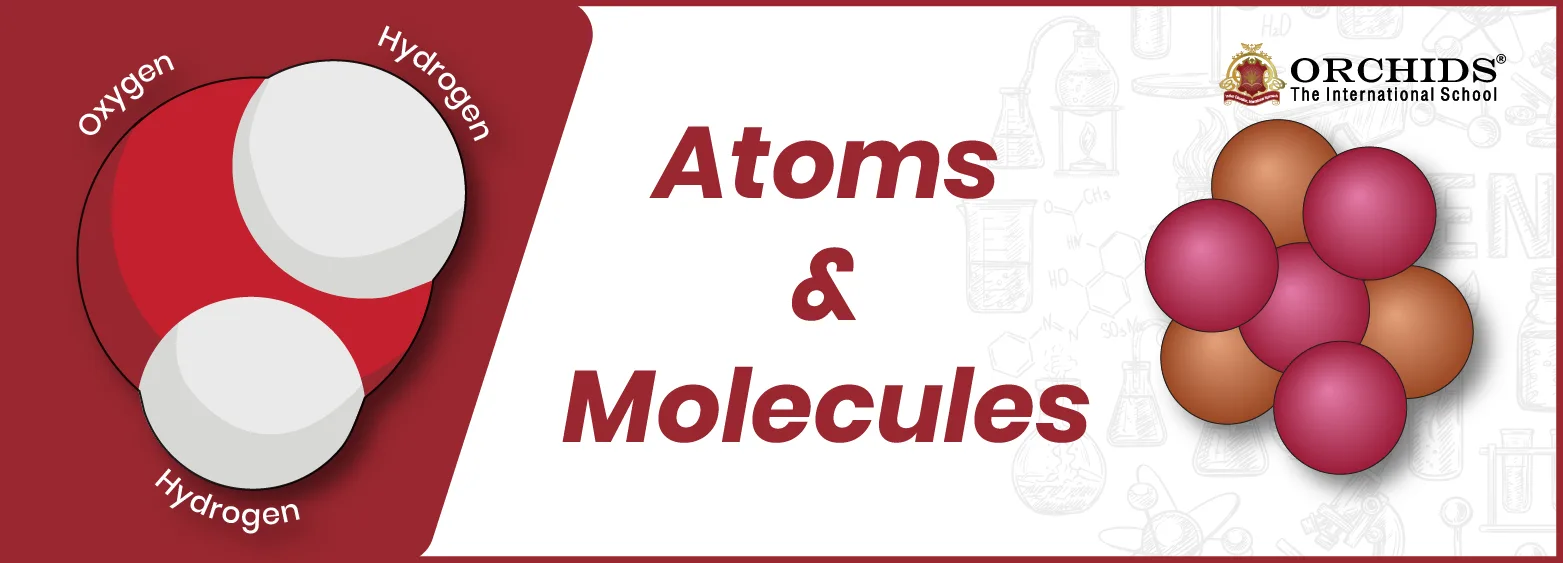
Atoms and Molecules; Everything around us in the world we occupy comes from atoms and molecules, including the air we breathe, the water we drink, and ourselves as objects. These building blocks of matter signal how everything is made. By knowing how they work, we can better understand the chemical world in which we live. This page will try to simplify the concepts behind atoms and molecules so you will be able to appreciate them.
Table of Contents
- About Atoms
- Understanding Atomic Size
- About Molecules
- Understanding Molecules with Examples
- An Overview of Dalton's Atomic Theory
- Interactions Between Atoms and Molecules
About Atoms
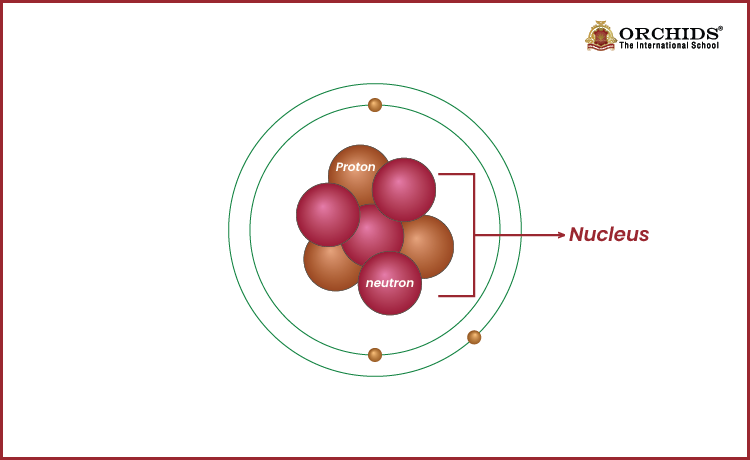
Atoms are the basic building blocks of matter. They are the smallest units of an element that retain the properties of that element. An atom consists of a central nucleus made up of protons and neutrons, surrounded by electrons in orbitals.

Understanding Atomic Size
An atom is very small, often measured in nanometers. An atom's size depends on the element and how electrons are arranged around the nucleus.
An atom's size cannot be measured with a ruler; scientists determine it based on the distance between the centres of two adjacent atoms. By taking half of that distance, we can estimate the atomic radius, which gives one a reasonable feel for how large an atom may be, the size and arrangement of the atoms that defines many properties of materials.
Atomic size is usually expressed in nanometres (nm), which is appropriate for the scale of atoms.
1 m = 10⁹ nm
Atoms vary in size depending on their atomic number and the number of shells of electrons surrounding the nucleus of the atom. Hydrogen is one of the smallest atoms, while caesium is one of the bigger atoms.
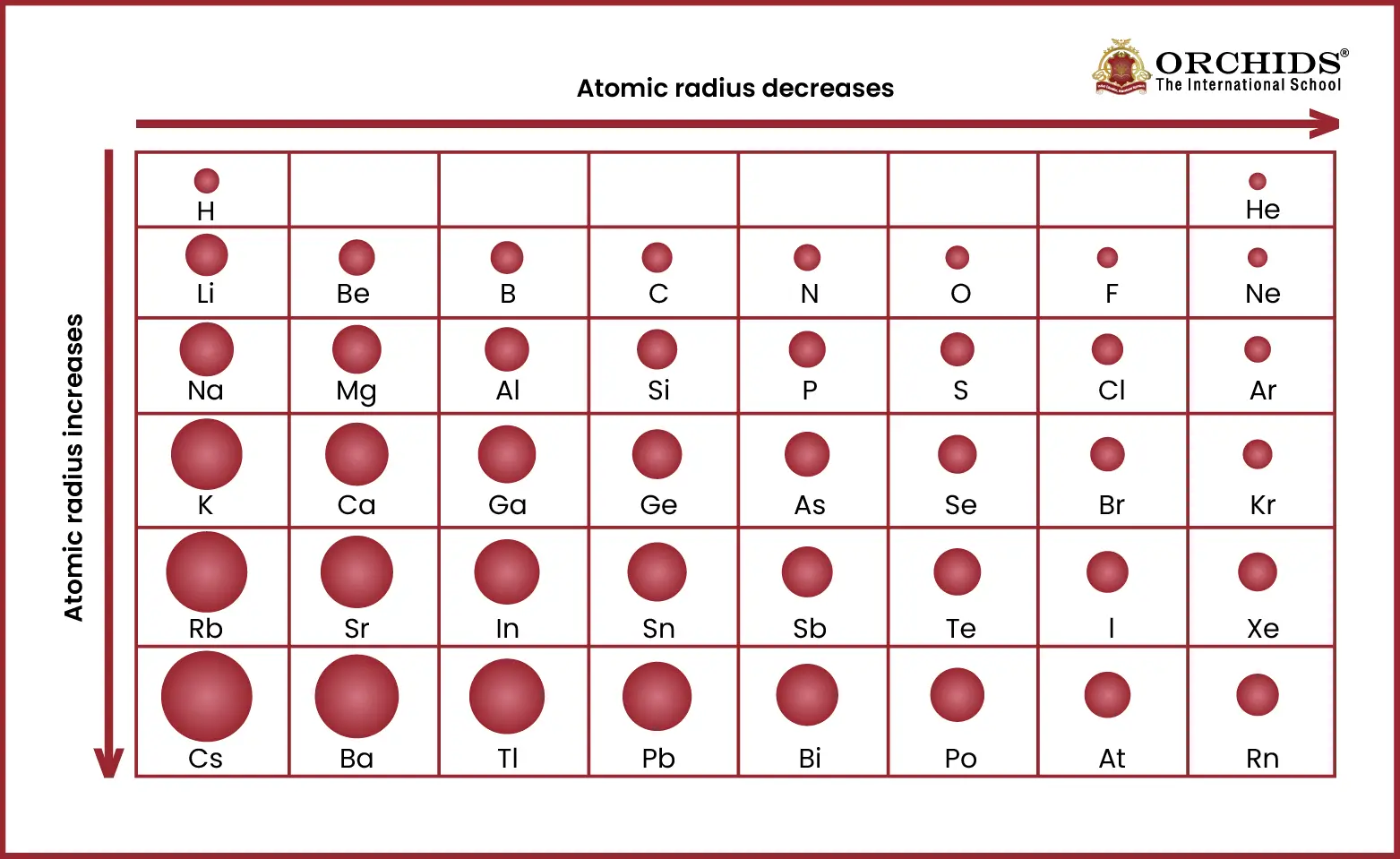
Knowing relative sizes of atoms helps in estimating how atoms might bond and react.
An Atom's Parts
An atom consists of three parts:
- Protons (positive charge)
- Neutrons (neutral)
- Electrons (negative charge)
The protons and neutrons form the nucleus which is dense. The electrons orbit around the nucleus in energy levels.
Now, Atomic mass is the total mass of an atom. To calculate atomic mass you add the number of protons and neutrons in the nucleus together. The mass of electrons is relatively insignificant because it is so small.
Atomic mass indicates the element and is useful for predicting the behavior of elements in chemical reactions.
About Molecules
A molecule is a bunch of two or more atoms that are chemically bonded. Molecules can be made up of the same type of atom, like O₂ (oxygen) or different atoms, like H₂O (water).
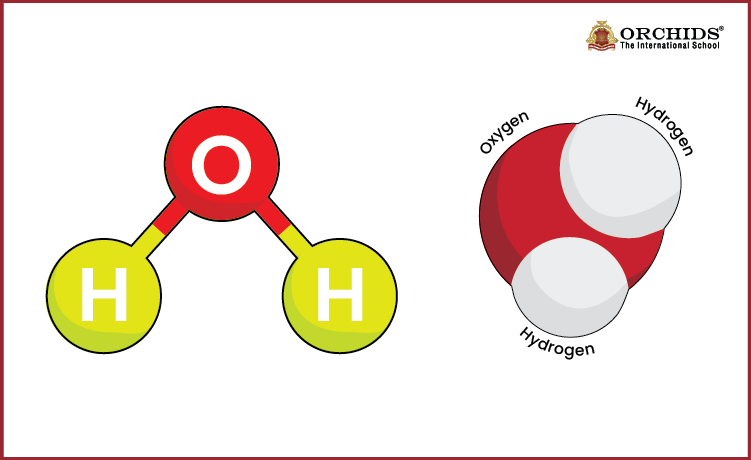
Molecules are the smallest units of a substance that still have the substance's chemical properties.
Understanding Molecules with Examples
Molecules are formed when atoms bond together. These bonds can be between atoms of the same element or different elements. Examples include:
- O₂:A molecule of oxygen gas
- CO₂: A molecule of carbon dioxide
- H₂O: A water molecule
Molecules are responsible for the chemical nature and reactions of substances.
An Overview of Dalton's Atomic Theory
In the early 1800s, John Dalton proposed a theory explaining the nature of matter. Dalton's theory has the following points:
- All matter is made of atoms.
- Atoms are indivisible and cannot be destroyed.
- Atoms of a given element are identical to each other in mass and properties.
- Atoms combine together in fixed ratios to form compounds.
Dalton's theory has since been amended, but it is the basis for atomic theory today.
Interactions Between Atoms and Molecules
Atoms and molecules always interact in many different ways. Ionic or covalent bonding, attraction, and repulsion are all examples of interactions. The atoms and molecules found in substances contain all of the properties that contribute to the physical and chemical properties of that substance.
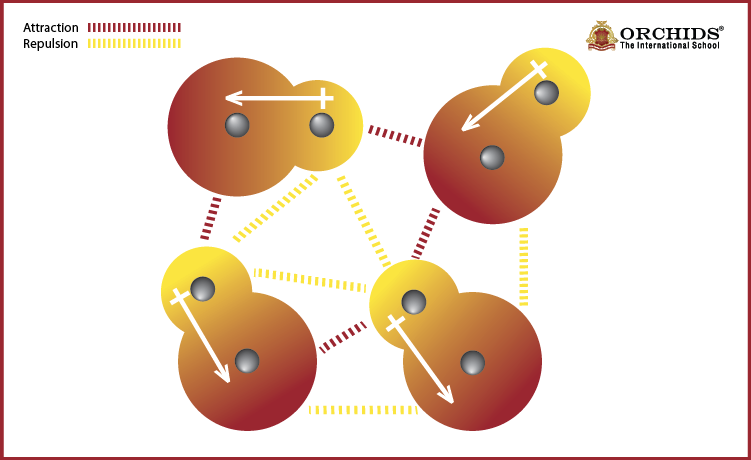
Atoms and molecules rarely "float around" on their own as they are constantly interacting with one another.
Interactions can be broadly classified as
- intramolecular (inside a molecule)
- intermolecular (between molecules).
For example, water is formed when many water molecules stick together in a way known as hydrogen bonding, and those bonds are what provide water with its unique physical and chemical properties.
As we have learned,Atoms and molecules are very small, but they have a tremendous influence on everything around us. They determine how substances will form, and drive the chemical reactions that sustain life. Sodium chloride is the chemical structure that describes table salt.
Frequently Asked Questions on Atoms and Molecules
1. What are the most important topics of atoms and molecules?
The key areas to focus on include atomic structure, types of molecules, chemical bonding, and how atoms combine to form matter.
2. What are the rules about molecules and atoms?
Atoms combine in specific ways to form molecules, always following set rules like the conservation of mass and fixed composition.
3. What is the importance of atoms and molecules?
Atoms and molecules are the tiny building blocks of everything from the air we breathe to the clothes we wear and the food we eat.
4. What is the role of atoms and molecules in daily life?
They play a role in everything, whether it’s water boiling, iron rusting, or even how we digest food; atoms and molecules are behind it all.
5. How do atoms and molecules affect chemical reactions?
Chemical reactions are just atoms being rearranged or shared between molecules to form something completely new.
6. Can atoms exist alone, or do they always form molecules?
Most atoms like to stay bonded in molecules, but a few, like noble gases, are stable enough to exist on their own.
7. What is an atom and molecule?
An atom is the smallest unit of matter that retains the properties of an element. A molecule is made when two or more atoms chemically bond together to form a single unit.
8. What is the difference between an atom and a molecule?
An atom is a single particle, while a molecule is a group of atoms joined together. Molecules can be simple, like O₂ or complex, like glucose (C₆H₁₂O₆).
9. How are atoms and molecules different?
Atoms are single units of elements, and molecules are collections of atoms connected by chemical bonds. Molecules can represent elements (O₂) or compounds (H₂O).
10. What are an atom, molecule, element, and compound?
An atom is the basic unit of an element, a molecule is two or more atoms bonded, an element is made of the same kind of atoms, and a compound is made of different atoms chemically combined.
11. Can a molecule consist of the same type of atoms?
Yes, molecules like O₂ or N₂ are made of the same kind of atoms, and they are called elemental molecules.
12. Are all molecules compounds?
No, not all molecules are compounds. Only molecules with two or more different types of atoms are considered compounds, like H₂O or CO₂.
13. Why are molecules important in chemistry?
Molecules determine the chemical and physical properties of substances. They form the basis of reactions, materials, and life itself.
Science isn't just a subject, it's the way of seeing the world. Curious how Orchids The International School teaches it that way? Talk to our admissions team.
Admissions Open for 2026-27
What type of concept pages would you prefer?
CBSE Schools In Popular Cities
- CBSE Schools in Bangalore
- CBSE Schools in Mumbai
- CBSE Schools in Pune
- CBSE Schools in Hyderabad
- CBSE Schools in Chennai
- CBSE Schools in Gurgaon
- CBSE Schools in Kolkata
- CBSE Schools in Indore
- CBSE Schools in Sonipat
- CBSE Schools in Delhi
- CBSE Schools in Rohtak
- CBSE Schools in Bhopal
- CBSE Schools in Aurangabad
- CBSE Schools in Jabalpur
- CBSE Schools in Jaipur
- CBSE Schools in Jodhpur
- CBSE Schools in Nagpur
- CBSE Schools in Ahmednagar
- CBSE School In Tumkur











Orchids The International School is one of India's leading chains of CBSE and ICSE schools, with 110+ schools across the country.