

Atomic radius in the Periodic Table in Basic Chemistry
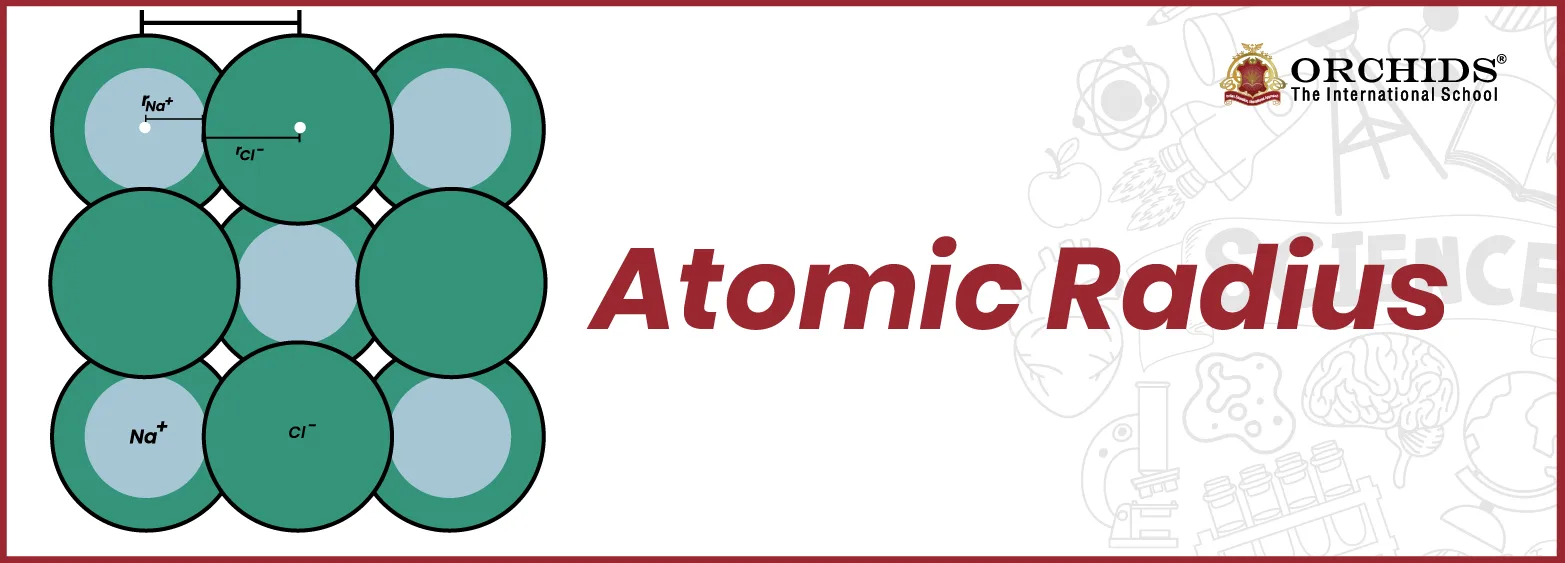
Atomic Radius, When we refer to atoms, one thing comes to mind: how large are they? As atoms lack definite boundaries, scientists refer to the concept of atomic radius to express their size. The atomic radius informs us about an approximate distance between the nucleus and the valence electron, enabling us to know about bonding, reactivity, and periodic trends.
This article is to discuss the various types of atomic radii, how they are measured, and why they are so important in chemistry.
Table of Contents
- Atomic Radius in Chemistry
- Types of Atomic Radius
- Periodic Trends of Atomic Radius
- Significance of Atomic Radius
- Frequently Asked Questions on Causes of Atomic radius in the Periodic Table in Basic Chemistry

Atomic Radius in Chemistry
Atomic radius is something that we usually picture as small balls of matter. But ever thought about how large an atom is? Chemists and physicists refer to the size of an atom using the term atomic radius.
As atoms lack definite physical edges like a marble or a football, it is not very easy to measure their size. Rather, scientists term atomic radius as the average distance from an atom's nucleus to its outermost electron shell.
It is typically measured in picometers (pm) or angstroms (Å), where
Atomic radius is a significant term in chemistry since it enables us to comprehend how atoms are bonded, how they interact with each other, and how their properties vary along the periodic table.
Types of Atomic Radius
Because the edge of an atom is not distinct and electrons inhabit clouds, the atomic radius can never be directly measured.
Rather, it is calculated depending on the kind of bond or atomic interaction.
1. Covalent Radius
Covalent radius is half of the distance between the nuclei of two identical atoms joined by one covalent bond.
For example, in a molecule of chlorine (Cl₂), the separation between two chlorine nuclei is approximately 198 pm. Thus, the covalent radius of chlorine is:
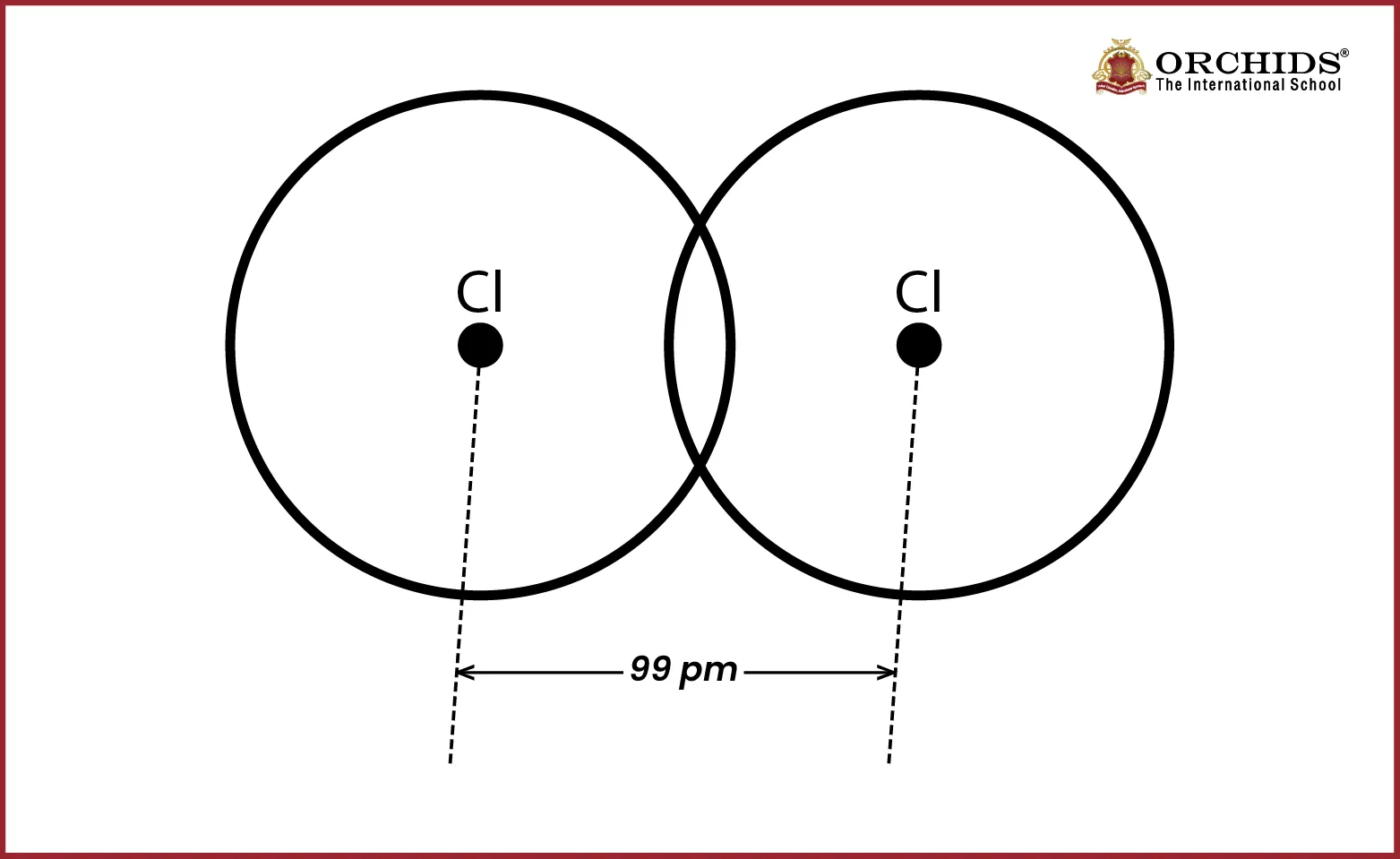
Covalent radius of Cl=1982=99 pm Covalent radius of Cl=2198=99pm
Such a radius is primarily applied to covalently bonded molecules and nonmetals.
2. Ionic Radius
As soon as an atom becomes an ion, its size changes. This is referred to as the ionic radius.
Let's take an example of NaCl
Na⁺ (cation) has a smaller radius than neutral sodium. The anion Cl⁻ has a greater radius than neutral chlorine.
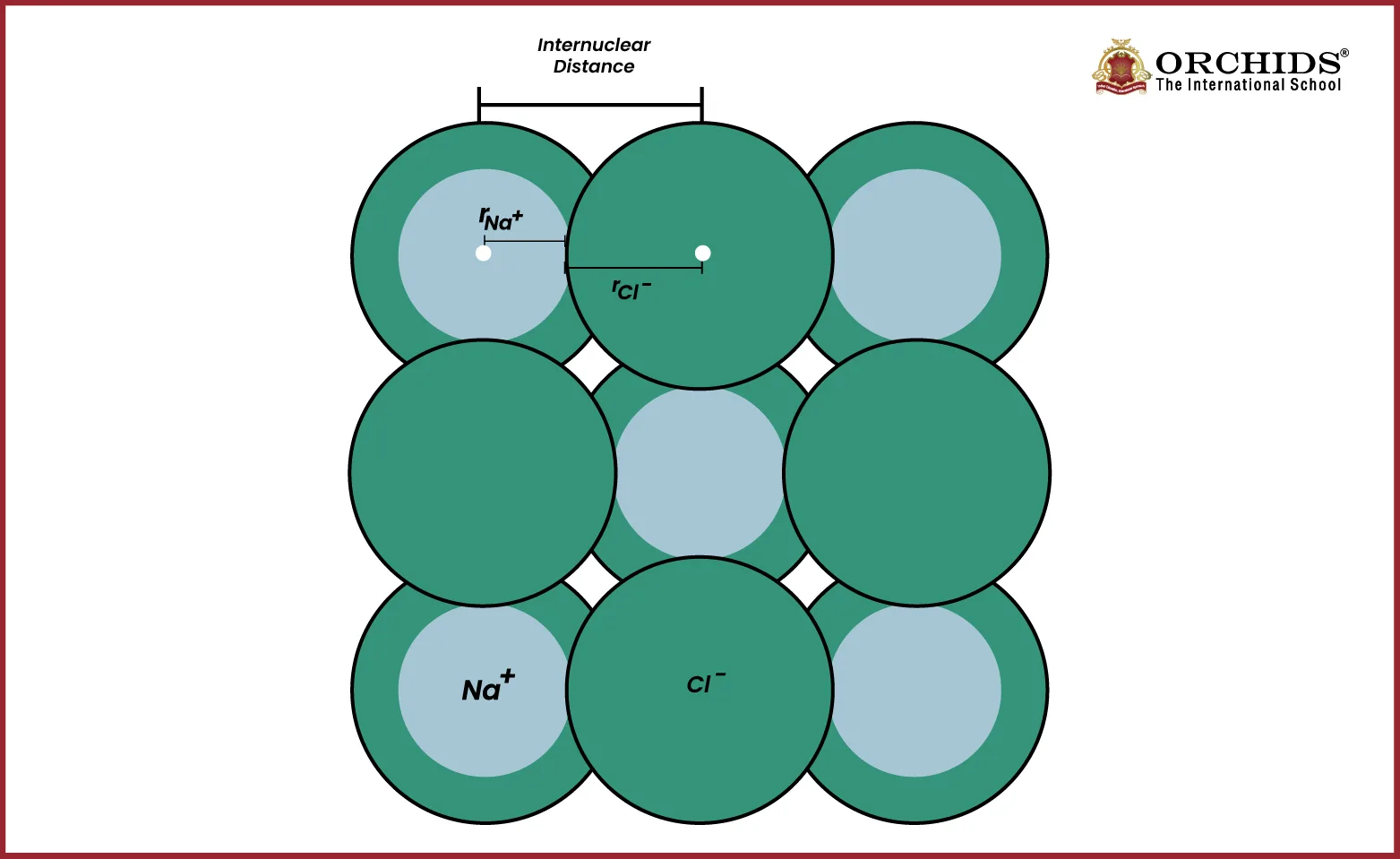
- Cations (positive ions) are formed when an atom loses some or all of its electrons; the nuclear attraction for the remaining electrons is greater; thus, the ion is smaller than the neutral atom.
- Anions (negative ions) are formed when an atom picks up additional electrons; the electrons push each other away from each other, and the atom gets bigger, thus the ion is larger than the neutral atom.
Therefore, ionic radii are charge and number of electrons gained or lost dependent.
3. Metallic Radius
Atoms in metals are packed together and possess a "sea of electrons." A metallic radius is half the distance between the two adjacent nuclei of the atoms in a metallic lattice.
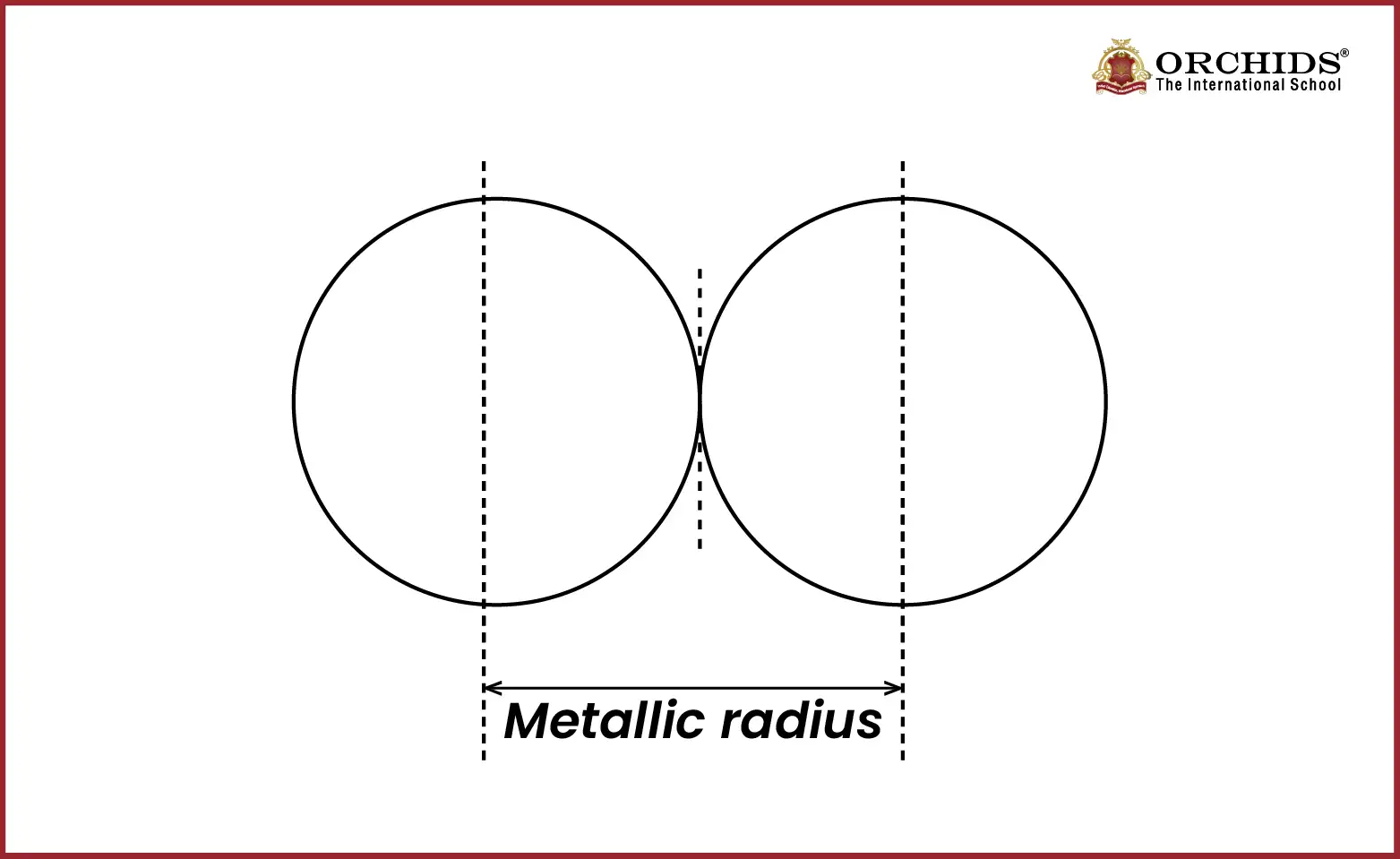
- For example, in a copper crystal, the separation between two copper atoms is approximately 256 pm, thus the metallic radius of copper is:
Metallic radius of Cu=2562=128 pm Metallic radius of Cu=2256=128pm
Metallic radii are generally greater than covalent radii due to metallic bonding involving delocalised electrons.
4. Van der Waals Radius
The Van der Waals radius is the half-distance between two of the same non-bonded atoms that are closely held together by weak Van der Waals forces.
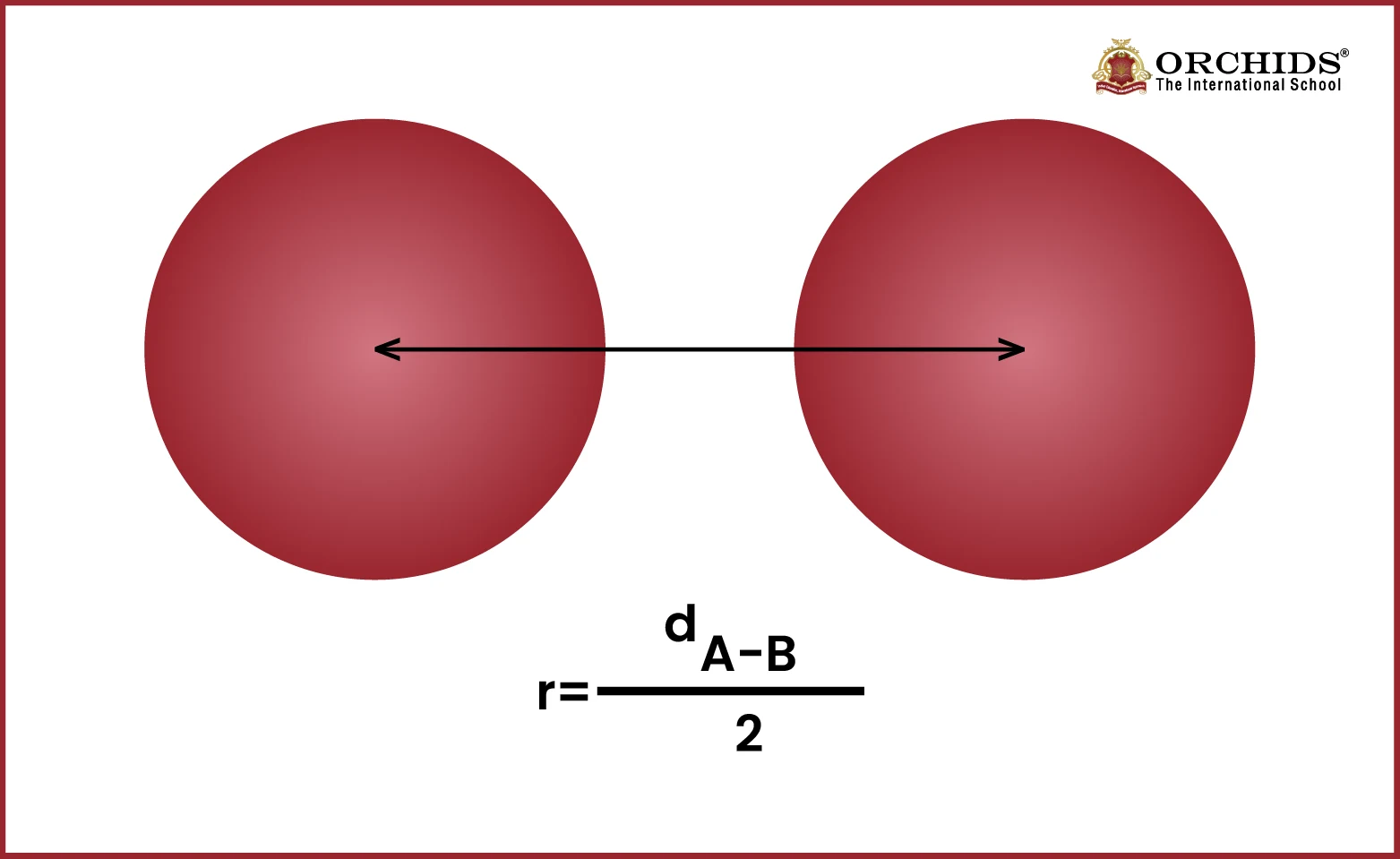
It is generally greater than the covalent radius, because here, atoms are not being shared; they are simply loosely bound.
For instance, the Van der Waals radius of chlorine is 180 pm, which is much greater than its covalent radius of 99 pm.
Periodic Trends of Atomic Radius
The atomic radius exhibits regular changes within periods and groups of the periodic table. It is easier to explain chemical properties by knowing these trends.
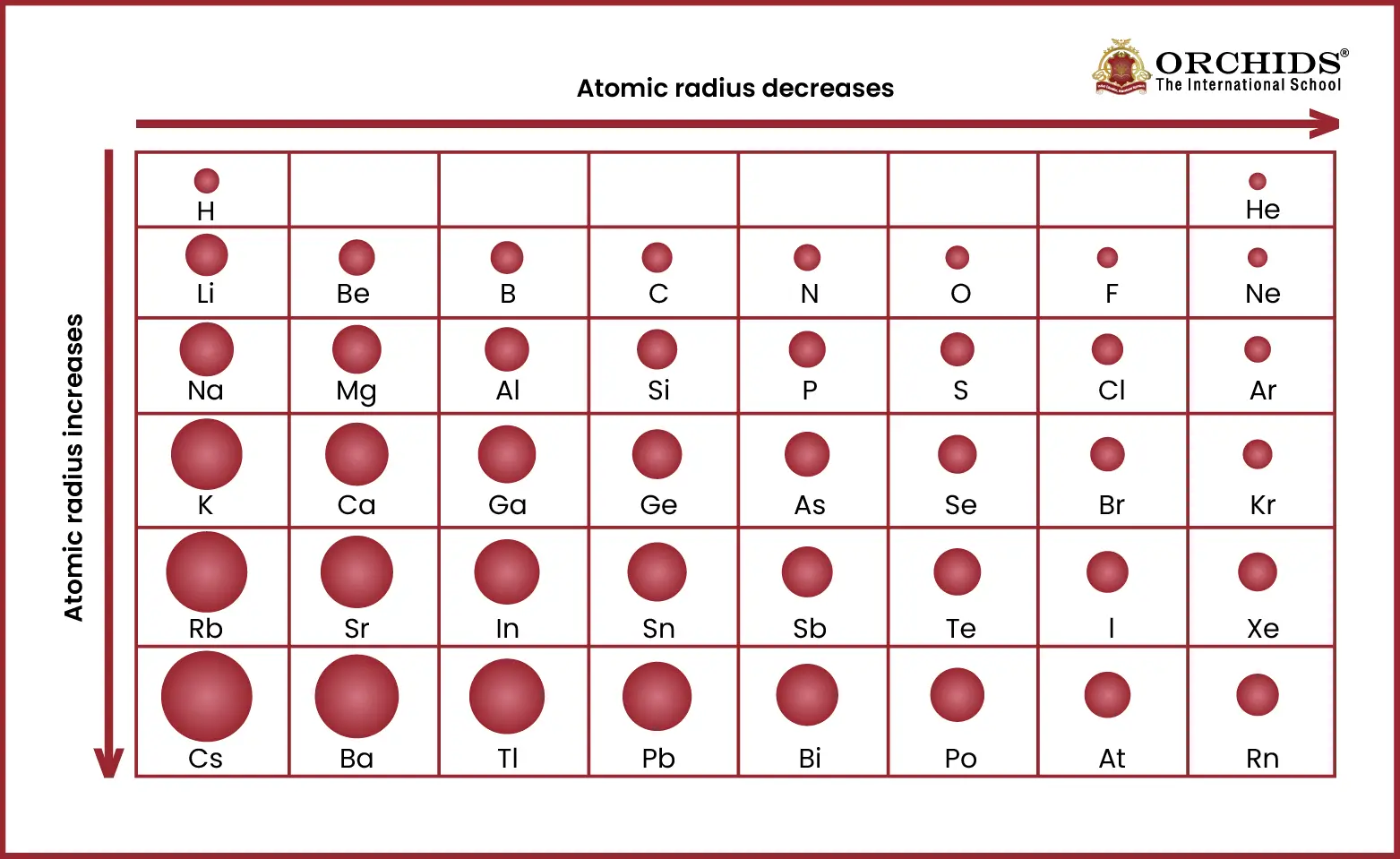
-
Across a Period (Left to Right)
Atomic radius decreases when we go from left to right across a period.
But Why and How?
In each step, one proton is added to the nucleus (nuclear charge increases) and one electron is added to the same shell.
This means that it is the increased pull of the nucleus that pulls electrons in closer, making the atom smaller.
For Example:
Atomic radius of Na (186 pm) > Mg (160 pm) > Al (143 pm) Atomic radius of Na (186 pm) > Mg (160 pm) > Al (143 pm)
-
Down a Group (Top to Bottom)
Atomic radius is greater as we go down a group.
But Why and How?
Each time, a new electron shell is added, thereby making the distance between the nucleus and the outermost electrons greater. Although the nuclear charge rises, its impact is overpowered by the rise in shell size.
For Example:
Atomic radius of Li (152 pm) < Na (186 pm) < K (227 pm) Atomic radius of Li (152 pm) < Na (186 pm) < K (227 pm)
Significance of Atomic Radius
- It predicts bond length in molecules.
- It explains the reactivity of elements (e.g., fluorine as a smaller atom is more reactive) in a short reactivity series of elements.
- It determines ionic and covalent bond strength.
- It plays a vital role in periodic properties such as ionisation energy, electronegativity, and metallic character.
As learned, atomic radius might sound like a tiny point, but it is the key to realising why elements bond, react, and behave as they do throughout the periodic table. By examining its types and trends, we can make predictions about properties such as bond lengths, reactivity, and even chemical stability.
Frequently Asked Questions on Causes of Atomic radius in the Periodic Table in Basic Chemistry
1. What is the atomic radius in the periodic table in basic chemistry?
In simple terms, the atomic radius in the periodic table is the distance from an atom’s nucleus to the outermost electron. It helps explain why atoms become smaller as you move across a period and larger as you go down a group.
2. What is atomic radius?
Atomic radius is the measure of how big an atom is. It’s found by looking at the space between the nucleus and the farthest electron in the cloud around it.
3. What are the atomic radius types?
There are different atomic radius types like covalent, metallic, van der Waals, and ionic. Each one is measured depending on how the atom is bonded or interacts with others.
4. What factors can affect atomic radius?
The size of an atom can change depending on the nuclear charge, the number of electron shells, and electron shielding. More shells make atoms larger, while a stronger nucleus pulls electrons in more tightly, making them smaller.
5. What is the application of atomic radius?
Atomic radius is useful for predicting how atoms bond, their reactivity, and the structure of materials. It’s widely applied in chemistry, materials science, and even drug design.
6. Why do we measure atomic radius?
Measuring atomic radius helps us understand how atoms behave in reactions and compounds. It’s also key to comparing elements and identifying periodic trends in chemistry.
Science isn't just a subject, it's the way of seeing the world. Curious how Orchids The International School teaches it that way? Talk to our admissions team.
Admissions Open for 2026-27
What type of concept pages would you prefer?
CBSE Schools In Popular Cities
- CBSE Schools in Bangalore
- CBSE Schools in Mumbai
- CBSE Schools in Pune
- CBSE Schools in Hyderabad
- CBSE Schools in Chennai
- CBSE Schools in Gurgaon
- CBSE Schools in Kolkata
- CBSE Schools in Indore
- CBSE Schools in Sonipat
- CBSE Schools in Delhi
- CBSE Schools in Rohtak
- CBSE Schools in Bhopal
- CBSE Schools in Aurangabad
- CBSE Schools in Jabalpur
- CBSE Schools in Jaipur
- CBSE Schools in Jodhpur
- CBSE Schools in Nagpur
- CBSE Schools in Ahmednagar
- CBSE School In Tumkur











Orchids The International School is one of India's leading chains of CBSE and ICSE schools, with 110+ schools across the country.