

Amino Acids Chain
Amino acid chains are small molecules that play a huge role in keeping our bodies healthy. They are the building blocks of proteins, which are essential for growth, tissue repair, and many vital processes. Importantly, some amino acids are made naturally in our bodies, while others must come from the food we eat.
This article focuses on different types of amino acids, their roles in the body, and why they are vital for life, explained in simple terms.
Table of Contents
- What is an Amino Acid Chain?
- Types of Amino Acids
- Branched-Chain Amino Acids (BCAAs) (Overview)
- Frequently Asked Questions

What an Amino Acid Chains?
An amino acid chain is a sequence of amino acids linked together through peptide bonds. These chains fold into specific shapes to form proteins, which perform almost all tasks in the body. Isn't it great? And also interestingly, these Proteins can be simple (made of a single chain) or complex (multiple chains).
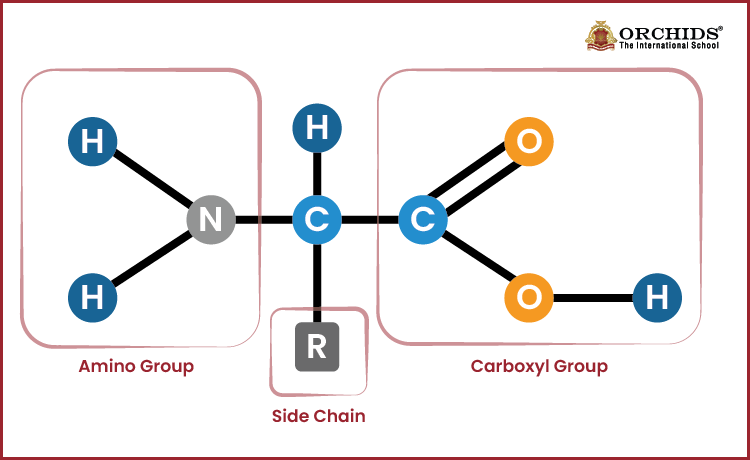
The fact that each amino acid structure has three main parts:
-
Amino group
-
Carboxyl group
-
Side chain R, which makes each amino acid unique
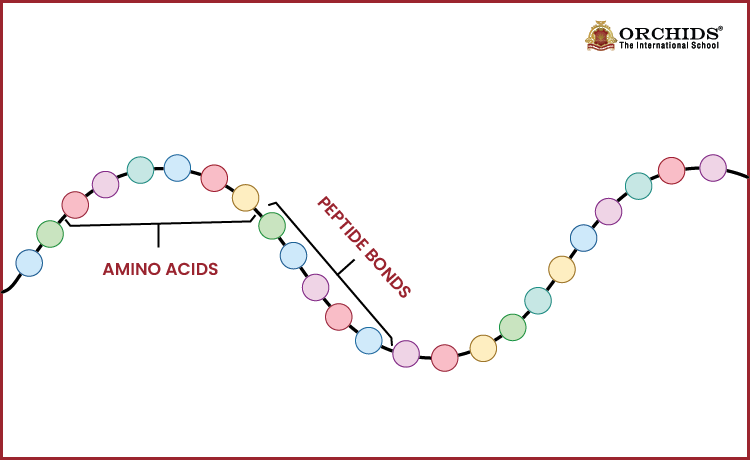
Its General formula is represented by:
When two amino acids join, a peptide bond forms, and water is released:
Do you know? Proteins are chains of hundreds or thousands of amino acids, and their sequence determines the protein’s structure and function.
Let's take an example of haemoglobin, which carries oxygen in blood, and is made of four amino acid chains folded precisely.
Next is let's understand how the Peptide Bonds and Protein Folding take place?
A peptide bond is a chemical bond formed between the amino group of one amino acid and the carboxyl group of another. These bonds create long chains called polypeptides.
Example formula for a peptide bond:
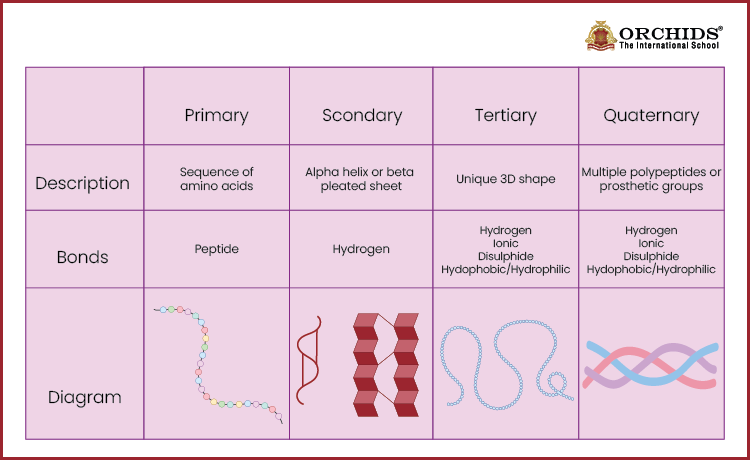
After forming, the chain folds into specific shapes due to interactions between side chains:
-
Primary structure is the Sequence of amino acids
-
Secondary structure is the Alpha-helix or beta-sheet folding
-
Tertiary structure is 3D folding into a functional shape
-
Quaternary structure has Multiple polypeptides joined
This folding is critical. Even one wrong amino acid can cause disorders like sickle-cell anaemia.
Below is the comparison for the following protein structures:
Types of Amino Acids
Amino acids are classified by the position of the amino group and the structure of the carbon chain.
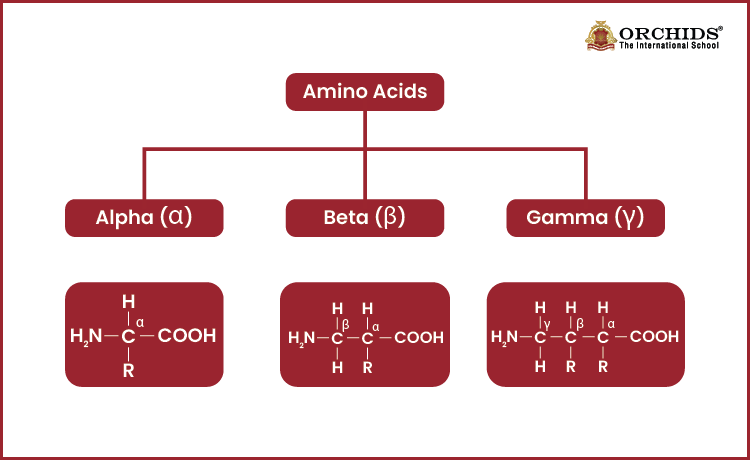
Alpha-Amino Acid
-
An amino group is attached to the alpha carbon (next to the carboxyl group).
-
Most proteins are made of alpha-amino acids.
-
Formula:
-
Examples: Glycine, Alanine
-
Role: It forms most enzymes, hormones, and structural proteins like keratin in hair and nails
Beta-Amino Acid
-
An amino group is attached to the beta carbon (one carbon away from the carboxyl group).
-
Formula:
-
Examples: Lysine, Arginine
-
Role: It helps in growth, immune function, and neurotransmitter production
Gamma-Amino Acid
-
An amino group is attached to the gamma carbon (two carbons away from the carboxyl).
-
Formula:
-
Examples: 2-Aminobutyric acid and aminobutyric acid an important neurotransmitters
-
Role: It helps brain function, reduces stress, and regulates nerve signals
Delta-Amino Acid
A delta-amino acid is an amino acid in which the amino (−NH₂) group is attached to the delta (δ) carbon, the fourth carbon away from the carboxylic acid group.
The general molecular formula of a delta-amino acid can be represented as:
Delta-amino acids are categorised according to the position of the amino group in the Fischer projection:
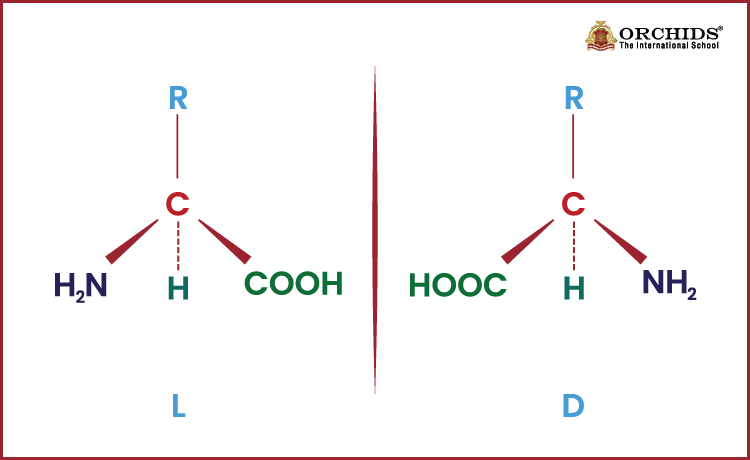
-
L-Amino Acid
-
D-Amino Acid
L-Amino Acid
In the Fischer projection, an L-amino acid has the amino group positioned on the left-hand side, with the carboxylic acid group at the top and the remaining carbon chain extending downward.
-
These amino acids are levorotatory, meaning they rotate plane-polarised light counterclockwise.
-
L-amino acids are commonly used by cells to build proteins.
-
Modern nomenclature often uses R/S notation, but L/D notation is still widely used in biology.
D-Amino Acid
A D-amino acid has the amino group positioned on the right-hand side in the Fischer projection, with the carboxylic acid group on top and the carbon chain at the bottom.
-
These amino acids are dextrorotatory, meaning they rotate plane-polarised light clockwise.
-
The fact that D-amino acids are less common in proteins but are found in bacterial cell walls and some antibiotics.
-
They are also described using S/R notation in modern stereochemistry.
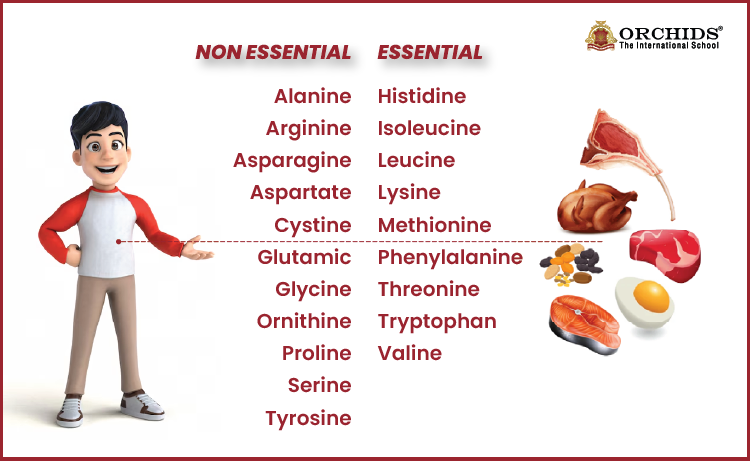
Amino acids can also be classified by whether the body can synthesise them:
Essential vs Non-Essential Amino Acids
- Essential Amino Acids
-
It cannot be made by the body, and must be taken through diet
-
Role: It builds muscles, repairs tissues, and produces neurotransmitters
-
Common Examples: Histidine, Leucine, Lysine, Threonine, Methionine, Isoleucine, Tryptophan, Phenylalanine, Valine
- Non-Essential Amino Acids
-
It can be produced naturally by the body
-
Role: Detoxification, immune support, brain health, and energy
- Examples: Alanine, Arginine, Asparagine, Aspartic Acid, Cysteine, Glutamic Acid, Glutamine, Glycine, Proline, Serine, Tyrosine
But what Functions are of Amino Acids?
-
Protein Synthesis helps in building muscles, tissues, enzymes, and hormones
-
It really helps in curing Tissue Repair, healing wounds, and maintaining body organs
-
It acts as a Nitrogen Storage to keep nitrogen balanced for metabolism
-
It has a major contribution to Energy Production as it can convert into glucose during fasting
-
In Detoxification, it helps in removing toxins from the body
Deficiency Effects: Fatigue, slow growth, weak immunity, anaemia, insomnia, poor concentration
Do you know that, unlike open-chain amino acids, there are branched-chain amino acids which are important in serving biological needs Let's see how?
Branched Chain Amino Acids (BCAAs) (Overview)
Branched Chain Amino Acids (BCAAs) are essential amino acids that include Leucine, Isoleucine, and Valine. Their side chains have a branched structure, which makes them unique.
BCAAs are primarily utilised by muscles for energy, aid in building and repairing muscle tissue, and can help reduce fatigue during physical activity.
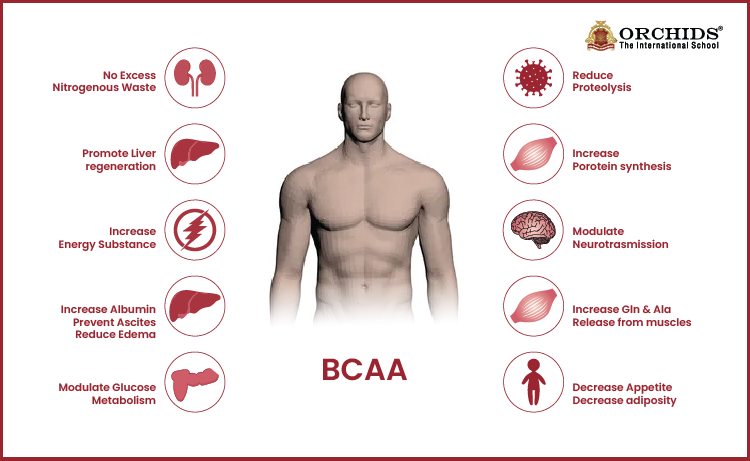
The fact that the body cannot produce them, they must be obtained from protein-rich foods like eggs, meat, dairy, legumes, and nuts.
BCAAs are especially important for growth, exercise, and overall muscle health.
We learned that amino acid chains, or polypeptides, are the building blocks of proteins. They are formed when amino acids link through peptide bonds, and their sequence determines a protein’s structure and function. Even small changes in the chain can significantly affect biological activity, highlighting their central role in life’s processes.
Frequently Asked Questions
1. What is the most powerful amino acid?
Leucine is often considered the most powerful because it triggers muscle growth and protein synthesis in the body.
2. What are Amino Acid Chains?
An amino acid chain is a series of amino acids linked by peptide bonds, which fold to form proteins that perform vital functions.
3. What are Branched Amino Acid chains?
BCAAsLeucine, Isoleucine, and Valine are essential amino acids with branched side chains that help muscles grow, repair, and produce energy.
4. What makes chains of amino acids?
Amino acid chains are made when amino acids join through peptide bonds, forming long sequences called polypeptides.
5. Who should not take amino acids?
People with kidney or liver problems should consult a doctor before taking amino acid supplements.
6. What makes an amino acid side chain basic?
A side chain is basic if it has an extra amino group (-NH2) that can accept a hydrogen ion.
7. What is always the first amino acid in a chain?
Methionine is usually the first amino acid in a protein chain during protein synthesis.
8. What amino acids are charged?
Amino acids like lysine, arginine, aspartic acid, and glutamic acid carry a positive or negative charge at physiological pH.
Science isn't just a subject, it's the way of seeing the world. Curious how Orchids The International School teaches it that way? Talk to our admissions team.
Admissions Open for 2026-27
What type of concept pages would you prefer?
CBSE Schools In Popular Cities
- CBSE Schools in Bangalore
- CBSE Schools in Mumbai
- CBSE Schools in Pune
- CBSE Schools in Hyderabad
- CBSE Schools in Chennai
- CBSE Schools in Gurgaon
- CBSE Schools in Kolkata
- CBSE Schools in Indore
- CBSE Schools in Sonipat
- CBSE Schools in Delhi
- CBSE Schools in Rohtak
- CBSE Schools in Bhopal
- CBSE Schools in Aurangabad
- CBSE Schools in Jabalpur
- CBSE Schools in Jaipur
- CBSE Schools in Jodhpur
- CBSE Schools in Nagpur
- CBSE Schools in Ahmednagar
- CBSE School In Tumkur











Orchids The International School is one of India's leading chains of CBSE and ICSE schools, with 110+ schools across the country.