

Barium
Barium, symbol Ba, quietly powers many wonders around us that we are unaware. Though too reactive to exist freely in nature, its compounds light up fireworks with brilliant green hues, help doctors capture clear X-ray images, and even play a role in making glass and electronics.
Soft, shiny, and full of character, barium might not be famous, but it’s one of those behind-the-scenes elements that make modern life brighter and more intresting.
This article provides the perfect guide on barium’s properties, reactions, and everyday applications, helping you understand how this lesser-known element plays a big role in science, technology, and medicine.
Table of Contents
- What is Barium?
- General and Physical Properties of Barium
- Chemical Properties of Barium
- Important Compounds of Barium
- Uses of Barium and Its Compounds
- Let's discuss its Safety and toxicity!
- Frequently Asked Questions on Barium

What is Barium?
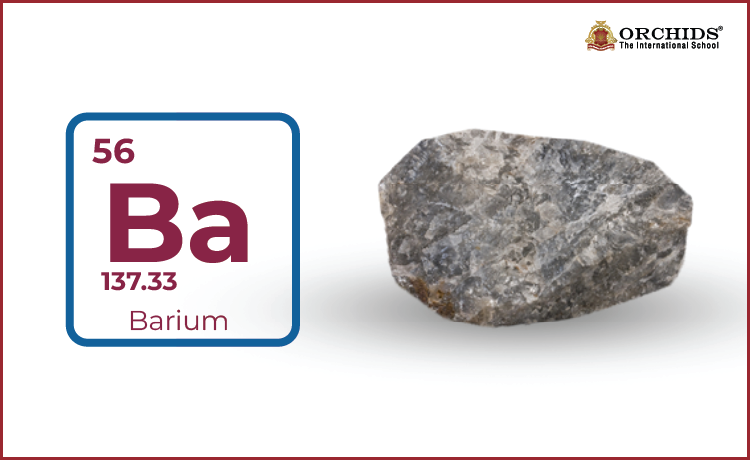
When it comes to its appearance, Barium is a soft, silvery-white alkaline earth metal with the chemical symbol Ba and atomic number 56.
It belongs to Group 2 of the periodic table, alongside calcium and magnesium.
But the question is, how did the existence of Barium come into light?
The story of barium begins in 1600, when Italian alchemist Vincenzo Casciarolo discovered glowing stones near Bologna.
These stones, later identified as barite (BaSO₄), would shine after being heated, giving them the name “Bologna stones.”
Later in 1774, Swedish chemist Carl Wilhelm Scheele confirmed barium was a new substance, though he couldn’t isolate it.
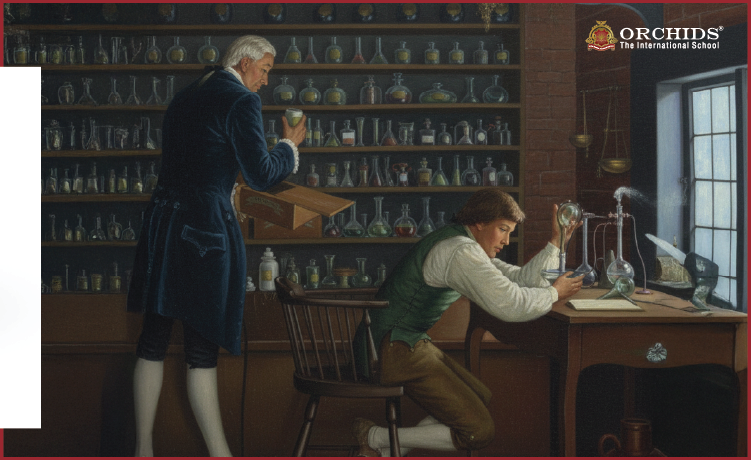
Finally, in 1808, Sir Humphry Davy used electrolysis to separate pure barium for the first time.
Do you know? Unlike gold or iron, you’ll never find barium as a pure metal in nature, as it is too reactive and is always locked up inside minerals like barite (BaSO₄) and witherite (BaCO₃).
Its reactivity makes it interesting but also tricky to handle. Pure barium oxidises in air, reacts with water to release hydrogen, and can form a range of useful compounds.
Next is Barium shows some specific trends which make it easy to identify it among other elements.
General and Physical Properties of Barium
|
Symbol |
Ba |
|
Atomic Number |
56 |
|
Atomic Mass |
~137 amu |
|
Group |
2 (Alkaline Earth Metals) |
|
Appearance |
Silvery-white, soft, malleable |
|
Density |
3.6 g/cm³ |
|
Melting Point |
725°C |
|
Boiling Point |
1640°C |
|
Oxidation State |
+2 (most common) |
|
Flame Color |
Pale yellow-green |
|
Conductivity |
Good conductor of heat and electricity |
|
Reactivity |
Very reactive with air, water, and acids |
Fun fact: If you sprinkle barium salts into a flame, it produces a green colour, which is why barium is a favourite ingredient in fireworks.
Chemical Properties of Barium
Barium is known for its high reactivity. It readily forms compounds with nonmetals and acids.
Reaction with Air
Barium oxidises quickly, forming barium oxide on its surface.
Reaction with Water
When barium touches water, it reacts vigorously, releasing hydrogen gas and producing barium hydroxide, a strong base.
Reaction with Hydrochloric Acid
This gives barium chloride, when reacted with hydrochloric acid which is an important compound in industry.which, when reacted with hydrochloric acid,
Reaction with Sulfate Ions Here, barium ions form insoluble barium sulfate, which is the basis of a classic lab test for sulfate ions.
Important Compounds of Barium
1. Barium Carbonate (BaCO₃)
It is found in nature as witherite.
White solid, slightly soluble in water.
Uses: making ceramics, speciality glass, magnetic materials, and sometimes as a rodenticide (though toxic).
2. Barium Sulfate (BaSO₄)
A dense, white, crystalline solid.
Insoluble in water → non-toxic and safe for medical use.
Uses:
- It is used in Medical “barium meal” for X-ray imaging of the stomach and intestines.
- It is added to drilling fluids in the oil and gas industries.
- It works as a filler in paints, plastics, and rubber products.
3. Barium Chloride (BaCl₂)
Its appearance looks like a white, highly soluble salt.
The fact that it is produced when barium reacts with hydrochloric acid.
Uses:
- It creates green flames in fireworks.
- It is used in water treatment and metal refining.
- A precursor for other barium salts.
4. Other Notable Compounds
- Barium Nitrate (Ba(NO₃)₂) is used in fireworks for bright green sparks.
- Barium Hydroxide (Ba(OH)₂) is a strong base used in laboratories and industry.
- Barium Titanate (BaTiO₃) is used in capacitors and electronics due to its dielectric properties.
Uses of Barium and Its Compounds
Even though pure barium metal is too reactive and dangerous to handle, its compounds are widely useful.
- In the Medical field, Barium sulfate enables physicians to get clear X-ray shots of the digestive tract.
- Barium compounds harden ceramics, purify glass, and enhance paints and serve the needs in several Industry sectors.
- In Electronics, it's observed that barium titanate finds applications in capacitors, sensors, and even medical ultrasound equipment.
- Barium salts produce the characteristic green explosion in fireworks.
- Barium keeps unwanted gases out of vacuum tubes, making them work effectively.
- It is used in Alloys where trace amounts of barium enhance the structure and tensile strength of steel and aluminium alloys.
Let's discuss its Safety and toxicity!
While some barium compounds like BaSO₄ are safe, many others (like BaCl₂, BaCO₃) are highly toxic if swallowed or inhaled.
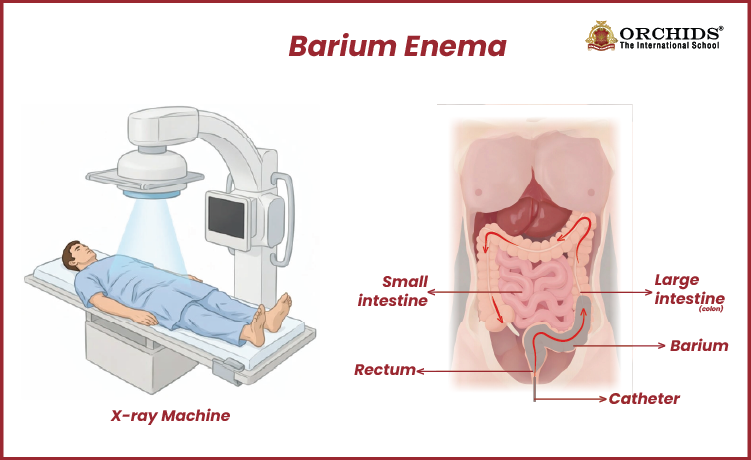
That’s why barium salts used in medicine are carefully chosen to be insoluble and safe.
As we learned, barium may not be as famous as iron or copper, but it has a unique story and vital applications. Its compounds, whether helping doctors, lighting up the sky, or improving industrial materials, prove that even a reactive and unstable metal can find safe and valuable uses in our world.
Frequently Asked Questions on Barium
1. What is the valency of barium?
Barium has a valency of +2 because it readily loses two electrons to form stable Ba²⁺ ions.
2. What is the colour of barium sulphate?
Barium sulphate is a white crystalline solid, which makes it safe and useful in medical imaging.
3. What is the formula of barium chloride?
The chemical formula of barium chloride is BaCl₂, showing one barium atom bonded with two chlorine atoms.
4. What is the formula of barium sulphate?
Barium sulphate has the formula BaSO₄, combining barium, sulfur, and oxygen.
5. Is barium a metal?
Yes, barium is a soft, silvery alkaline earth metal that belongs to Group 2 of the periodic table.
6. What are 5 interesting facts about barium?
Barium burns with a green flame, was first studied in glowing Bologna stones, is highly reactive, is never found free in nature, and is used in fireworks and X-rays.
7. What is the colour of barium?
Pure barium is silvery-white, but it quickly turns dull grey when exposed to air.
8. What is the main use of barium?
The most important use of barium is in barium sulfate, which helps doctors see clear X-ray images of the stomach and intestines.
9. What is barium made of?
Barium itself is a natural element (atomic number 56), made up of protons, neutrons, and electrons like all atoms.
10. What are the four types of barium?
Barium is found mainly in four forms: barium carbonate, barium sulfate, barium chloride, and barium nitrate, each with unique uses.
11. What period is barium in?
Barium is in Period 6 of the periodic table, meaning it has six electron shells.
Science isn't just a subject, it's the way of seeing the world. Curious how Orchids The International School teaches it that way? Talk to our admissions team.
Admissions Open for 2026-27
What type of concept pages would you prefer?
CBSE Schools In Popular Cities
- CBSE Schools in Bangalore
- CBSE Schools in Mumbai
- CBSE Schools in Pune
- CBSE Schools in Hyderabad
- CBSE Schools in Chennai
- CBSE Schools in Gurgaon
- CBSE Schools in Kolkata
- CBSE Schools in Indore
- CBSE Schools in Sonipat
- CBSE Schools in Delhi
- CBSE Schools in Rohtak
- CBSE Schools in Bhopal
- CBSE Schools in Aurangabad
- CBSE Schools in Jabalpur
- CBSE Schools in Jaipur
- CBSE Schools in Jodhpur
- CBSE Schools in Nagpur
- CBSE Schools in Ahmednagar
- CBSE School In Tumkur











Orchids The International School is one of India's leading chains of CBSE and ICSE schools, with 110+ schools across the country.