

What are Isotopes: Types, Characteristics and Uses Explained
Isotopes' meaning itself suggests that they share the same chemical identity but differ in mass, giving them unique properties and uses. Have you ever wondered why some atoms of the same element are heavier than others? These atomic variations are called isotopes. This article will help you understand and define isotopes, their properties and their uses with examples.
Table of Contents
- What is an Isotope
- Types of Isotopes
- Characteristics of Isotopes
- Applications of Isotopes
- Difference Between Isotopes and Isobars
- Frequently Asked Questions on Isotopes

What is an Isotope?
The major confusion that arises is how one element exists in different forms but with little variation! That is where the Isotopes play their role. An isotope is a form of a chemical element that has the same number of protons (same atomic number) but a different number of neutrons, resulting in a different atomic mass.
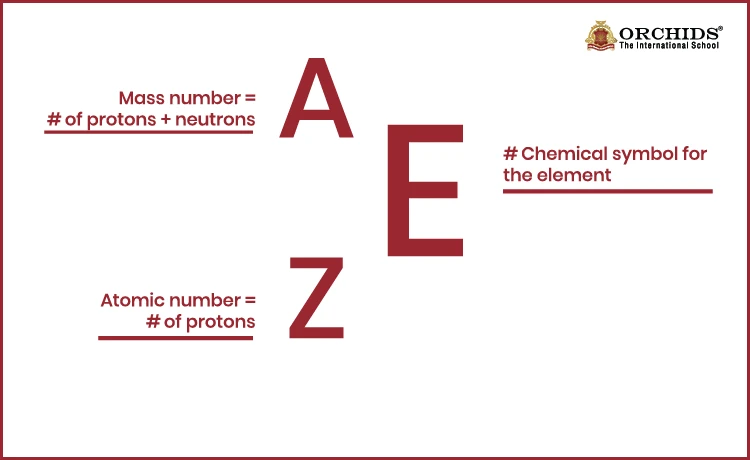
In simpler terms:
All isotopes of an element behave chemically the same, but they only differ in their mass and physical properties.
Isotope Example:
Hydrogen has three isotopes:
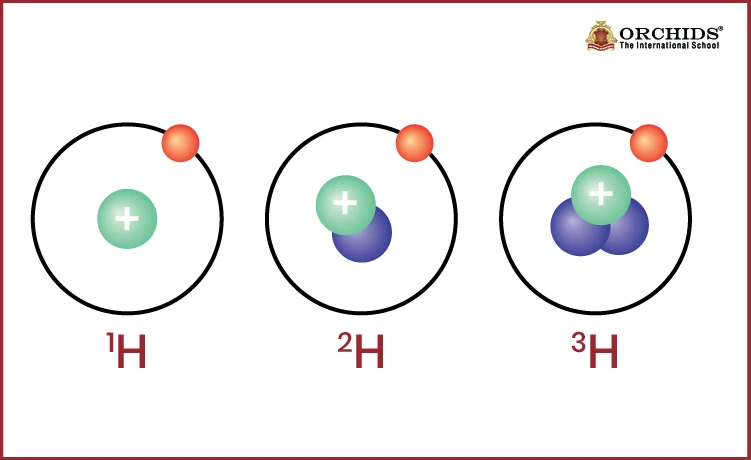
- Protium (¹H) has 1 proton and 0 neutrons
- Deuterium (²H) has 1 proton and 1 neutron
- Tritium (³H) has 1 proton and 2 neutrons
Despite these differences in mass, all three are still hydrogen atoms.
The major thing that students might face difficulty with is in determining the Number of Neutrons in an Isotope, but you can calculate the number of neutrons in any isotope by using a simple formula:
Number of Neutrons = Mass Number – Atomic Number
Let's understand with the example Carbon-12:
- Mass Number = 12
- Atomic Number of Carbon = 6
- Neutrons = 12 - 6 = 6
So, a Carbon-12 atom has 6 neutrons in its nucleus.
How are isotopes different from Isobars?
To know what are isotopes and isobars as Isobars, however, are like neighbours who live in houses with the same number (mass number) but have different family names (elements).
For example, ¹⁴C and ¹⁴N weigh the same but belong to totally different families!
Also Read: Atomic Number and Mass Number
Types of Isotopes
Interestingly, Isotopes can be categorised based on their stability and origin:
Stable Isotopes:These isotopes have nuclei that do not decay over time; that is, they remain unchanged and are not radioactive, and are considered to be stable isotopes.
Some common examples include:
- Carbon-12
- Carbon-13
- Oxygen-16 and more
- Radioactive Isotopes;Interestingly, they have unstable nuclei that decay and release radiation and play an important role in nuclear power plants, initiating a chain reaction, also used in medical imaging, cancer treatment, and carbon dating.
Common examples include:
- Carbon-14
- Hydrogen-3 (Tritium)
- Uranium-235
- Uranium-238
- Chlorine-36
Primordial Isotopes: These Isotopes have existed since the solar system was formed. The most interesting thing about them is that they have not decayed completely due to their extremely long half-lives.
Fact: Out of 339 naturally occurring isotopes, 286 are classified as primordial!
Characteristics of Isotopes
The following are some general properties of isotopes:
- They are part of the same element, hence their atomic number is the same.
- Their atomic masses vary due to a different number of neutrons.
- They exhibit similar chemical behaviour because they possess the same electron configuration.
- Physical properties, such as melting point and density, can be different for isotopes.
- Certain isotopes are stable, whereas others are radioactive and disintegrate over time.
Here are some well-known isotopes for common elements:
- Carbon:
- Carbon-12 (¹²C) - stable
- Carbon-14 (¹⁴C) - radioactive, used in carbon dating
- Oxygen:
- Oxygen-16 (¹⁶O)
- Oxygen-17 (¹⁷O)
- Oxygen-18 (¹⁸O) – all stable
- Uranium:
Uranium-235 and Uranium-238 are used as nuclear fuel in nuclear power plants.We have already discussed the isotopes of hydrogen,like Protium, Deuterium, Tritium
Applications of Isotopes
Isotopes have widespread applications across various fields, from basic to research!
- In the Medical Field, Iodine-131 is used to diagnose and treat thyroid disorders. Radioisotopes like Cobalt-60 are used in cancer radiotherapy.
- Do you know how the isotopes serve best in Carbon-14 dating to help determine the age of ancient artefacts?
- Isotopes are also used as tracers to follow chemical pathways in plants and animals.
- Isotopes contribute a lot in power plants, especially Uranium-235 is used in nuclear reactors for power generation.
Difference Between Isotopes and Isobars
Though they sound similar, isotopes and isobars are not the same. Here's what are isotopes and isobars and how they differ:
| Feature | Isotopes | Isobars |
| Atomic Number | Same | Different |
| Mass Number | Different | Same |
| Chemical Element | Same element | Different elements |
| Example | ¹²C, ¹³C (carbon isotopes) | ¹⁴N, ¹⁴C (different elements, same mass) |
Read More: Carbon Compounds
Isotopes are an important part of atomic structure. Define isotopes remind us that even within a single element, there's variety and depth.Understanding what are isotopes and isobars not only gives us insights into atomic science but also opens the door to real-world applications from treating illnesses to solving ancient mysteries.
Frequently Asked Questions on Isotopes
1. What are important facts about isotopes?
Isotopes are atoms of the same element, sharing the same atomic number but different mass. While some are stable, others are radioactive with special applications.
2. Which is the most important isotope?
Carbon‑14 is vital in archaeology for dating fossils, while Iodine‑131 is a saviour in thyroid treatment.
3. Why are isotopes important in our daily lives?
They are used in medical scans, the treatment of cancer, storing food, and even generating electricity in nuclear power plants.
4. Why are isotopes formed?
Isotopes are formed naturally due to variations in the number of neutrons in the nucleus of an atom, or can be made artificially in reactors.
5. How are isotopes used in medicine?
Radioisotopes like Cobalt‑60 and Iodine‑131 are used to detect disease and destroy cancer cells harmlessly and efficiently.
6. Are isotopes harmful?
Yes, radioactive isotopes are harmful when used incorrectly, but in their controlled application, they are excellent health and research tools.
Science isn't just a subject, it's the way of seeing the world. Curious how Orchids The International School teaches it that way? Talk to our admissions team.
Admissions Open for 2026-27
What type of concept pages would you prefer?
CBSE Schools In Popular Cities
- CBSE Schools in Bangalore
- CBSE Schools in Mumbai
- CBSE Schools in Pune
- CBSE Schools in Hyderabad
- CBSE Schools in Chennai
- CBSE Schools in Gurgaon
- CBSE Schools in Kolkata
- CBSE Schools in Indore
- CBSE Schools in Sonipat
- CBSE Schools in Delhi
- CBSE Schools in Rohtak
- CBSE Schools in Bhopal
- CBSE Schools in Aurangabad
- CBSE Schools in Jabalpur
- CBSE Schools in Jaipur
- CBSE Schools in Jodhpur
- CBSE Schools in Nagpur
- CBSE Schools in Ahmednagar
- CBSE School In Tumkur











Orchids The International School is one of India's leading chains of CBSE and ICSE schools, with 110+ schools across the country.