

Alcohol Structure (Hydroxyl Group)
Alcohol Structure Hydroxyl Group are an important class of organic compounds characterised by the hydroxyl (-OH) group being bonded to a carbon atom. Though tiny, it has a great contribution which determines the chemical characteristics, physical properties, and applications of alcohols widely.
This article assists you in realising how the hydroxyl group decides the structure and behaviour of alcohols.
Table of Contents
- Alcohols in Chemistry
- Classification of Alcohols by Hydroxyl Groups
- Classification by Carbon Attachment
- Frequently Asked Questions on Alcohol Structure (Hydroxyl Group)

Alcohols in Chemistry
Alcohols represent one of the most widely used and versatile series of organic compounds. Their peculiarity lies in the presence of a hydroxyl group (-OH) on a carbon atom.
Interestingly, the single –OH unit is the source of chemical properties, especially in Organic chemistry. It serves the best physical characteristics, and even functions of alcohols in everyday life, best utilised from drinks and pharmaceuticals to fuels and cosmetics and even more.
The general formula for alcohols is: R–OH
Here:
- R is an alkyl group (such as CH₃, CH₃CH₂) or aryl group.
- –OH is the hydroxyl functional group, which is responsible for the typical properties of alcohols.
Let's discuss some examples
- Methanol: CH₃–OH
- Ethanol: CH₃CH₂–OH
When it comes to Bonding and Geometry, it's important to understand the chemistry behind it !!
The Carbon Atom is bonded to the –OH group, is sp³ hybridised.
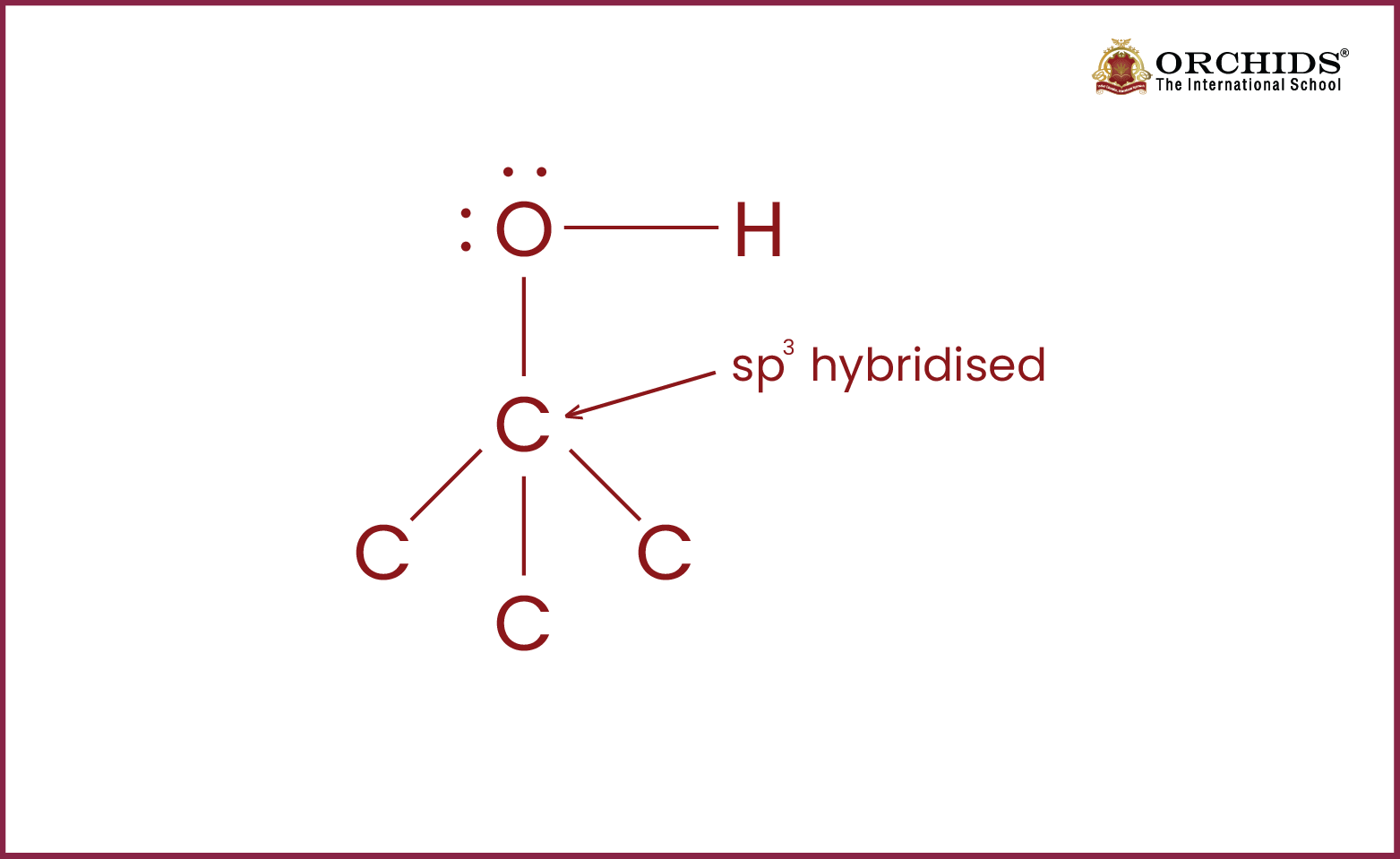
- It means it makes four single bonds in a tetrahedral geometry, having bond angles of around 109.5°.
- One of these bonds is attached to the hydroxyl oxygen, and the remaining three can be attached to hydrogen or other carbon atoms.
Whereas within the Oxygen Atom,the –OH group possesses two lone pairs of electrons, and this creates a bent shape at the oxygen atom.
This enables oxygen to engage in hydrogen bonding, and hence alcohols are soluble in water as well as boiling at elevated temperatures compared to analogous hydrocarbons.
Classification of Alcohols by Hydroxyl Groups
Alcohols may be classified according to how many hydroxyl groups they have:
- Monohydric Alcohols consist of one –OH group.
Example: Ethanol (C₂H₅OH)
- Dihydric Alcohols (Glycols) consist of two –OH groups.
Example: Ethylene glycol (HO–CH₂–CH₂–OH)
- Trihydric Alcohols consist of three –OH groups.
Example: Glycerol (HO–CH₂–CHOH–CH₂–OH)
Classification by Carbon Attachment
Alcohols are also divided based on the kind of carbon the –OH group is attached to:
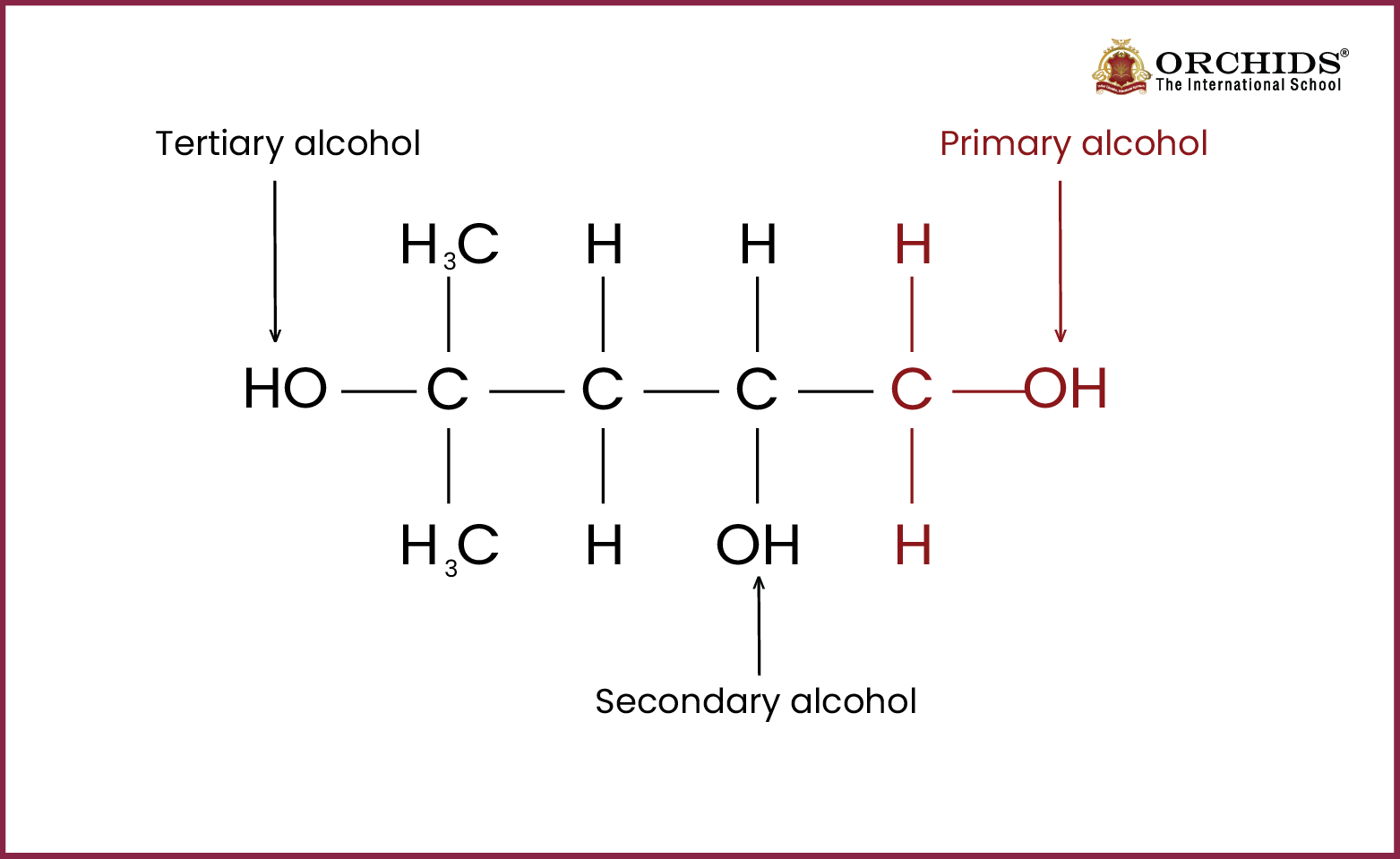
- Primary (1°) Alcohols (OH) are bonded to a carbon bonded to only one other carbon.
Example: Ethanol (CH₃CH₂–OH)
- Secondary (2°) Alcohols (OH) are bonded to a carbon bonded to two other carbons.
Example: Isopropanol (CH₃–CHOH–CH₃)
- Tertiary (3°) Alcohols (OH) are bonded to a carbon bonded to three other carbons.
Example: Tert-butanol ((CH₃)₃C–OH)
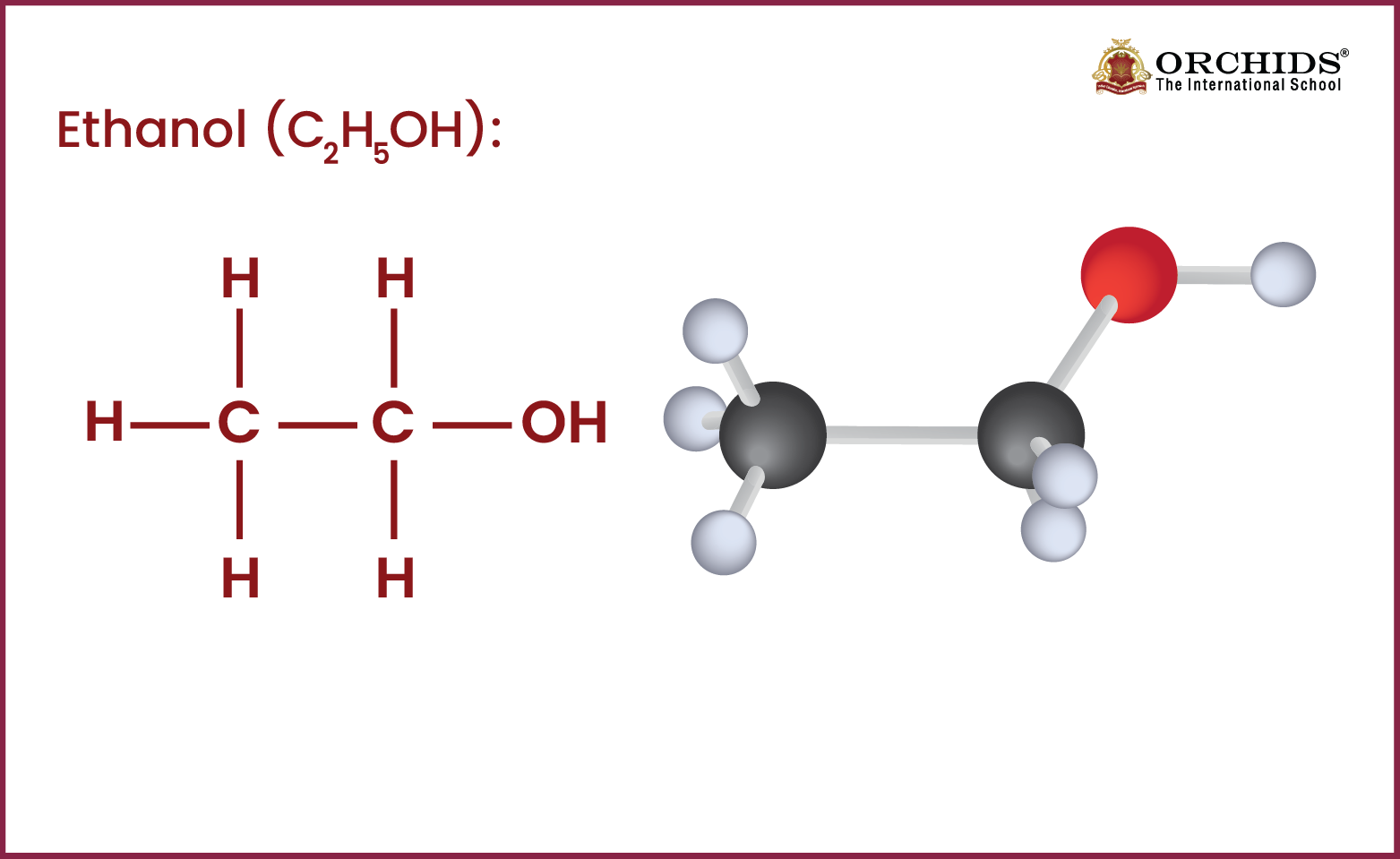
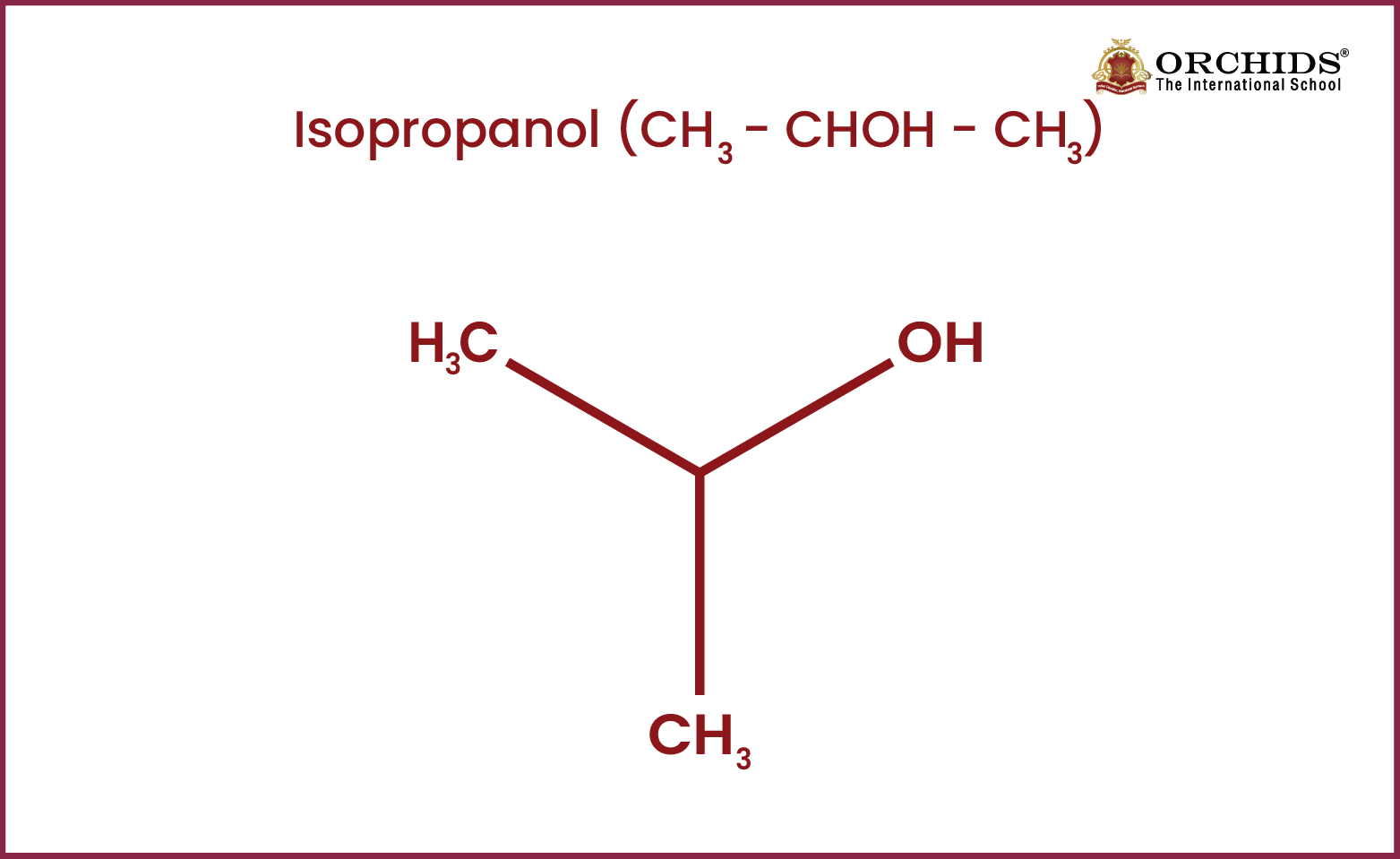
Let's have a look at some visual representations for a better understanding of this structure.
Ethanol (C₂H₅OH):
Isopropanol (CH₃–CHOH–CH₃):
But have you ever wondered why the Structure Matters?
The hydroxyl group is polar, and alcohols can form hydrogen bonds with water molecules, which makes them soluble in water (particularly the smaller alcohols such as methanol and ethanol).
Chemical reactivity depends upon the location of the –OH group and what type of carbon it's on. For example:
- Primary alcohols may be oxidised into aldehydes.
- Secondary alcohols may be oxidised into ketones.
- Tertiary alcohols are not oxidisable.
The tetrahedral geometry around the carbon ensures that alcohols have a 3D shape, which affects how they interact with other molecules in chemical reactions.
Frequently Asked Questions on Alcohol Structure (Hydroxyl Group)
1. What is the alcohol structure of the hydroxyl group in chemistry?
The alcohol structure hydroxyl group is simply the –OH part of the molecule that’s attached to a carbon atom. This tiny feature is what gives alcohols their unique properties and makes them different from other compounds.
2. What are the hydroxyl group types in organic compounds?
Hydroxyl group types are described as primary, secondary, or tertiary. The name depends on how many other carbons are connected to the one holding the –OH group, and each type behaves a bit differently in reactions.
3. Can you give hydroxy group examples from daily life?
Hydroxy group examples are all around us, like ethanol in drinks, glycerol in lotions, and sorbitol in sugar-free gums. Each one’s –OH group plays a big role in how the product works.
4. Do all alcohols have a hydroxyl group?
Yes, every alcohol has at least one hydroxyl group. Without it, the compound wouldn’t even be called an alcohol; it’s like the one feature that makes an alcohol, an alcohol.
5. How can you protect the OH group of alcohol?
To keep the OH group safe during chemical reactions, scientists often temporarily change it into a form that won’t react, such as a silyl ether or an ester. Once the reaction is done, they can switch it back.
6. Why is hydroxyl not a good leaving group in reactions?
The hydroxyl group isn’t a great leaver because it turns into a hydroxide ion, which is too reactive to just float away. That’s why chemists usually change it into something more willing to leave before a reaction.
Science isn't just a subject, it's the way of seeing the world. Curious how Orchids The International School teaches it that way? Talk to our admissions team.
Admissions Open for 2026-27
What type of concept pages would you prefer?
CBSE Schools In Popular Cities
- CBSE Schools in Bangalore
- CBSE Schools in Mumbai
- CBSE Schools in Pune
- CBSE Schools in Hyderabad
- CBSE Schools in Chennai
- CBSE Schools in Gurgaon
- CBSE Schools in Kolkata
- CBSE Schools in Indore
- CBSE Schools in Sonipat
- CBSE Schools in Delhi
- CBSE Schools in Rohtak
- CBSE Schools in Bhopal
- CBSE Schools in Aurangabad
- CBSE Schools in Jabalpur
- CBSE Schools in Jaipur
- CBSE Schools in Jodhpur
- CBSE Schools in Nagpur
- CBSE Schools in Ahmednagar
- CBSE School In Tumkur











Orchids The International School is one of India's leading chains of CBSE and ICSE schools, with 130+ schools across the country.