

Ammonium Chloride Formula NH₄Cl
Have you ever heard of or wondered about ammonium chloride, which plays an important role in the world of chemistry? While ammonium chloride may seem like a chemical only used in a laboratory, it is fairly common in everyday life as a cough syrup, fertiliser, and even in your bread.
This article helps you to understand its properties, its effects, its role in the simplest manner, and its impact on both industry and human health.
Table of Contents
- Ammonium Chloride: Molecular Structure
- Properties of Ammonium Chloride
- Ammonium Chloride Synthesis
- Chemical Properties of Ammonium Chloride
- Ammonium Chloride Uses in Daily Life
- Know About Ammonium Chloride Health Effects
- Additional Biological and Medical Roles of Ammonium Chloride
- Frequently Asked Questions on Ammonium Chloride Formula NH₄Cl

Ammonium Chloride: Molecular Structure
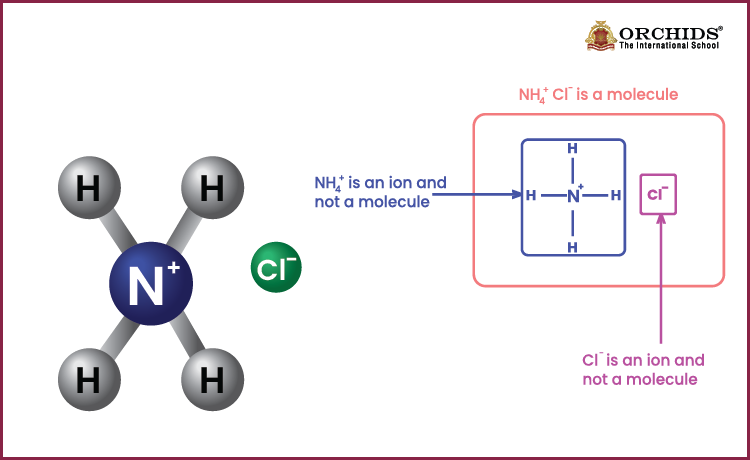
Ammonium chloride is a white crystalline salt containing two ionic components: ammonium (NH₄⁺) and chloride (Cl⁻).
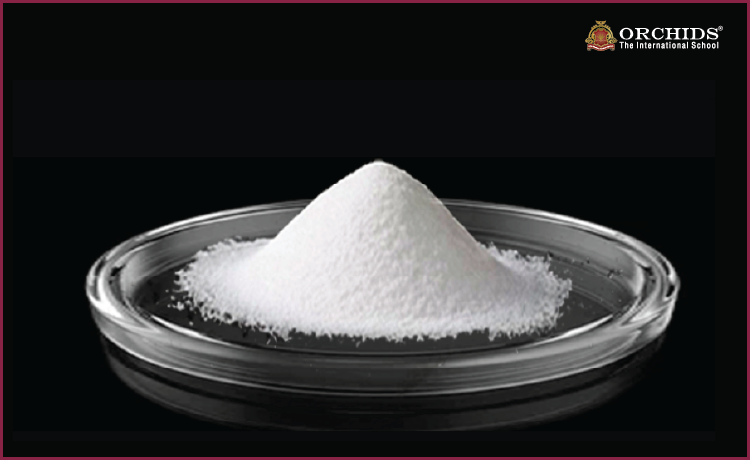
Its chemical formula is NH₄Cl. also important thing about it is in the solid state, ammonium chloride will form an ionic lattice; its ammonium ions (NH₄⁺) are positively charged ions that form a lattice, and are held in position by negatively charged chloride ions (Cl⁻) through electrostatic attraction.
Properties of Ammonium Chloride
Here’s a quick look at the physical and chemical profile of ammonium chloride:
|
Property |
Value |
|
Chemical Formula |
NH₄Cl |
|
Molar Mass |
53.49 g/mol |
|
Appearance |
White, crystalline solid |
|
Density |
1.53 g/cm³ |
|
Melting Point |
338°C |
|
Boiling Point |
Sublimes at around 520°C without melting |
Ammonium Chloride Synthesis
Below are two methods:
1. Neutralisation
A straightforward laboratory reaction involves combining ammonia gas (NH₃) with hydrogen chloride gas (HCl):
This reaction produces white fumes of ammonium chloride, often seen in chemistry labs.
2. Solvay Process (as By-product)
Ammonium chloride is also a by-product in the production of sodium carbonate (Na₂CO₃). Here, carbon dioxide and ammonia react in a sodium chloride solution:
This method is used industrially due to its cost-efficiency and high output.
Chemical Properties of Ammonium Chloride
- Thermal Decomposition:
When heated, ammonium chloride breaks down into ammonia and hydrogen chloride gases:
- Reaction with Bases:
Ammonium chloride reacts with sodium hydroxide to release ammonia gas:
- Reaction with Sodium Carbonate:
It also reacts with sodium carbonate to release ammonia:
These reactions highlight its acidic nature and ability to release ammonia, a useful trait in various industries.
Ammonium Chloride Uses in Daily Life:
Ammonium chloride has a variety of applications in several areas:
-
Fertilisers; It is used as a nitrogen source, especially in rice production.
-
Medicine: It is used as an expectorant to loosen mucus in cough syrups.
-
Food Industry: It is used in bread making as a nutrient to help yeast.
-
Laboratory Use: It is a common ingredient in cooling baths and buffers.
-
Animal Feed: It is an additive in the diet of cattle.
-
pH Control: It is a contributor to maintain a low-acidic pH in certain medical tests and treatments.
Know About Ammonium Chloride Health Effects
Ammonium chloride is useful, but take care:
-
Short-term exposure may cause coughing, eye irritation, nausea, and headache, particularly if exposed to gas or a fine powder.
-
Skin and eye contact like if skin and eye contact is prolonged, irritation and discomfort may develop.
-
Long-term effects may lead to Chronic exposure may harm respiratory function or, in rare cases, affect kidney function.
It has been used in medicine as a systemic acidifier to treat certain forms of metabolic alkalosis and urinary tract complications. Overdosing can raise blood pressure and cause problems with electrolyte balance.
Therefore, monitoring dosage is very important.
Additional Biological and Medical Roles of Ammonium Chloride
-
Ammonium chloride naturally occurs in the human body, helping to maintain pH balance in blood and urine.
-
It helps clear mucus by mildly irritating the respiratory linings; this triggers the body’s natural mucus-clearing reflex.
-
NH₄Cl is administered to test the kidneys' ability to acidify urine, an important diagnostic step for renal tubular acidosis.
Knowing the ammonium chloride structure, properties, and applications can help us understand how science affects our everyday lives, sometimes in places we don’t expect. Whether helping your body fight off a cold or increasing crop yield, ammonium chloride will never be noticed, but it supports us in many ways.
Frequently Asked Questions on Ammonium Chloride Formula NH₄Cl
1. What is the importance of ammonium chloride?
Ammonium chloride plays a key role in medicine, agriculture, and even food. It's used in cough syrups, fertilisers, batteries, and lab tests.
2. How fast does ammonium chloride work?
Its effect depends on how it's used medically; it can act within hours, while in soil or industry, results may take longer, but are steady and effective.
3. What happens to ammonium chloride when heated?
When heated, it breaks down into ammonia and hydrogen chloride gases, a reaction often seen as white smoke in chemistry labs.
4. Is ammonium chloride a strong acid?
No, it's not a strong acid. It's mildly acidic and forms a weak acid solution when dissolved in water, making it safe for controlled uses.
5. Can ammonium chloride be found in the human body?
Yes, in small amounts, it helps regulate pH levels in the blood and urine, especially when the body is balancing acid-base levels.
6. Is ammonium chloride safe to touch or inhale?
Brief contact is usually harmless, but too much exposure, especially to dust or fumes, can irritate your eyes, skin, or lungs. Handle with care.
Science isn't just a subject, it's the way of seeing the world. Curious how Orchids The International School teaches it that way? Talk to our admissions team.
Admissions Open for 2026-27
What type of concept pages would you prefer?
CBSE Schools In Popular Cities
- CBSE Schools in Bangalore
- CBSE Schools in Mumbai
- CBSE Schools in Pune
- CBSE Schools in Hyderabad
- CBSE Schools in Chennai
- CBSE Schools in Gurgaon
- CBSE Schools in Kolkata
- CBSE Schools in Indore
- CBSE Schools in Sonipat
- CBSE Schools in Delhi
- CBSE Schools in Rohtak
- CBSE Schools in Bhopal
- CBSE Schools in Aurangabad
- CBSE Schools in Jabalpur
- CBSE Schools in Jaipur
- CBSE Schools in Jodhpur
- CBSE Schools in Nagpur
- CBSE Schools in Ahmednagar
- CBSE School In Tumkur











Orchids The International School is one of India's leading chains of CBSE and ICSE schools, with 110+ schools across the country.