

What is a Monomer? Types and Properties Explained with Examples
In chemistry and environmental science, DDT is one of those names that carries a lot of weight. The full form of DDT is Dichlorodiphenyltrichloroethane, and the curious thing about it is that its story connects directly to our everyday world. Just like how we use a powerful tool to fix a problem but later realise it causes damage if misused, DDT was once the world's most celebrated chemical fix, praised for saving millions of lives, only to be later recognised as one of the most damaging substances ever released into the environment. From farms and battlefields to mosquito-infested villages, DDT shaped the 20th century in ways few chemicals ever did. This article explains its full form, history, structure, uses, and effects in a simple, clear, and engaging way.
This article explains their structure, classification, natural types, and uses simply and crisply.
Table of Contents
- What is a Monomer
- Classification of Monomers
- Understanding Natural Monomers
- Everyday Importance of Monomers
- Frequently Asked Questions on Monomers

What is a Monomer?
A monomer is a small molecule that can chemically bond with other identical or different molecules to form long chains or three-dimensional networks called polymers.
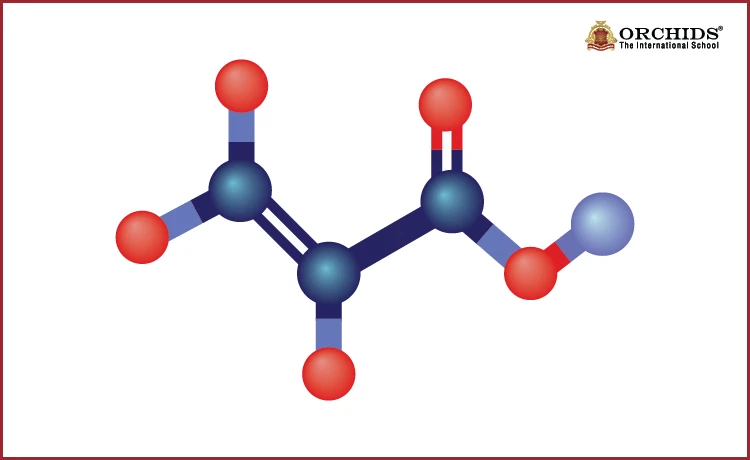
Interestingly!! Monomers and their dimer counterparts are widely studied in chemistry as they provide new insights into how molecules assemble into larger structures.
In industries, monomers are chosen carefully depending on the kind of polymer needed. One major application is in the production of acrylic solution polymers, which are widely used in paints, coatings, adhesives, and plastics.
These can be further divided into two groups:
-
Thermosetting Acrylics
These are built from backbone monomers combined with at least one reactive monomer.
On heating or adding a catalyst, they undergo cross-linking, which makes the material hard and durable. The fact about thermosetting acrylics is that once set, they cannot be melted again.
Common examples are strong coatings, protective paints, and adhesives.
-
Thermoplastic Acrylics
These are made by polymerising acrylic or methacrylic monomers, either through homopolymerisation or copolymerisation. They do not cross-link but can soften on heating and be reshaped multiple times. Known for being stable and relatively inert.
Common examples are packaging films, transparent plastics, and flexible household materials.
This clear distinction between thermosetting and thermoplastic acrylics shows how the choice of monomers determines the final property of the polymer.
Classification of Monomers
Monomers can be classified in two main ways: based on origin and based on synthesis.
Let's Discuss!
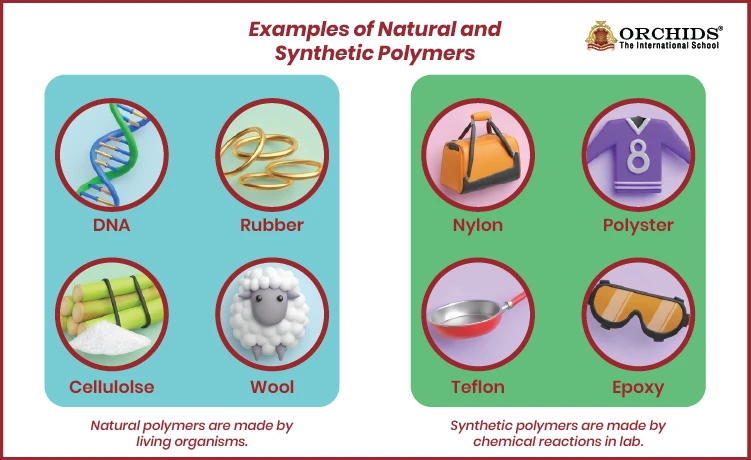
Based on Origin
- Natural monomers suggest that it is found in living organisms.
For example, glucose (in starch and cellulose) and amino acids (in proteins).
- Synthetic monomersare Man-made molecules used to create plastics and fibres like polythene, nylon, PVC, and polystyrene.
Based on Synthesis
- Addition (chain-growth) monomers have double bonds and add repeatedly to form long chains without losing atoms.
Example: Ethylene → Polythene, Propylene → Polypropylene.
- Condensation (step-growth) monomersjoin by eliminating small molecules, such as water or HCl.
Example: Nylon (from diamine + dicarboxylic acid).
Here's a Quick peek into how monomers and polymers are synthesised:
Do you know! The fact that Addition or Chain Polymers are formed when monomers continuously add to one another, creating a long polymer chain.
The monomers involved are usually unsaturated compounds containing double or triple bonds, which easily open up and connect.
The relationship between some common monomers and the polymers they form through chain-growth polymerisation is shown below.
|
S.No |
Monomer |
Polymer |
|
1 |
Ethylene |
Polythene |
|
2 |
Propylene |
Polypropylene |
|
3 |
Butadiene |
Polybutadiene |
|
4 |
Tetrafluoroethylene |
Polytetrafluoroethylene (Teflon) |
|
5 |
Vinyl chloride |
Polyvinyl chloride (PVC) |
Understanding Natural Monomers
Natural monomers are biologically significant and have been used by nature for millions of years to build life.
Let’s discuss the main types:
1. Amino Acids
Amino acids are the monomers of proteins. Each amino acid chain contains an amino group (–NH₂) and a carboxyl group (–COOH).
Proteins are formed when thousands of amino acids join in specific sequences, giving rise to enzymes, hormones, and structural components in our bodies.
2. Nucleotides
Nucleotides are the monomers of DNA and RNA. Each nucleotide consists of a sugar, a phosphate group, and a nitrogen base.
When linked, they form long chains called nucleic acids, which store and transfer genetic information.
3. Glucose and Related Sugars
Glucose (C₆H₁₂O₆) is a simple sugar monomer that forms polysaccharides like starch, glycogen, and cellulose.
These polymers act as energy storage in animals and provide structural strength in plants.
4. Isoprene
Isoprene is a natural monomer found in plants. It is the building block of natural rubber and is also present in terpenes and steroids.
Its synthetic version, 1,3-butadiene, is used in the production of synthetic rubbers.
Everyday Importance of Monomers
Monomers are not just textbook concepts; they shape our daily lives:
- Plasticslike bags, bottles, and containers (from synthetic monomers).
- Textiles include Nylon, polyester, and acrylic fibres (from synthetic condensation monomers).
- Medicine uses Biopolymers like proteins and DNA for life, and synthetic polymers for drug delivery.
- Food like Starch and proteins are nutritional sources.
- Industries like Rubber tyres, adhesives, paints, and coatings.
Monomers are truly the foundation of chemistry and biology. Whether it is amino acids forming proteins, glucose forming cellulose, or synthetic monomers creating plastics, these small units build the materials that shape our world.
Frequently Asked Questions on Monomers
1. What does the monomer's meaning refer to?
The monomer meaning simply refers to a “single unit” that links with others to make complex structures. It explains how tiny molecules form the foundation of huge substances like DNA or plastics.
2. Can you give a monomer example?
Yes, glucose is a monomer that forms starch and cellulose in plants. Another common example is amino acids, which combine to build proteins.
3. What is a monomer made of?
A monomer is made up of atoms arranged in a simple structure, often containing carbon, hydrogen, oxygen, or nitrogen. These atoms connect in such a way that they can bond with other monomers easily.
4. What is the work of a monomer?
The work of a monomer is to link with others and create polymers, which have different properties and uses. This process allows nature and industry to build everything from DNA to plastics.
5. What is the monomer of a polymer?
The monomer of a polymer is the repeating single unit that forms the entire chain. For example, ethylene is the monomer of polythene, and nucleotides are the monomers of DNA.
6. What are the facts about monomers?
Monomers are found both in nature and in labs, forming materials like proteins, cellulose, and plastics. Without them, polymers, the backbone of life and industry, wouldn’t exist.
Science isn't just a subject, it's the way of seeing the world. Curious how Orchids The International School teaches it that way? Talk to our admissions team.
Admissions Open for 2026-27
What type of concept pages would you prefer?
CBSE Schools In Popular Cities
- CBSE Schools in Bangalore
- CBSE Schools in Mumbai
- CBSE Schools in Pune
- CBSE Schools in Hyderabad
- CBSE Schools in Chennai
- CBSE Schools in Gurgaon
- CBSE Schools in Kolkata
- CBSE Schools in Indore
- CBSE Schools in Sonipat
- CBSE Schools in Delhi
- CBSE Schools in Rohtak
- CBSE Schools in Bhopal
- CBSE Schools in Aurangabad
- CBSE Schools in Jabalpur
- CBSE Schools in Jaipur
- CBSE Schools in Jodhpur
- CBSE Schools in Nagpur
- CBSE Schools in Ahmednagar
- CBSE School In Tumkur











Orchids The International School is one of India's leading chains of CBSE and ICSE schools, with 130+ schools across the country.