

Acids, Bases and Salts
From the tartness of lemon to the soapiness of shampoo, acids and bases are ubiquitous in our lives. They are very important chemicals in nature and industry. When they react with each other, they produce salts, another substance we use every day.
This article is intended to make students' expertise in the fundamental principles of acids, bases, and salts, with types and common reactions.
Table of Contents
- What are Acids, Bases and Salts
- Acidity Definition
- Bases Definition
- Salts
- Tips and Tricks to Learn About Acids, Bases and Salts
- Frequently Asked Questions on Acids, Bases and Salts

What are Acids, Bases and Salts
When combined, acids and bases, which are chemical opposites, can neutralise each other.
The ability of acids to release hydrogen ions in solution and their sour taste are well-known. Bases are known for distributing hydroxide ions in solution with a bitter flavour and soapy appearance.
In both natural and industrial environments, their behaviour in chemical reactions is vital.
Acidity Definition
Acids are materials that release hydrogen ions when dissolved in water.
They mostly have a sour taste and are corrosive.
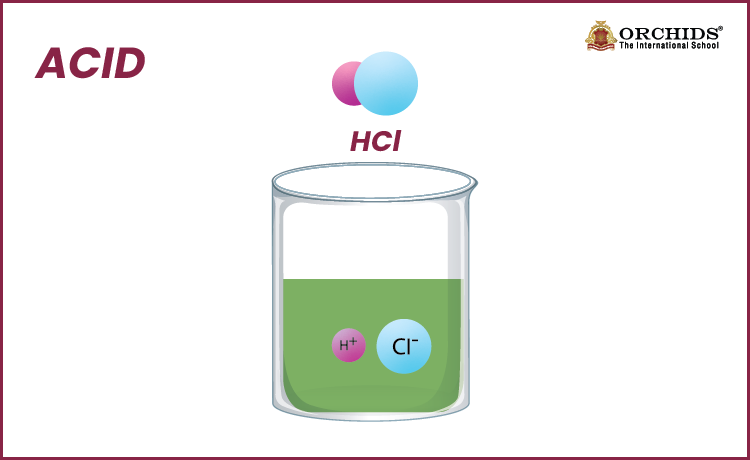
While some acids are synthesised for industrial use, others exist naturally in food products.
Simple Dissociation of Acids:
➡ Hydrochloric acid (HCl) in water:Hydrochloric acid (HCl) in water:
➡ Hydrochloric acid (HCl) in water:Sulphuric acid (H₂SO₄) in water:
➡ Hydrochloric acid (HCl) in water:Natural Acids
These acids are found in various fruits and food items. Examples include:
- Citric acid in lemons and oranges
- Acetic acid in vinegar
- Lactic acid in curd
➡ Mineral Acids
These are synthetic acids used in laboratories and industries. Examples include:
- Hydrochloric acid
- Sulphuric acid
- Nitric acid
Bases Definition
When dissolved in water, bases release hydroxide ions.
They mostly feel soapy or slippery to the touch and have a bitter taste.Bases can be man-made or naturally occurring, just like acids.
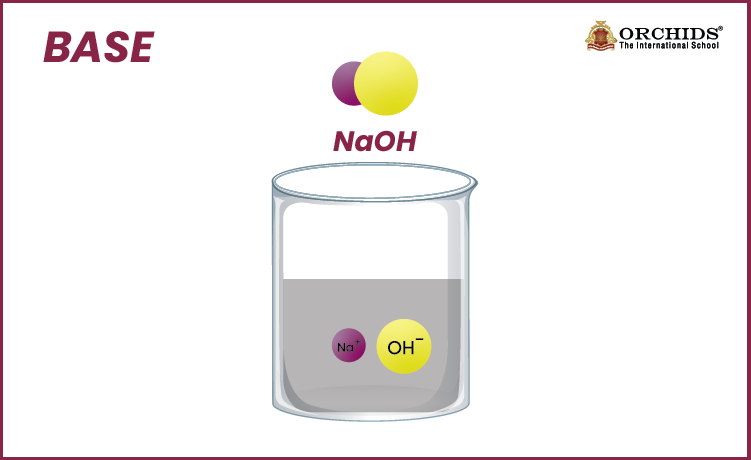
Simple Dissociation of Bases:
➡ Sodium hydroxide (NaOH) in water:
➡ Potassium hydroxide (KOH) in water:
Types of Bases
➡ Weak Bases (less reactive and safer to handle):
- Magnesium hydroxide is used in antacids
- Calcium hydroxide is known as limewater
- Sodium bicarbonate is used in baking and cleaning
➡ Strong Bases (highly reactive and corrosive):
- Sodium hydroxide
- Potassium hydroxide
Salts
When bases and acids combine, compounds known as salts are formed.
Water and salt are the products of this chemical process, known as neutralisation.
Depending on their components, salts can have an acidic, basic, or neutral nature.
Simple Neutralisation Reaction Example:
Hydrochloric acid + Sodium hydroxide → Sodium chloride + Water
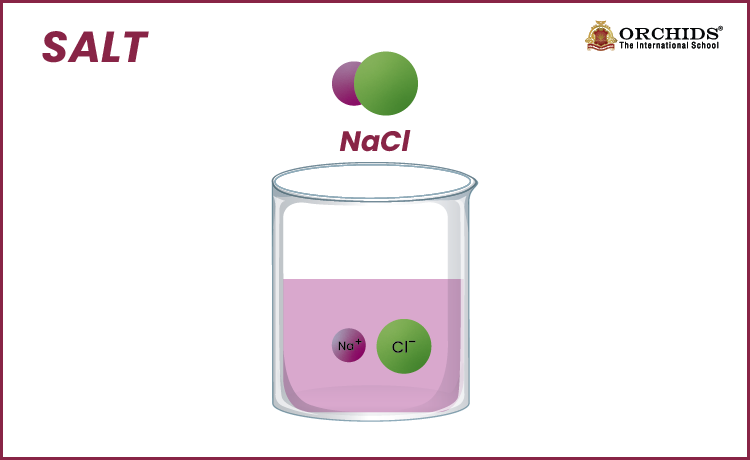
Dissociation of Salts in Water:
➡ Sodium chloride (NaCl):
➡ Sodium carbonate (Na₂CO₃):
Common Salts and Their Uses
- Sodium chloride is a Common table salt used in cooking
- Sodium carbonate is used as washing soda in household cleaning
- Calcium chloride is used as a drying agent and to melt ice on roads
- Calcium hypochlorite is used in bleaching and disinfecting
- Potassium nitrate is used in fertilisers and fireworks
Tips and Tricks: To learn about Acids, Bases and Salts
- Litmus Rule: Acids turn blue litmus red; bases turn red litmus blue.
- Neutralisation Formula: Acid + Base = Salt + Water.
- Sensory Clues: Acids are sour; bases are bitter and slippery.
- Recall with Examples: Lemon (acid), soap (base), table salt (salt).
More than simply abstract chemical ideas, salts, bases, and acids are fundamental to everyday existence. An in-depth knowledge of acids, bases, and salts not only improves basic chemistry understanding but also builds awareness of the materials we encounter daily.
Frequently Asked Questions on Acids, Bases and Salts
1. What are acids, bases and salts ?
Acids are substances that release hydrogen ions in water, bases release hydroxide ions, and salts are formed when acids and bases neutralise each other.
2. What are the 10 acid salts?
Examples of acid salts include sodium bisulfate, potassium bisulfate, sodium bicarbonate, ammonium hydrogen carbonate, and others formed from partial neutralisation.
3. What are 10 examples of acids and bases?
Acids: Hydrochloric acid, Sulphuric acid, Acetic acid, Citric acid, Nitric acid.
Bases: Sodium hydroxide, Calcium hydroxide, Ammonium hydroxide, Magnesium hydroxide, Potassium hydroxide.
4. What is the difference between acidic and basic salts?
Acidic salts come from strong acids and weak bases, while basic salts result from strong bases and weak acids: their properties depend on this origin.
Science isn't just a subject, it's the way of seeing the world. Curious how Orchids The International School teaches it that way? Talk to our admissions team.
Admissions Open for 2026-27
What type of concept pages would you prefer?
CBSE Schools In Popular Cities
- CBSE Schools in Bangalore
- CBSE Schools in Mumbai
- CBSE Schools in Pune
- CBSE Schools in Hyderabad
- CBSE Schools in Chennai
- CBSE Schools in Gurgaon
- CBSE Schools in Kolkata
- CBSE Schools in Indore
- CBSE Schools in Sonipat
- CBSE Schools in Delhi
- CBSE Schools in Rohtak
- CBSE Schools in Bhopal
- CBSE Schools in Aurangabad
- CBSE Schools in Jabalpur
- CBSE Schools in Jaipur
- CBSE Schools in Jodhpur
- CBSE Schools in Nagpur
- CBSE Schools in Ahmednagar
- CBSE School In Tumkur











Orchids The International School is one of India's leading chains of CBSE and ICSE schools, with 110+ schools across the country.