

Graphite and Its Everyday Use
Graphite is a natural carbon that we tend to recognise as pencil "lead," but its applications extend far beyond the written word. From electricity conductivity to resisting high heat, graphite has made a remarkable presence in its place in industries and everyday life.
This article is the perfect guide on graphite, structure, occurrence, properties and more, so that you have a clear and comprehensive understanding of this incredible mineral.
Table of Contents
- What is Graphite?
- Types of Graphite
- Properties of Graphite
- Graphite in Our Daily Life
- Frequently Asked Questions on Graphite

What is Graphite?
Graphite is a natural mineral and one of the cleanest forms of carbon allotropes, serving a wide range of applications. Interestingly !! Graphite is named from the Greek word "graphein", meaning "to write", as it has been used for centuries to make pencils.
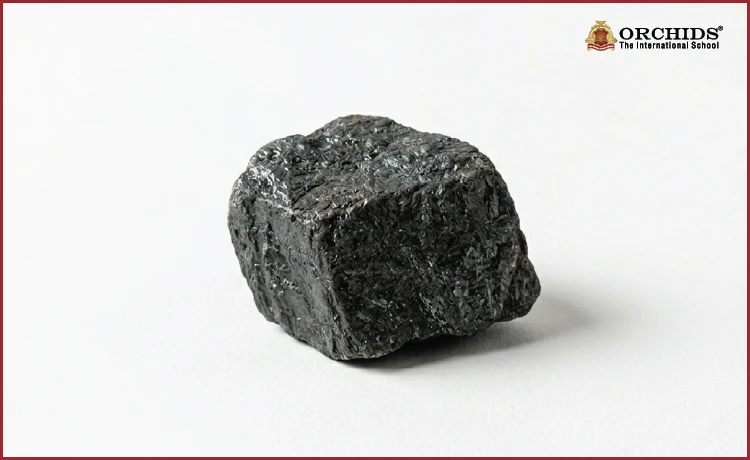
Graphite is a highly stable carbon found in igneous and metamorphic rocks, and it possesses qualities like electrical conductivity and thermal resistance that make it valuable both in ancient and contemporary industries.
The major Question is how the occurrence of graphite happened?
Graphite naturally occurs in the Earth's crust, making large deposits present in nations such as China, India, Brazil, Canada, and Madagascar.
When it comes to how this graphite is created under high-temperature and pressure conditions in metamorphic rocks such as gneiss, schist, and marble.
Do you know !! The synthetic graphite is also manufactured in industries for specific purposes, such as batteries and high-temperature use.
The structure of graphite is responsible for its characteristics:
Let's Discuss the Structure of Graphite!
- Graphite consists of Hexagonal Layers that are three carbon atoms each bond to every carbon atom in each layer. They create flat hexagonal rings that form sheet-like layers.
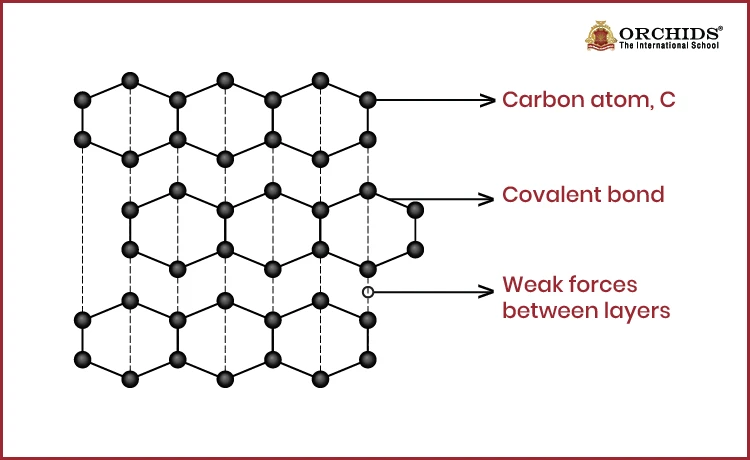
- The layers are of weak interlayer forces piled upon each other but held weakly by poor Van der Waals forces.
- Also, it consists of Free Electrons, that is,each carbon atom leaves behind one electron free to move, which makes graphite so good at conducting electricity.
This layer formation is why graphite is also an excellent conductor, lubricant, and writing material.
Types of Graphite
Natural graphite can be categorised into three types:
- Crystalline Flake Graphite is found in metamorphic rocks; employed in batteries, lubricants, and refractories.
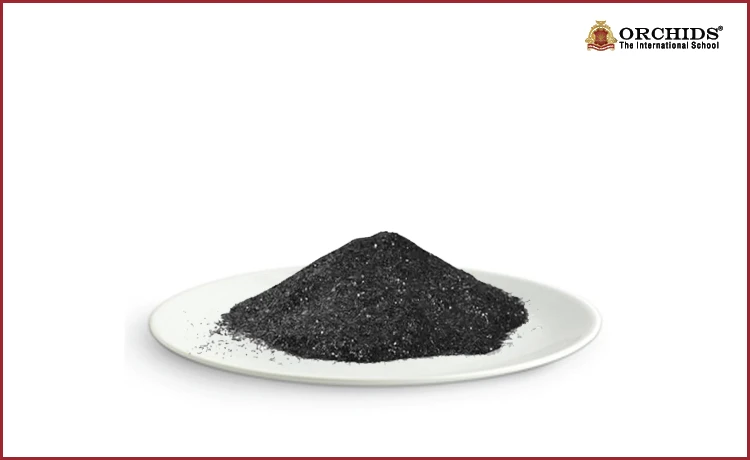
- Amorphous Graphite is a less ordered structure; employed in paints, coatings, and foundry.
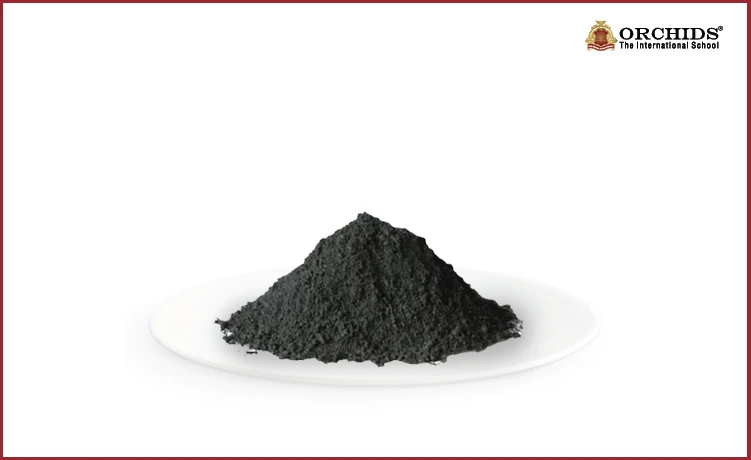
- Lump or Vein GraphiteExotic, occurs in veins; very pure and employed in specialised industries.

Properties of Graphite
Graphite's special properties enable it to differ from other materials:
Physical Properties
- Graphite appears dark grey or black with metallic or earthy lustre.
- They are very soft; easily scratched using a fingernail.
- Density is low compared to metals, lightweight but strong within layers.
- Graphite consists of perfect cleavage, meaning it easily splits into thin sheets.
Chemical Properties
- Graphite is composed of Pure carbon.
- When it comes to stability, it is chemically stable and does not react easily with most substances.
- Also, it is insoluble, that is, it does not dissolve in water or solvents.
Graphite has been worth its weight for centuries and remains crucial in contemporary industries.
Graphite in Our Daily Life

- In Lower Grades, the Pencils that we used for writing purposes are of the "lead" which is a mixture of graphite and clay.
- The lubricants are powdered graphite that is applied to locks, hinges, and machinery to make their working smooth.
- Electrodes that are utilised in batteries, arc lamps, and cells of electrolysis give good benefits in industrial applications.
- The electronics sector has the source of graphene, which is leading a new revolution in flexible screens, solar panels, and nanotechnology.
Learning about graphite allows us to see how an ordinary natural material can become so influential in determining both daily life and the future of technology.
Frequently Asked Questions on Graphite
1. What is Graphite and why is it important?
Graphite is a natural form of carbon that is soft, slippery, and conducts electricity. Its layered structure makes it useful in pencils, lubricants, batteries, and high-temperature equipment.
2. What are some common Graphite Uses?
Graphite is used for writing pencils, in machines as a dry lubricant, and in batteries and crucibles. It also plays a role in advanced fields like electronics and nuclear reactors.
3. Can you give some Graphite examples from daily life?
A simple example is pencil “lead,” which is made from graphite and clay. You’ll also see graphite in brake pads, coatings, and heat-resistant materials.
4. What are some good questions about carbon?
Good questions about carbon include why it is called the element of life, how it forms millions of compounds, and why it exists in forms like diamond and graphite.
5. Why is graphite different from diamond if both are carbon?
Graphite is soft and slippery because its carbon atoms form layers that slide over one another. Diamond is extremely hard because its atoms are locked in a rigid 3D network.
Science isn't just a subject, it's the way of seeing the world. Curious how Orchids The International School teaches it that way? Talk to our admissions team.
Admissions Open for 2026-27
What type of concept pages would you prefer?
CBSE Schools In Popular Cities
- CBSE Schools in Bangalore
- CBSE Schools in Mumbai
- CBSE Schools in Pune
- CBSE Schools in Hyderabad
- CBSE Schools in Chennai
- CBSE Schools in Gurgaon
- CBSE Schools in Kolkata
- CBSE Schools in Indore
- CBSE Schools in Sonipat
- CBSE Schools in Delhi
- CBSE Schools in Rohtak
- CBSE Schools in Bhopal
- CBSE Schools in Aurangabad
- CBSE Schools in Jabalpur
- CBSE Schools in Jaipur
- CBSE Schools in Jodhpur
- CBSE Schools in Nagpur
- CBSE Schools in Ahmednagar
- CBSE School In Tumkur











Orchids The International School is one of India's leading chains of CBSE and ICSE schools, with 130+ schools across the country.