

Bicarbonates: Properties, Synthesis, and Practical Applications
Bicarbonates are intresting little chemical compounds that quietly do big jobs, both inside our bodies and in everyday chemistry. Think of them as nature's own pH balancers, keeping harmful acids from building up in your body and keeping lab solutions stable.
You've probably already come across bicarbonates without realising it. They're in baking soda sitting in your kitchen, in medicines you take when your stomach hurts, and yes, even flowing through your blood right now. They're literally everywhere.
In this article, we're going to break down exactly what bicarbonates are, how they connect to carbonic acid, what they look like at a chemical level, the main compounds they form, what they're used for, and why they matter so much for keeping life and balance going on Earth.
Table of Contents
- What are Bicarbonates
- Carbonic Acid and Bicarbonate Ion Relation
- Properties of Bicarbonates
- Compounds of Bicarbonates
- Uses of Bicarbonates
- Frequently Asked Questions on Bicarbonates

What are Bicarbonates?
Bicarbonate, also known as hydrogen carbonate, is an intermediate product formed during the deprotonation of carbonic acid. Its chemical formula is HCO₃⁻, and it is a polyatomic anion, meaning it consists of multiple atoms carrying an overall negative charge.
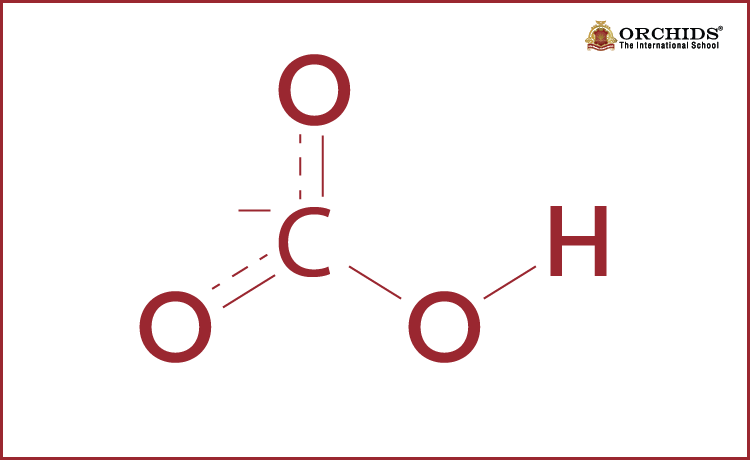
In simple words, bicarbonates act as buffers. They help maintain a stable pH in solutions, ensuring that acids or bases do not drastically change the acidity levels. This is especially important in biological systems, like human blood, where even a small pH shift can disrupt normal functioning.
Do you know that chemically, bicarbonates can act as both acids and bases, a property known as amphiprotic behaviour.
Learn More : Acid and Base Difference
Next, how are carbonic acid and bicarbonate ions connected in maintaining pH balance?
Carbonic Acid and Bicarbonate Ion Relation
Bicarbonates are closely related to carbonic acid (H₂CO₃). The human body maintains a delicate acid-base balance using this bicarbonate buffering system.
When carbon dioxide (CO₂) dissolves in water, it forms carbonic acid, which then partially dissociates into hydrogen ions (H⁺) and bicarbonate ions (HCO₃⁻).
The reversible reaction is represented as:

The dissociation of carbonic acid occurs in two steps:
In the first step, carbonic acid dissociates into a hydrogen ion and a bicarbonate ion:
In the second step, the bicarbonate ion further dissociates into a hydrogen ion and a carbonate ion:
But what happens when excess acid enters the bloodstream? Bicarbonate ions react with hydrogen ions to form carbonic acid, neutralising the acid and maintaining a stable pH.
Similarly, when the environment becomes too basic, carbonic acid releases hydrogen ions to restore balance. This natural buffering system is vital for sustaining life, ensuring that blood pH remains around 7.4, which is slightly basic and perfect for biochemical reactions.
Properties of Bicarbonates
Physical Properties:
- Appearance: Most bicarbonates are white, shiny crystals that look similar to common salts. However, Group 2 bicarbonates (like calcium and magnesium) are unstable in solid form and are usually found dissolved in water.
- Molecular Mass:The bicarbonate ion (HCO₃⁻) has a molar mass of about 61.02 g/mol small, but incredibly important in nature and industry.
- Thermal Decomposition: When heated, bicarbonates break down to form carbon dioxide (CO₂), water (H₂O), and a metal carbonate. This reaction is often seen in baking and laboratory experiments.
- Solubility: Bicarbonates like sodium bicarbonate (baking soda) dissolve easily in water, forming a mildly alkaline solution that helps neutralise acids.
Chemical Properties
- Structure: The bicarbonate ion has one carbon atom bonded to three oxygen atoms in a trigonal planar shape, with one oxygen attached to hydrogen, making it both simple and versatile.
- Electronic Nature: Interestingly, bicarbonate has the same number of electrons as nitric acid (HNO₃), showing how balanced and reactive it can be.
- Amphiprotic Behaviour: Bicarbonate is amphiprotic, meaning it can act as both an acid and a base:
- It’s the conjugate acid of the carbonate ion (CO₃²⁻).
- It’s also the conjugate base of carbonic acid (H₂CO₃).
- Acid–Base Balance: With a pKa of 10.3 and pKb of 7.7, bicarbonate perfectly demonstrates dual acid–base behaviour, helping maintain pH balance in nature and the human body.
Compounds of Bicarbonates
1. What is Sodium Bicarbonate (NaHCO₃)
A white crystalline solid, slightly soluble in water, forming a mildly alkaline solution. It is also known as baking soda, used in baking.
.webp)
Preparation:
Sodium bicarbonate is made by passing carbon dioxide through a solution of sodium carbonate:
Uses:
- It is used as baking soda to make cakes and pastries fluffy.
- It acts as an antacid to relieve acidity in the stomach, an ingredient in fire extinguishers. Also used as a mild antiseptic for skin irritation.
2. Potassium Bicarbonate (KHCO₃)
A white crystalline compound that dissolves easily in water.
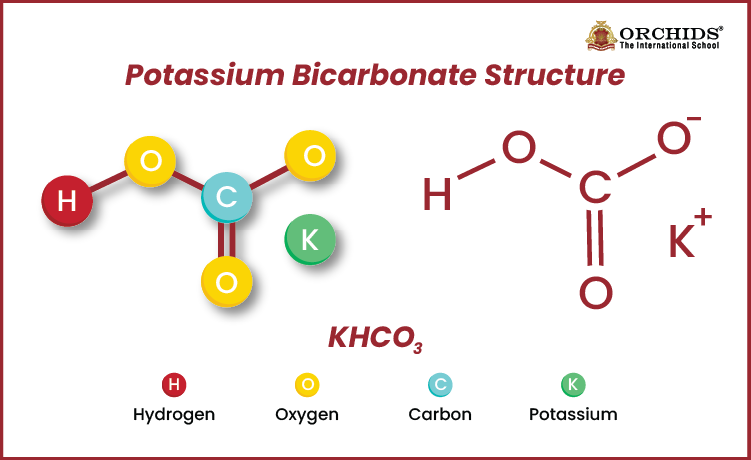
Preparation:
Prepared by treating potassium carbonate with carbon dioxide and water:
Uses:
- It is commonly used in winemaking as a buffering agent.
- It serves as a sodium-free alternative to baking soda.
- It helps to regulate acidity in food and pharmaceutical preparations.
3. Ammonium Bicarbonate (NH₄HCO₃)
White crystalline solid with an ammonia-like smell; soluble in water but insoluble in ethanol.
.webp)
Preparation:
Formed by combining ammonia, carbon dioxide, and water under cool conditions to prevent decomposition:
Uses:
- It is used in baking as a leavening agent.
- Importantly, it acts as a fertiliser to supply nitrogen to plants.
- It is used in fire extinguishers and dye manufacturing.
- It plays a role in making certain medicines and food additives.
Uses of Bicarbonates
- In the Food Industry, it is used as a leavening agent in baking and as an acidity regulator.
- The common medicine that is used when suffering from acidity acts as an antacid to neutralise stomach acid and relieve heartburn
- In Laboratories, it is used in chemical analysis and pH control experiments.
- It serves well in the Industry sector as considered important in manufacturing dyes, detergents, and fire extinguishers.
- In the Environment sector, Bicarbonates in natural water bodies help neutralise acid rain and stabilise aquatic ecosystems.
Let's have a look at the Importance of Bicarbonates in Human Health
Bicarbonates are essential for maintaining the body’s internal pH balance. They act as a buffering system in the blood, neutralising excess acids produced during metabolism.
Importantly, without bicarbonates, the blood could become too acidic, leading to severe health issues.
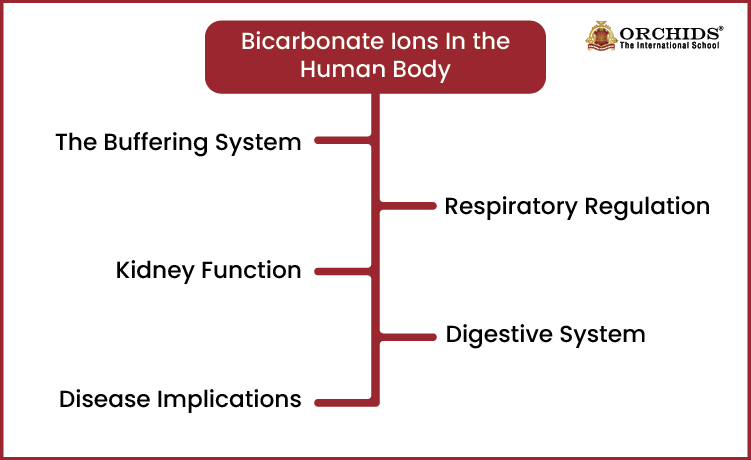
They also help transport carbon dioxide from tissues to the lungs for exhalation. Beyond the human body, bicarbonates in natural waters protect aquatic life by neutralising acid pollutants.
Read More: Calcium Carbonate and Carbonate Ore
So, till now, we learned how Bicarbonates may seem simple, but they are fundamental to both chemistry and life. They protect living organisms, stabilise environmental pH, and serve countless roles in daily life from baking to medicine. Right?
Frequently Asked Questions on Bicarbonates
1. What is bicarbonate?
Bicarbonate is a chemical compound that helps maintain the pH balance in our body and environment. It acts as a natural buffer in blood and water systems.
2. What is sodium bicarbonate?
Sodium bicarbonate, also known as baking soda, is a white powder used in cooking, cleaning, and neutralising acids. It helps maintain pH and reduce acidity.
3. How are bicarbonates formed?
Bicarbonates are formed when carbon dioxide reacts with water and a base, like sodium hydroxide. This process creates compounds such as sodium bicarbonate.
4. What is bicarbonate also known as?
Bicarbonate is also known as hydrogen carbonate. It contains one hydrogen atom, one carbon atom, and three oxygen atoms (HCO₃⁻).
5. How do bicarbonates affect the fluid system?
Bicarbonates keep fluids in our body and the environment at a stable pH. They prevent harmful acid buildup in the blood and natural water sources.
6. What is the main function of bicarbonate?
The main function of bicarbonate is to maintain acid-base balance. It neutralises excess acids and keeps systems like blood and soil healthy.
7. What increases bicarbonate?
Bicarbonate levels increase when the body retains too much base or loses acid, often due to diet or breathing changes. Some medical treatments also raise bicarbonate levels.
8. Why is it called bicarbonate?
It’s called bicarbonate because early chemists thought it contained two carbon atoms per molecule. Later, they discovered it actually contains one, but the name stayed.
Science isn't just a subject, it's the way of seeing the world. Curious how Orchids The International School teaches it that way? Talk to our admissions team.
Admissions Open for 2026-27
What type of concept pages would you prefer?
CBSE Schools In Popular Cities
- CBSE Schools in Bangalore
- CBSE Schools in Mumbai
- CBSE Schools in Pune
- CBSE Schools in Hyderabad
- CBSE Schools in Chennai
- CBSE Schools in Gurgaon
- CBSE Schools in Kolkata
- CBSE Schools in Indore
- CBSE Schools in Sonipat
- CBSE Schools in Delhi
- CBSE Schools in Rohtak
- CBSE Schools in Bhopal
- CBSE Schools in Aurangabad
- CBSE Schools in Jabalpur
- CBSE Schools in Jaipur
- CBSE Schools in Jodhpur
- CBSE Schools in Nagpur
- CBSE Schools in Ahmednagar
- CBSE School In Tumkur











Orchids The International School is one of India's leading chains of CBSE and ICSE schools, with 130+ schools across the country.