

Displacement Reaction in Chemistry: Formula, Examples and Uses
Chemistry is not merely the mixing of things; it is the study of how matter reacts and changes. One of the most fascinating kinds of reactions is the displacement reaction, where a single element or ion quite literally "takes the other's place."
These responses demonstrate to us the significance of the reactivity series of metals and non-metals, and why certain reactions occur instantly while others fail to occur at all.
The article aims to explain displacement reactions in detail, their types, and why they matter in everyday life.
Table of Contents
- What is a Displacement Reaction
- Types of Displacement Reactions
- Comparison of Single vs Double Displacement
- Importance of Displacement Reactions
- Frequently Asked Questions on Displacement Reaction

What is a Displacement Reaction
A displacement reaction is a chemical reaction where a more reactive element displaces a less reactive element from its compound.
In other words, if two elements fight for a place in a compound, the dominant one (more reactive) will evict the weaker one.
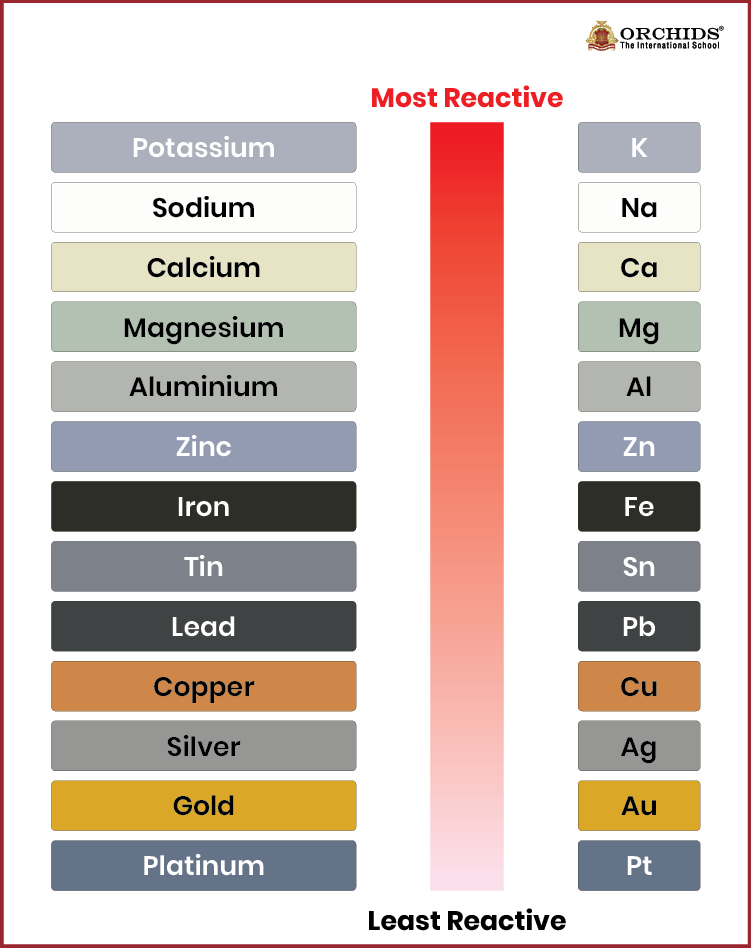
- For metals, displacement is based on their position in the reactivity series (potassium, sodium, calcium, etc., being more reactive than zinc, copper, or silver).
Let's have a look at the reactivity series:
- For halogens and other non-metals, displacement is a function of electronegativity and periodic trends.
General Form represents it:
X + YZ → XZ + Y
Here, X is more reactive than Y.
If the entering element is not more reactive, the reaction will not proceed.
Types of Displacement Reactions
Displacement reactions are mainly of two types:
- Single Displacement Reaction
- Double Displacement Reaction
Let’s look at each one in detail.
Single Displacement Reaction
A single displacement reaction happens when an element displaces another in a compound.
The General Formula represents it:
A + BC → AC + B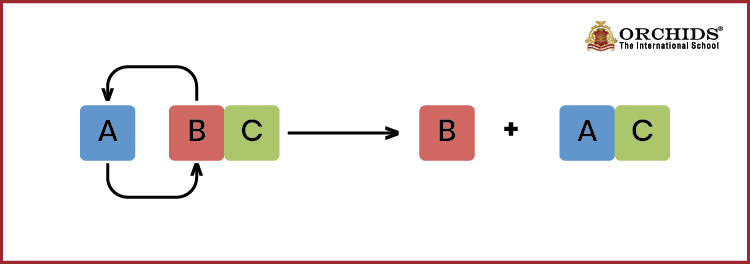
Here, element A displaces element B because it is more reactive.
Let's discuss some examples:
- Metal + Solution of Salt
On adding a reactive metal to the solution of the salt of a less reactive metal, the more reactive one pushes out the less reactive metal.
Example:
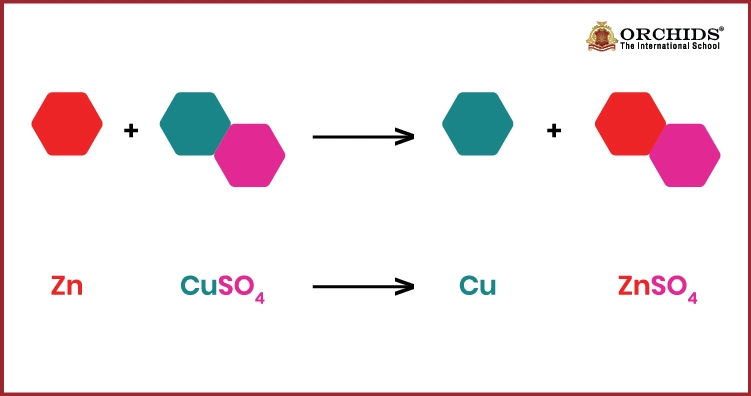
Zinc is more reactive than copper, and thus zinc sulphate is formed and copper is given out.
- Metal + Acid
Reactive metals push out hydrogen from acids.
Example:
Magnesium reacts with hydrochloric acid to produce magnesium chloride and hydrogen gas.
- Metal + Water
Very reactive metals such as sodium and potassium displace hydrogen from water.
Example:
Sodium reacts violently with water to give sodium hydroxide and hydrogen gas.
- Halogen Displacement
A more reactive halogen displaces a less reactive halogen from its compound.
Example:
Chlorine displaces bromine because chlorine is more reactive.
Important Note: There is no reaction if the entering element is less reactive.
Example: Since copper is less reactive than zinc.
-
Double Displacement Reaction
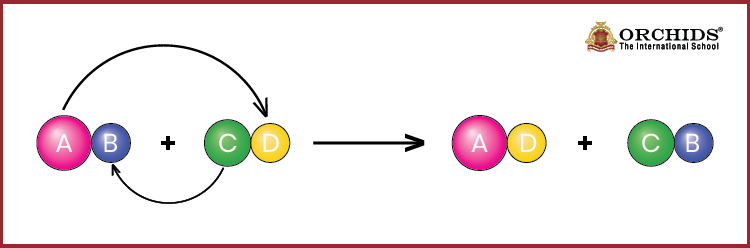
A double displacement reaction occurs when two compounds swap their ions to produce two new compounds.
The General Formula represents it:
AB + CD → AD + CB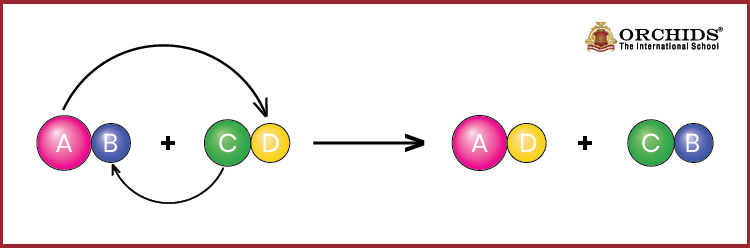
Here, both cations and anions change partners.
Types of Double Displacement Reactions
- Precipitation Reaction
When two aqueous solutions react to produce an insoluble solid (precipitate).
Example:
Silver chloride precipitates as white.
- Neutralisation Reaction
When an acid and a base react to produce salt and water.
Example:
This is a typical example of how antacids neutralise stomach acid.
- Gas Formation Reaction
A gas is evolved as one of the products.
Example:
Salt, water, and carbon dioxide gas are released.
Comparison of Single vs Double Displacement
|
Aspect |
SINGLE Displacement |
DOUBLE Displacement |
|
Definition |
One element displaces another in a compound |
Two compounds exchange ions |
|
General Formula |
A + BC → AC + B |
AB + CD → AD + CB |
|
Driving Factor |
Difference in reactivity |
Formation of precipitate, gas, or water |
|
Example |
|
|
Importance of Displacement Reactions
- It plays a crucial role in metallurgy as the extraction of metals (e.g., iron is extracted using carbon monoxide).
- Significant in the preparation of salts, alkalis, and acids as an important prospect for Industrial Uses.
- It has a major contribution in Medicine, like Neutralisation reaction from the foundation of antacid tablets.
- Daily Life: Observed in the rusting of iron, tarnishing of silver, and food chemistry reactions.
Read More: Reactivity Series Experiment
As we have learned that how Displacement reactions remind us that chemistry is not abstract but practical and deeply connected to daily life. Whether it’s metals being extracted, antacids calming acidity, or simple lab experiments, these reactions showcase the dynamic nature of matter.
Frequently Asked Questions on Displacement Reaction
1. What is the displacement reaction?
A displacement reaction happens when a more reactive element replaces a less reactive element from its compound. It clearly reflects the reactivity series in action.
2. What is the cause of the displacement reaction?
The driving cause is the difference in reactivity of elements. The stronger one naturally pushes out the weaker one to form a new compound.
3. What is a displacement reaction also called?
It is also called a substitution reaction. This is because one element directly substitutes for another within a compound.
4. Are all displacement reactions exothermic?
No, not all are exothermic. While many release heat, some may even absorb energy, depending on the nature of the reactants.
5. What is a displacement reaction in everyday life?
Placing an iron nail in a copper sulphate solution where copper is displaced is a common example. Rusting and tarnishing also involve displacement steps.
6. What are displacement reaction examples?
Examples include Zn + CuSO₄ → ZnSO₄ + Cu and Mg + 2HCl → MgCl₂ + H₂. Both clearly show a more reactive element pushing out a less reactive one.
7. What are double displacement reaction examples?
Neutralisation of HCl with NaOH (forming NaCl and water) and AgNO₃ + NaCl → AgCl + NaNO₃ are classic double displacement reaction examples.
Science isn't just a subject, it's the way of seeing the world. Curious how Orchids The International School teaches it that way? Talk to our admissions team.
Admissions Open for 2026-27
What type of concept pages would you prefer?
CBSE Schools In Popular Cities
- CBSE Schools in Bangalore
- CBSE Schools in Mumbai
- CBSE Schools in Pune
- CBSE Schools in Hyderabad
- CBSE Schools in Chennai
- CBSE Schools in Gurgaon
- CBSE Schools in Kolkata
- CBSE Schools in Indore
- CBSE Schools in Sonipat
- CBSE Schools in Delhi
- CBSE Schools in Rohtak
- CBSE Schools in Bhopal
- CBSE Schools in Aurangabad
- CBSE Schools in Jabalpur
- CBSE Schools in Jaipur
- CBSE Schools in Jodhpur
- CBSE Schools in Nagpur
- CBSE Schools in Ahmednagar
- CBSE School In Tumkur











Orchids The International School is one of India's leading chains of CBSE and ICSE schools, with 130+ schools across the country.