

Uses of Acetone: Applications, Benefits and Everyday Importance Explained
Acetone is a simple, clear, highly volatile liquid in chemistry that quietly powers many things we use every day. Known chemically as propanone, it is the simplest ketone and one of the most important solvents in science and industry.
But beyond its structure and formula, what truly makes acetone valuable is its uses of acetone from medicines and cosmetics to electronics and household cleaning.
The article focuses on the uses of Acetone, why acetone is used so widely, how its properties support these uses, and how different industries rely on it.
Table of Contents
- What is Acetone
- Major Uses of Acetone
- Safety Measures While Using Acetone
- Frequently Asked Questions on Uses of Acetone

What is Acetone?
Acetone (CH₃–CO–CH₃) is a colourless, flammable, and highly volatile liquid belonging to the ketone family. It evaporates quickly, mixes well with water, and dissolves many substances, making it an excellent solvent.
It is produced industrially and also naturally inside the human body during fat metabolism.
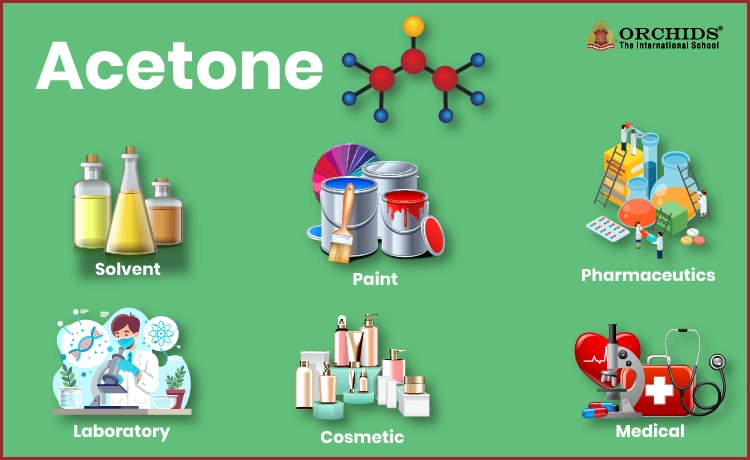
When it comes to the Structure of Acetone:
Acetone has a central carbonyl group (C=O) connected to two methyl groups (CH₃).
Its structure is:
CH₃ – CO – CH₃
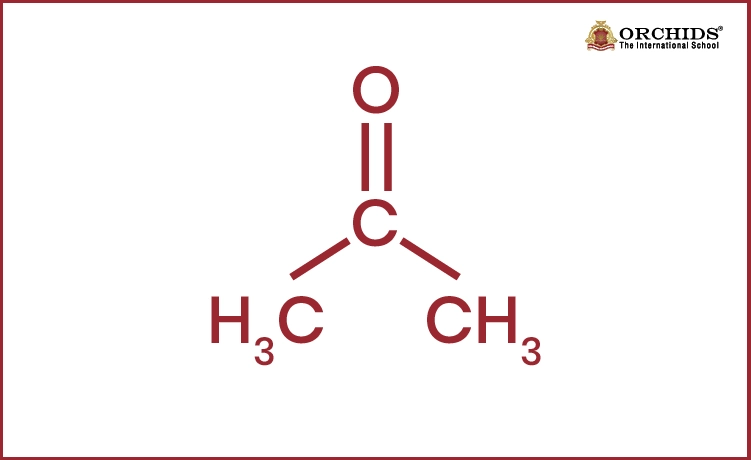
This simple arrangement makes acetone stable yet reactive, contributing to its strong solvent abilities.
Also read, Hydroxyl group
But the question is, why is Acetone Widely Used
Acetone has several qualities that make it highly useful:
- It evaporates quickly
- It dissolves grease, oil, resins, and plastics
- Acetone mixes with both water and organic liquids
- It leaves any residue after drying
These properties make acetone an essential chemical across multiple industries.
Lets Discuss!
Major Uses of Acetone
Below is a detailed, why acetone is used widely.
1. In the Medicine & Pharmaceuticals sectors, Acetone is used as a solvent in manufacturing tablets, capsules, and liquid medicines, ensuring proper consistency and purity.
Apart from them, it helps in extracting active ingredients and is also used as a mild antiseptic in some formulations.
The fact that In textile-related medical production, acetone helps indegreasing wool and degumming silk,ensuring high-quality medical fabrics.
2. In Cosmetics & Personal Care, Acetone is one of the main ingredients in nail polish removers, helping dissolve and lift colour easily.
What makes it feasible for use? It denatures certain alcohols, making them suitable for use in cosmetics, skin creams, and personal-care formulations.
Also, its fast-drying property helps professionals clean makeup tools and surfaces efficiently.
3. Acetone in Laboratories: We might have noticed that during our school days, Acetone was used to clean and dry laboratory glassware because it evaporates quickly and leaves no residue.
Interestingly, its very low freezing point (around –80°C) makes it useful for cooling baths and low-temperature experiments.
4. Acetone in Electronics:The fact that everyone might not be aware but Acetone is used for cleaning circuit boards, chips, and sensitive electronic components.
It mainly helps remove solder flux, oils, and adhesives without damaging delicate surfaces.
Many electronic cleaning sprays include acetone as a key ingredient because it evaporates quickly and does not leave residue.
5. In Homes & Domestic Cleaning as acetone removes ink, paint, adhesives, gum, grease, and oil stains from various surfaces.
It is widely and most commonly used as a paint thinner for resins and oil-based paints.
Do you know Home DIY users rely on acetone to clean paintbrushes, rollers, and tools after painting work?
6. In Industrial Manufacturing, Acetone is a starting material for making plastics like acrylic (PMMA). It helps in producing fibres, coatings, adhesives, and chemical intermediates.
Importantly, Industries use it for degreasing machinery, removing residues, and preparing surfaces for painting or coating. That's how acetone serves great!!
Safety Measures While Using Acetone
Since acetone is flammable and volatile:
- Keep it away from flames and heat sources, as acetone ignites very easily, so always use it far from fire, sparks, or anything that heats up. This prevents accidental fires or flare-ups.
- Since acetone releases strong fumes, using it in open or airy spaces helps avoid headaches, irritation, or breathing discomfort, souse it in a well-ventilated area.
- 3. Avoid contact with eyes and sensitive skin, Acetone can irritate or dry out your eyes and skin, so wear basic protection. Wash immediately with water if it accidentally touches you.
- As Acetone evaporates quickly, airtight containers keep the fumes contained and reduce fire hazards. This also helps maintain its quality for future use, so we should store it in tightly sealed containers
Read More: Bismuth
As we learn that Acetone is far more than a common solvent is a multi-purpose chemical that supports medicine, cosmetics, laboratories, electronics, and household work. Its ability to dissolve tough substances and evaporate instantly makes it essential in both industrial and everyday applications.
Frequently Asked Questions on Uses of Acetone
1. What are 5 uses of acetone?
Five of the most common Uses of Acetone include nail polish removal and extracting chemicals in industries. These Acetone Uses make it an everyday essential because it evaporates quickly and cleans deeply without leaving residue.
2. Why is acetone so important?
Acetone matters because the Uses of Acetone stretch across medicine; it is a truly multipurpose solvent. Its quick-drying nature and high dissolving power are the main reasons Acetone Uses are so widespread.
3. What is acetone used to treat?
One of the helpful Uses of acetone is in medical settings, where it is used to clean minor cuts and remove sticky dressings gently. While it is not a medicine itself, understanding what is Acetone helps explain why it works well as a safe, fast-evaporating disinfectant.
4. What are the facts about acetone?
A simple fact about acetone is that it naturally forms inside our body during fat breakdown, which shows how harmless it is in tiny amounts.
5. What is the full name of acetone?
The full chemical name of acetone is propanone, which helps explain what acetone is in scientific terms. This name connects to many Acetone Uses, especially in labs and manufacturing, where accurate chemical identification matters.
6. What are the effects of acetone?
Acetone generally has mild effects, but too much exposure can cause dryness or slight irritation because of its strong dissolving action.
Science isn't just a subject, it's the way of seeing the world. Curious how Orchids The International School teaches it that way? Talk to our admissions team.
Admissions Open for 2026-27
What type of concept pages would you prefer?
CBSE Schools In Popular Cities
- CBSE Schools in Bangalore
- CBSE Schools in Mumbai
- CBSE Schools in Pune
- CBSE Schools in Hyderabad
- CBSE Schools in Chennai
- CBSE Schools in Gurgaon
- CBSE Schools in Kolkata
- CBSE Schools in Indore
- CBSE Schools in Sonipat
- CBSE Schools in Delhi
- CBSE Schools in Rohtak
- CBSE Schools in Bhopal
- CBSE Schools in Aurangabad
- CBSE Schools in Jabalpur
- CBSE Schools in Jaipur
- CBSE Schools in Jodhpur
- CBSE Schools in Nagpur
- CBSE Schools in Ahmednagar
- CBSE School In Tumkur











Orchids The International School is one of India's leading chains of CBSE and ICSE schools, with 110+ schools across the country.