

118 Elements and their symbols and Atomic numbers
About 118 Elements and their symbols and Atomic numbers; Chemistry is like learning a new language, and the elements are your first words. Everything around us, the water we drink, the air we breathe, even the food we eat, is made of different combinations of these elements.
In this guide, you’ll learn what elements are, why each one has an atomic number, how they are organised in the periodic table, and most importantly, how to remember them easily..
Table of Contents
- What Are Elements?
- What is the Atomic Number?
- What is the Atomic Mass Number?
- Understanding How Elements Are Arranged Scientifically
- List of 118 Elements with Their Names and Atomic Numbers
- How to Learn the 118 Elements With Ease
- Common Mistakes Students Make
- Why This All Matters!
- Conclusion
- Frequently Asked Questions on 118 Elements and their symbols and Atomic numbers

What Are Elements?
An element is a basic form of matter that cannot be broken down into anything simpler using chemical methods. Each element is made of only one kind of atom.
These elements are nature’s original ingredients; they’re found in everything from your pencil to your body to the stars.
Every element in the periodic table functions as a distinct building block of matter. It has:
- Protons in an atom are indicated by its atomic number.
- Also, the mass number is the sum of the protons and neutrons in the nucleus.
It can be readily represented by a symbol, which is a short, one- or two-letter name (for example, H for hydrogen, O for oxygen).
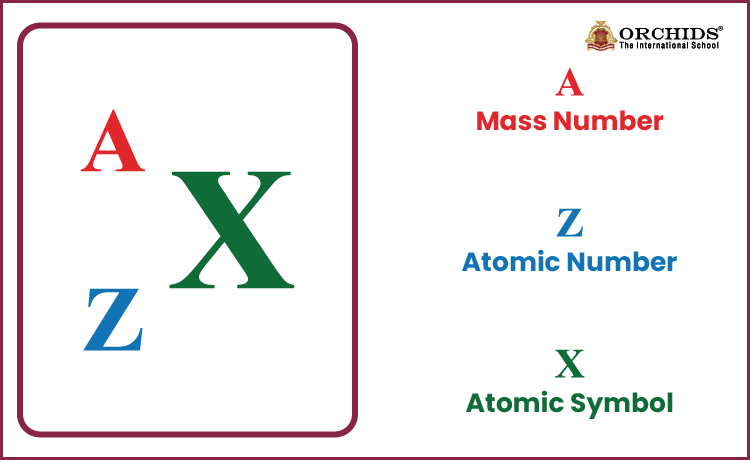
Some examples of elements you already know:
- The oxygen you breathe
- The iron in your blood
- The carbon in coal and diamonds
Each element has a unique name, and it's different from all the others.
Each element has a unique name, and it's different from all the others.
What is the Atomic Number?
An atomic number tells us how many protons are present in the nucleus (centre) of an atom of that element.
Think of it like a roll number - it gives each element its identity and position.
For example:
- The first element has one proton, so its atomic number is one
- The second element has two protons, so its atomic number is two
- And so on… up to one hundred and eighteen
No two elements have the same atomic number; it is what makes each element unique.
What is the Atomic Mass Number
The atomic mass number (or mass number) is the total number of protons and neutrons in the nucleus of an atom.
Formula:
Mass Number (A) = Number of Protons + Number of Neutrons
Example:
Carbon has 6 protons and 6 neutrons → Mass number = 12
This number gives us an idea of the size and weight of an atom's nucleus. But to understand how atoms interact or bond with each other, we also need to look at valency.
Valency
Valency is the combining capacity of an atom, i.e., how many electrons an atom can gain, lose, or share to form a stable compound.
Example:
Oxygen has a valency of 2 because it needs 2 electrons to complete its outer shell.
Understanding How Elements Are Arranged Scientifically
As more elements were discovered, scientists realised they needed a smart system to keep track of them. They arranged the elements in order of their atomic numbers, starting from the one with the fewest protons to the one with the most.
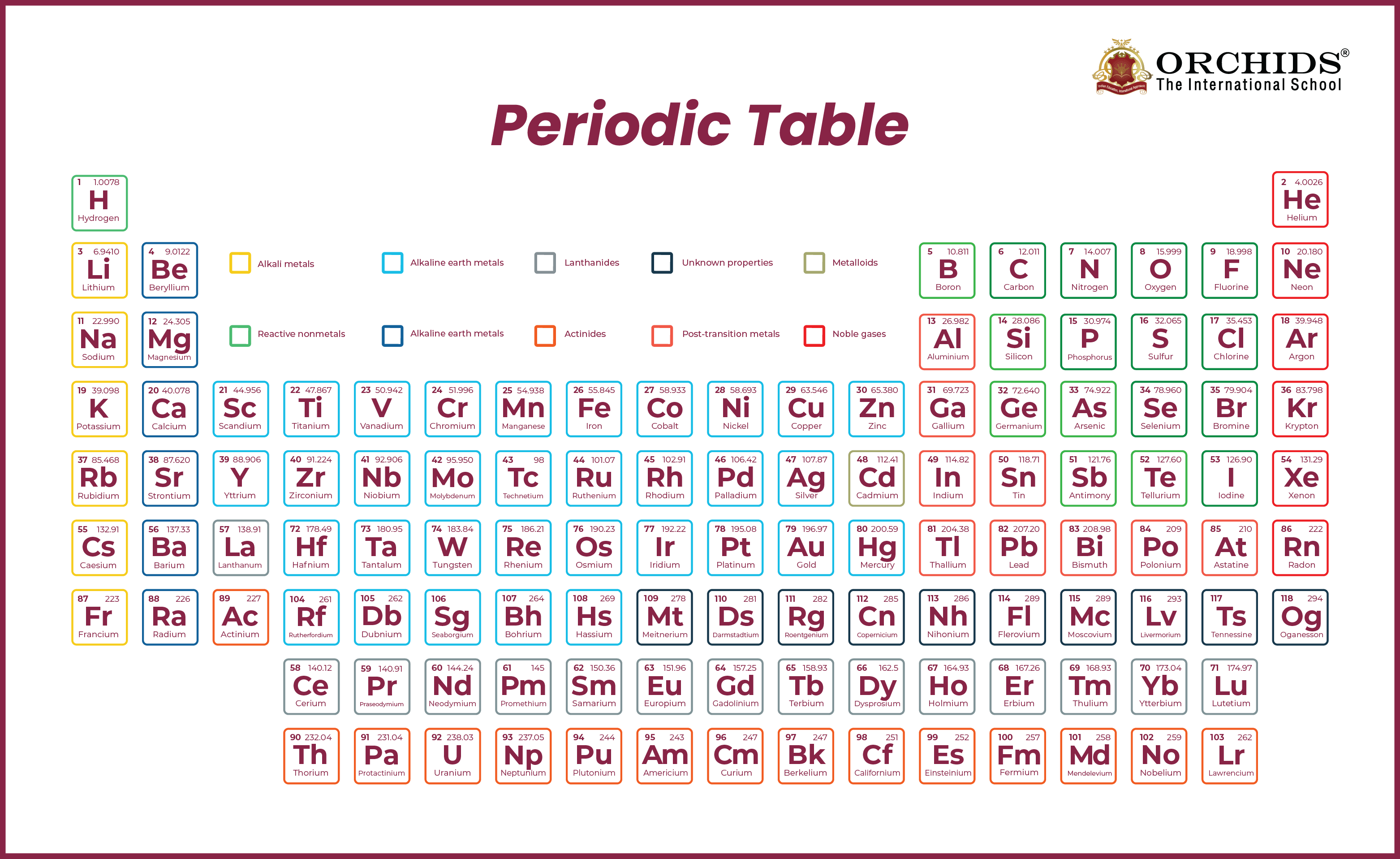
This arrangement became the Modern Periodic Table, where:
- Each element has its spot based on its atomic number
- Elements with similar properties are placed in the same vertical columns
- Horizontal rows show how many shells (energy levels) the atoms have
This table helps chemists predict how an element behaves, whether it will react easily or stay stable, whether it’s a metal or non-metal, and more.
List of 118 Elements with Their Names and Atomic Numbers
There are one hundred and eighteen elements known so far. Some are naturally found on Earth or in space, while others are made in laboratories.
Here’s how the first few look:
|
Name of the Element |
Symbol of the Element |
Atomic Number |
|
Hydrogen |
H |
1 |
|
Helium |
He |
2 |
|
Lithium |
Li |
3 |
|
Beryllium |
Be |
4 |
|
Boron |
B |
5 |
|
Carbon |
C |
6 |
|
Nitrogen |
N |
7 |
|
Oxygen |
O |
8 |
|
Fluorine |
F |
9 |
|
Neon |
Ne |
10 |
|
Sodium |
Na |
11 |
|
Magnesium |
Mg |
12 |
|
Aluminium |
Al |
13 |
|
Silicon |
Si |
14 |
|
Phosphorus |
P |
15 |
|
Sulfur |
S |
16 |
|
Chlorine |
Cl |
17 |
|
Argon |
Ar |
18 |
|
Potassium |
K |
19 |
|
Calcium |
Ca |
20 |
|
Scandium |
Sc |
21 |
|
Titanium |
Ti |
22 |
|
Vanadium |
V |
23 |
|
Chromium |
Cr |
24 |
|
Manganese |
Mn |
25 |
|
Iron |
Fe |
26 |
|
Cobalt |
Co |
27 |
|
Nickel |
Ni |
28 |
|
Copper |
Cu |
29 |
|
Zinc |
Zn |
30 |
|
Gallium |
Ga |
31 |
|
Germanium |
Ge |
32 |
|
Arsenic |
As |
33 |
|
Selenium |
Se |
34 |
|
Bromine |
Br |
35 |
|
Krypton |
Kr |
36 |
|
Rubidium |
Rb |
37 |
|
Strontium |
Sr |
38 |
|
Yttrium |
Y |
39 |
|
Zirconium |
Zr |
40 |
|
Niobium |
Nb |
41 |
|
Molybdenum |
Mo |
42 |
|
Technetium |
Tc |
43 |
|
Ruthenium |
Ru |
44 |
|
Rhodium |
Rh |
45 |
|
Palladium |
Pd |
46 |
|
Silver |
Ag |
47 |
|
Cadmium |
Cd |
48 |
|
Indium |
In |
49 |
|
Tin |
Sn |
50 |
|
Antimony |
Sb |
51 |
|
Tellurium |
Te |
52 |
|
Iodine |
I |
53 |
|
Xenon |
Xe |
54 |
|
Cesium |
Cs |
55 |
|
Barium |
Ba |
56 |
|
Lanthanum |
La |
57 |
|
Cerium |
Ce |
58 |
|
Praseodymium |
Pr |
59 |
|
Neodymium |
Nd |
60 |
|
Promethium |
Pm |
61 |
|
Samarium |
Sm |
62 |
|
Europium |
Eu |
63 |
|
Gadolinium |
Gd |
64 |
|
Terbium |
Tb |
65 |
|
Dysprosium |
Dy |
66 |
|
Holmium |
Ho |
67 |
|
Erbium |
Er |
68 |
|
Thulium |
Tm |
69 |
|
Ytterbium |
Yb |
70 |
|
Lutetium |
Lu |
71 |
|
Hafnium |
Hf |
72 |
|
Tantalum |
Ta |
73 |
|
Tungsten |
W |
74 |
|
Rhenium |
Re |
75 |
|
Osmium |
Os |
76 |
|
Iridium |
Ir |
77 |
|
Platinum |
Pt |
78 |
|
Gold |
Au |
79 |
|
Mercury |
Hg |
80 |
|
Thallium |
Tl |
81 |
|
Lead |
Pb |
82 |
|
Bismuth |
Bi |
83 |
|
Polonium |
Po |
84 |
|
Astatine |
At |
85 |
|
Radon |
Rn |
86 |
|
Francium |
Fr |
87 |
|
Radium |
Ra |
88 |
|
Actinium |
Ac |
89 |
|
Thorium |
Th |
90 |
|
Protactinium |
Pa |
91 |
|
Uranium |
U |
92 |
|
Neptunium |
Np |
93 |
|
Plutonium |
Pu |
94 |
|
Americium |
Am |
95 |
|
Curium |
Cm |
96 |
|
Berkelium |
Bk |
97 |
|
Californium |
Cf |
98 |
|
Einsteinium |
Es |
99 |
|
Fermium |
Fm |
100 |
|
Mendelevium |
Md |
101 |
|
Nobelium |
No |
102 |
|
Lawrencium |
Lr |
103 |
|
Rutherfordium |
Rf |
104 |
|
Dubnium |
Db |
105 |
|
Seaborgium |
Sg |
106 |
|
Bohrium |
Bh |
107 |
|
Hassium |
Hs |
108 |
|
Meitnerium |
Mt |
109 |
|
Darmstadtium |
Ds |
110 |
|
Roentgenium |
Rg |
111 |
|
Copernicium |
Cn |
112 |
|
Nihonium |
Nh |
113 |
|
Flerovium |
Fl |
114 |
|
Moscovium |
Mc |
115 |
|
Livermorium |
Lv |
116 |
|
Tennessine |
Ts |
117 |
|
Oganesson |
Og |
118 |
Thinking about starting to learn? Look no further than the first twenty to thirty elements since these are the ones you will most likely use in a school-level Chemistry course.
How to Learn the 118 Elements With Ease
Don’t panic - you do not need to remember all 118 elements all at once. There are ways to make it enjoyable and easy on yourself:
1. Start Simple
Begin with the first ten. Then the next ten. Break it into small groups and learn one set at a time.
2. Use Real-Life Links
- Calcium is in milk
- Oxygen is what we breathe
3. Create Funny Sentences (Mnemonics)
A mnemonic is a silly sentence that helps you remember names.
For example:
Hi, He Likes Beer But Could Not Offer Full Nine Suns
Hi → Hydrogen (H)
He → Helium (He)
Likes → Lithium (Li)
Beer → Beryllium (Be)
But → Boron (B)
Could → Carbon (C)
Not → Nitrogen (N)
Offer → Oxygen (O)
Full → Fluorine (F)
Nine Suns → Neon (Ne)
This helps you recall the first ten elements in order.
You can make your own for each row or group of the table. The crazier the sentence, the more it sticks!
4. Write and Repeat
Write the list often. Speaking and writing together help build a strong memory.
Common Mistakes Students Make
- Mixing up atomic number with atomic mass (they are different)
- Confusing similar-sounding elements (like magnesium and manganese)
- Thinking all elements are metals, many are non-metals or gases
- Assuming symbols always match the English name - many come from Latin!
Why This All Matters!
Understanding the names and atomic numbers of elements is your first real step into Chemistry. It helps you:
- Write and read chemical reactions
- Understand how substances behave
- Prepare confidently for exams
Even if you just learn the first few rows, it gives you a strong base to build on.
Conclusion
The important part about knowing the 118 elements isn't simply memorising their names. They dictate how we see the universe put together. With science educators, begin with scientific fundamentals, relate them to our everyday life, and learn in your own time. Chemistry can be quite simple and impactful if done right!
Frequently Asked Questions on 118 Elements and their symbols and Atomic numbers
1. What is the atomic number?
The atomic number represents how many protons are found in an atom’s nucleus. It’s what makes each element distinct.
2. Why do some element symbols not match their names?
Some elements have symbols based on their Latin names rather than their English names. For instance, iron’s symbol "Fe" comes from "ferrum" in Latin.
3. What is the highest atomic number?
Element number 118, known as Oganesson (Og), currently has the highest atomic number on the periodic table.
4. How many naturally occurring elements are there?
Out of the 118 elements, only some exist in nature. Most elements from atomic numbers 1 to 92 (except Technetium and Promethium) occur naturally, while others are made in labs.
5. Where can I find a list of all 118 elements with their symbols and atomic numbers?
You can find complete periodic tables on the Orchids International School website showing all 118 elements along with their symbols and atomic numbers.
6. What is the importance of learning the 118 elements and their symbols and atomic numbers?
Knowing the 118 elements and their symbols and atomic numbers helps students understand how the periodic table is organised. The atomic number indicates the number of protons in an atom and defines each element’s identity.
7. Why should we study the 118 elements and their symbols and atomic mass numbers?
Studying the 118 elements and their symbols and atomic mass numbers is essential for understanding atomic structure and calculations in chemistry.
8. How does knowing the 118 elements and their symbols and valency help in chemistry?
Learning the 118 elements and their symbols and valency helps you predict how elements will react or combine with others. Valency shows the number of electrons an atom can gain, lose, or share during bonding.
Science isn't just a subject, it's the way of seeing the world. Curious how Orchids The International School teaches it that way? Talk to our admissions team.
Admissions Open for 2026-27
What type of concept pages would you prefer?
CBSE Schools In Popular Cities
- CBSE Schools in Bangalore
- CBSE Schools in Mumbai
- CBSE Schools in Pune
- CBSE Schools in Hyderabad
- CBSE Schools in Chennai
- CBSE Schools in Gurgaon
- CBSE Schools in Kolkata
- CBSE Schools in Indore
- CBSE Schools in Sonipat
- CBSE Schools in Delhi
- CBSE Schools in Rohtak
- CBSE Schools in Bhopal
- CBSE Schools in Aurangabad
- CBSE Schools in Jabalpur
- CBSE Schools in Jaipur
- CBSE Schools in Jodhpur
- CBSE Schools in Nagpur
- CBSE Schools in Ahmednagar
- CBSE School In Tumkur











Orchids The International School is one of India's leading chains of CBSE and ICSE schools, with 110+ schools across the country.