

Combustion Fuel: Types,Characteristics and Everyday Uses
Combustion of fuel is something all of us see every single day, when a stove lights up, when a vehicle starts, or even when a candle burns. But behind this simple glow of a flame lies a powerful chemical reaction. But why is combustion important? It helps students learn how energy is produced, how different fuels behave, and how burning affects our environment.
This article focuses on the concept of fuel combustion in the simplest using real-life examples, including the different types, the kinds of fuels we use, and the effects of burning them.
Table of Contents
- What Is Combustion
- Types of Combustion
- Types of Fuels Used for Combustion
- Environmental Effects of Fuel Combustion
- Real-Life Uses of Combustion
- Frequently Asked Questions on Combustion Fuel

What Is Combustion?
Combustion simply means burning. It is a chemical reaction where a fuel reacts with oxygen and releases heat and often light. That is why a flame glows, a stove produces heat, and petrol makes engines work.
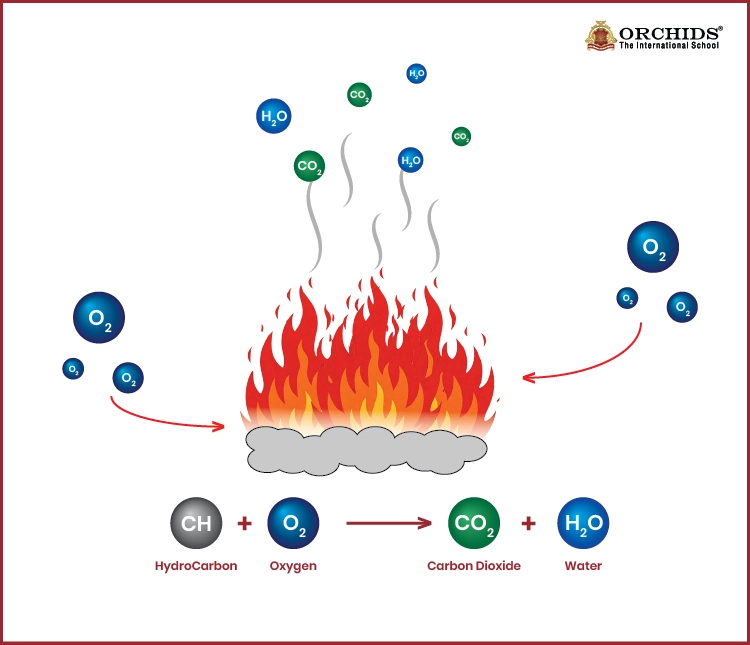
Everyday examples of combustion are:
- LPG burning in the kitchen
- Petrol and diesel are burned in vehicles
- Wood burning in fireplaces
- Burning of a candle
- Kerosene lamp flame
In every case, the fuel reacts with oxygen and produces heat, which is what the combustible substance is.
But How Combustion takes place?
Combustion can happen only when these three conditions are met. These three conditions are often called the Fire Triangle.
1. A fuel is any substance that can burn.
Examples: wood, paper, kerosene, LPG, petrol, charcoal.
2. Oxygen (Air) supports burning. If you remove oxygen, the fire goes out instantly. This is why covering a burning pan with a lid stops the flames.
3. Ignition Temperature: Every fuel needs to reach a certain minimum temperature to start burning.
This is why:
- Blowing air makes fire grow. You supply more oxygen.
- Water puts out fire; it cools fuel below its ignition temperature.
NOTE: The fact that if any one of these three conditions is missing, combustion cannot happen.
Also Read: Heat of Combustion
Before understanding the types, remember the following important terms.
- Combustible Substances: These are substances that burn easily in oxygen.
Examples: wood, paper, kerosene, LPG, charcoal.
- Inflammable Substances; Inflammable materials catch fire very quickly because they have a very low ignition temperature.
Examples: petrol, alcohol, LPG, aerosol sprays. Even a tiny spark can ignite them; that’s why they must be stored safely.
- Non-Combustible Substances: These substances do not burn even if oxygen is available.
Examples: clay, sand, soil, water, iron nails.
Most of these are used as fire-resistant materials.
- Ignition Temperature: Ignition temperature is the minimum temperature a fuel must reach before it can catch fire.
Examples:
- Paper ignites quickly → low ignition temperature
- Wood burns slowly → higher ignition temperature
If a fuel does not reach its ignition temperature, combustion will not start. This is why damp wood doesn’t burn easily.
Types of Combustion
1. Complete Combustion: Occurs when fuel burns with plenty of oxygen.
Products are:
- Carbon dioxide
- Water vapour
- High heat
- Very little smoke
Example: dry wood burning completely into ash.
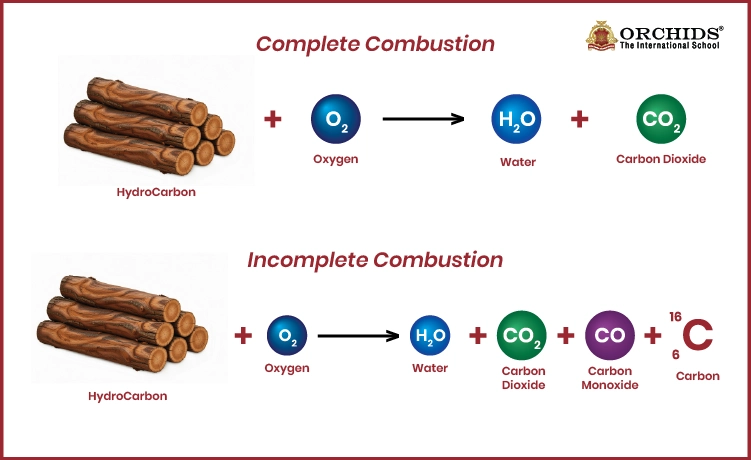
2. Incomplete Combustion;Occurs when oxygen supply is limited.
Products:
- Carbon monoxide (poisonous)
- Soot (black smoke)
- Less heat
This type is harmful to health and causes pollution.
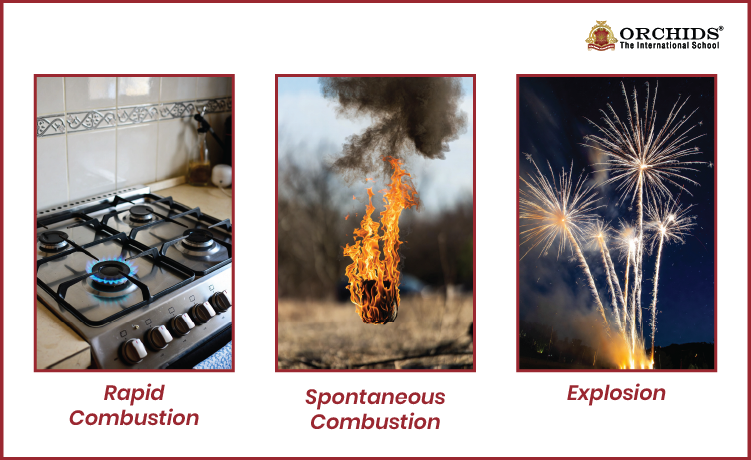
3. Rapid Combustion: Fuel catches fire instantly and produces heat and light quickly. Example: LPG ignites immediately when lit.
4. Spontaneous Combustion
Fuel catches fire on its own, without any spark. This happens when heat builds up internally.
Example: forest fires in a dry summer.
5. Explosion (Explosive Combustion)
A very sudden combustion that produces: Heat, Light, Sound, Pressure and a large amount of gas
Examples: crackers, fireworks, and explosive substances.
Below is the illustration of the types of combustion:
Types of Fuels Used for Combustion
1. Solid Fuels
- Solid fuels burn slowly because oxygen cannot reach all parts of the fuel at once.
- They usually produce smoke, soot, and ash after burning.
- These fuels are cheap and easily available, especially in rural areas.
- However, they are less efficient and cause more air pollution than liquid or gaseous fuels.
Examples: wood, coal, charcoal
- Where used?
Cooking on chulhas, brick kilns, steam engines (historically), and campfires.
2. Liquid Fuels
- Liquid fuels ignite very quickly, as they evaporate easily and mix well with air.
- They are widely used in automobiles and machines, where quick burning produces strong energy.
- They are easier to store and transport than solid fuels.
- Compared to solid fuels, they release less smoke but still produce harmful gases.
Examples: petrol, diesel, kerosene
- Where used?
Cars, trucks, motorcycles, aircraft, generators, lamps.
3. Gaseous Fuels, Examples: LPG, CNG, natural gas
Examples: LPG, CNG, PNG, natural gas, biogas
- Gaseous fuels burn very cleanly, producing almost no smoke or soot.
- They give more heat energy per unit compared to solids and liquids.
- They mix with air easily, so combustion is complete and efficient.
- They are highly convenient for households and industries because they can be supplied through pipelines and cylinders.
- Where used?
Home kitchens, industries, CNG vehicles, and gas power plants.
But the question is, Why Fuel Type Matters?
- Gaseous fuels → cleanest and most efficient
- Liquid fuels → fast ignition and used in transport
- Solid fuels → cheap but polluting
Choosing the right fuel helps save energy, reduce pollution, and improve efficiency.
Learn More: Fuel Types
Environmental Effects of Fuel Combustion
When fuels burn, they release harmful gases and particles:
1. Carbon dioxide (CO₂) leads to global warming.
2. Carbon monoxide (CO) is very poisonous.
3. Sulphur dioxide (SO₂) causes acid rain.
4. Nitrogen oxides (NOₓ) cause smog and breathing problems.
5. Particulate matter (soot) Blackens buildings and harms lungs.
This is why chimneys, ventilators, and exhaust fans are necessary.
Next is How Do We Control Combustion?
The reason water, sand, and fire extinguishers work effectively can be controlled by:
- Cutting off oxygen (covering the fire)
- Cooling the fuel (pouring water)
- Removing the fuel source
This is the reason water, sand, and fire extinguishers work effectively.
Real-Life Uses of Combustion
- Running vehicles, like Cars, buses, trucks, and bikes, run because petrol, diesel, or CNG burns inside the engine to produce energy that moves the vehicle.
- Powering industries, they use combustion in big boilers and furnaces to generate heat, run machines, melt metals, and process raw materials.
- Cooking food, whether it is LPG in homes or coal and wood in rural areas, burning fuel provides the heat needed for cooking.
- Producing electricity, like inthermal power plants burn coal, natural gas, or oil to create steam that turns turbines and generates electricity for our homes and cities.
- Heating homes; most available things like Room heaters, fireplaces, kerosene heaters, and even central heating systems depend on combustion to keep indoor spaces warm during winter.
- Working of rockets; as Rocket engines burn special fuels at extremely high speeds, which produces a massive push (thrust) that helps rockets lift off the ground.
Read More: Carbon monooxide
As we learned, Combustion of fuel is one of the most important processes that power our daily lives, from cooking to transportation and electricity generation. This simple and complete guide ensures that every part of the topic is clear, engaging, and connected to real-life situations.
Frequently Asked Questions on Combustion Fuel
1. Why is fuel necessary for combustion?
Fuel is needed because Combustion Fuel acts as the main source of energy that burns to release heat. Without a proper Combustion of Fuel, no reaction can begin, making Fuels and Combustion completely incomplete.
2. What are the 4 types of combustion?
The four types include rapid, spontaneous, slow, and explosive Fuel Combustion based on speed and intensity. Each type of Combustion of Fuel behaves differently, but all depend on fuel and Combustion working together.
3. Which is the most important for combustion?
The most important part of Combustion Fuel is the presence of oxygen, which helps the burning start and continue. Without oxygen, even the best Fuel Combustion cannot happen, making Fuels and Combustion impossible.
4. What makes a fuel combustible?
A fuel becomes combustible when it can easily react with oxygen and support smooth Combustion of Fuel. Its chemical makeup decides how well Fuel Combustion will occur, which is why Fuels and Combustion vary from one fuel to another.
5. What fuel is used in combustion?
Common combustion fuels include wood, coal, LPG, petrol, diesel, and natural gas used in homes and industries. Every type of Fuel Combustion releases energy differently, showing how wide the world of Fuels and Combustion is.
6. What is fuel made of?
Fuel is mainly made of carbon and hydrogen, which help in efficient Combustion of Fuel when oxygen is present.
Science isn't just a subject, it's the way of seeing the world. Curious how Orchids The International School teaches it that way? Talk to our admissions team.
Admissions Open for 2026-27
What type of concept pages would you prefer?
CBSE Schools In Popular Cities
- CBSE Schools in Bangalore
- CBSE Schools in Mumbai
- CBSE Schools in Pune
- CBSE Schools in Hyderabad
- CBSE Schools in Chennai
- CBSE Schools in Gurgaon
- CBSE Schools in Kolkata
- CBSE Schools in Indore
- CBSE Schools in Sonipat
- CBSE Schools in Delhi
- CBSE Schools in Rohtak
- CBSE Schools in Bhopal
- CBSE Schools in Aurangabad
- CBSE Schools in Jabalpur
- CBSE Schools in Jaipur
- CBSE Schools in Jodhpur
- CBSE Schools in Nagpur
- CBSE Schools in Ahmednagar
- CBSE School In Tumkur











Orchids The International School is one of India's leading chains of CBSE and ICSE schools, with 130+ schools across the country.