

Anabolism
Anabolism: Ever wonder how your body bounces back after a cut or gets stronger after a workout? Yes! Anabolism is the body’s way of building itself up from healing a cut to growing stronger muscles after a workout.
This article is the go-to guide to truly understand how anabolism works, everyday examples, the stages involved, the role of hormones, and even how DNA gets copied through this powerful process.
Table of Contents
- What is Anabolism
- Stages of Anabolism: How the Body Builds
- Sources of Energy for Anabolism
- Functions of Anabolism
- Frequently Asked Questions on Anabolism

What is Anabolism?
Anabolism plays an important role in the human body. It is a mechanism that is responsible for generating complex molecules from smaller, simpler ones.
The curious and important thing about it is that everything from muscle growth and cell repair to energy (in the form of ATP) storage and DNA production all start with anabolism.
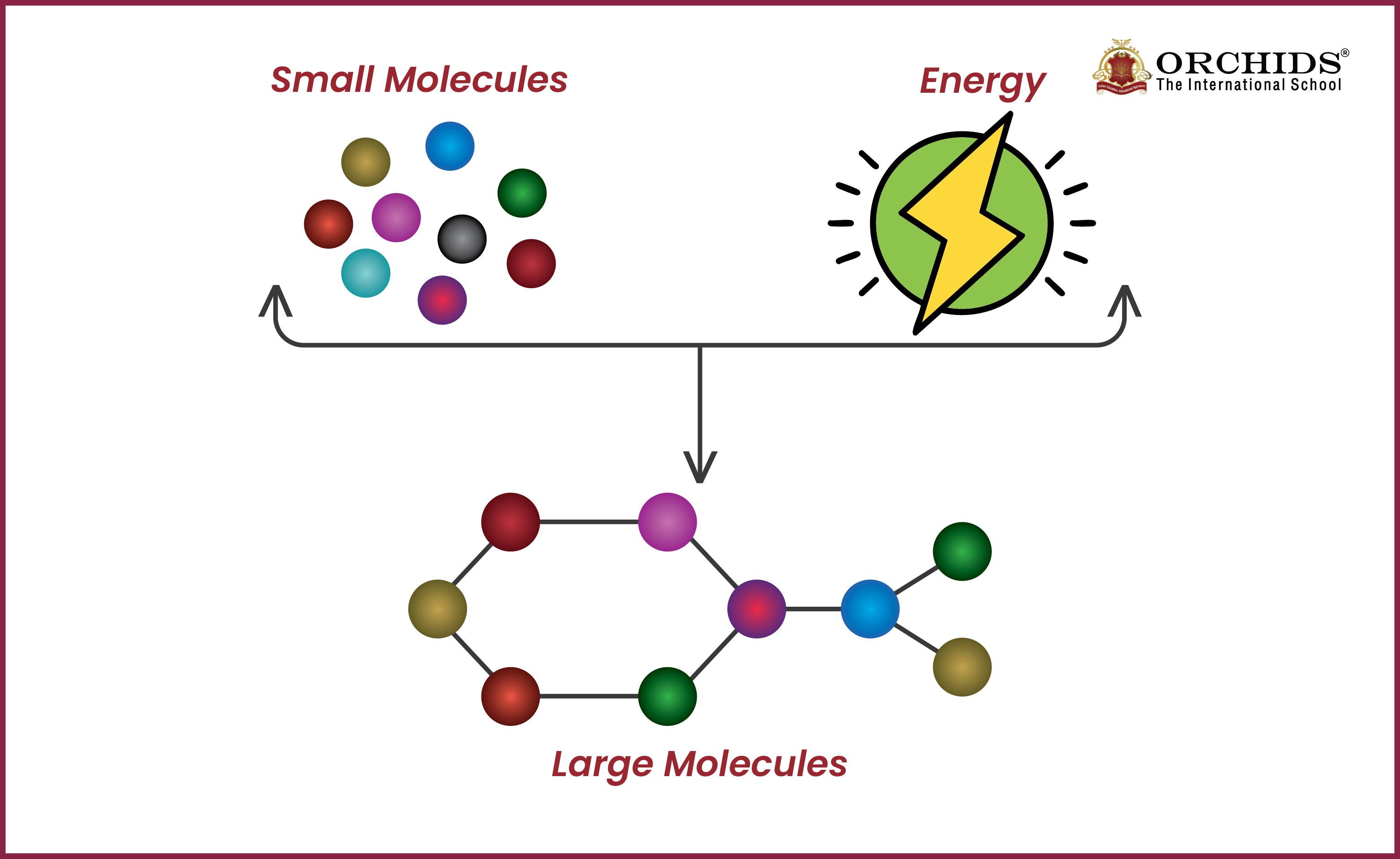
If catabolism is about breaking down molecules to release energy, anabolism is about using energy to build and maintain the body. This process is essential for growth, healing, and overall health.
Anabolism happens every day in your body, even when you’re just sitting and breathing.
Let's discuss several examples :
- Formation of Disaccharides
When two simple sugar molecules (monosaccharides) combine, they form a disaccharide like sucrose.
- Example:
This process also releases a water molecule, a common feature in anabolic reactions.
- Building Dipeptides from Amino Acids
Your body links amino acids to form proteins, starting with dipeptides.
- Example:
This is how your muscles, enzymes, and many body structures are built.
- Creation of Lipids
Lipids occur when glycerol combines with fatty acids in fat cells, or in the case of phospholipids, cell membranes.
- Example:
- Photosynthesis (Anabolic in Plants)
In the process of photosynthesis, plants create glucose by harnessing sunlight to convert carbon dioxide and water into glucose, which is a complex sugar for energy and growth.
- Equation:
This is one of the most important anabolic processes in nature.
Hormonal Support for Anabolism
Let's look into several hormones that facilitate and stimulate anabolism.
- Insulin: Promotes absorption and storage of glucose.
- Anabolic steroidssupport protein production and muscle hypertrophy.
- Growth hormone: Promotes tissue growth.
- Anaerobic exercise: Triggers strong muscle repair and muscle building from anabolic activity.
Stages of Anabolism: How the Body Builds
Anabolism occurs in three stages that are separate but interconnected:
- Produce Precursors
The body begins by forming the basic building blocks like monosaccharides, amino acids, nucleotides, and isoprenoids. These are the raw materials required for bigger structures. - Activating Precursors Using Energy
Before these precursors can be assembled, they are "activated" using energy, mostly in the form of ATP. This gives them the push needed to bond with other molecules. - Assembling Complex Molecules
Finally, the body puts these components together into macromolecules: - Monosaccharides → Polysaccharides (like glycogen)
- Amino acids → Proteins
- Nucleotides → DNA/RNA
- Fatty acids + Glycerol → Lipids
Sources of Energy for Anabolism
- Autotrophs (plants) use sunlight to make organic compounds out of CO₂ and water.
- Heterotrophs (humans)acquire nutrients from food, including glucose and amino acids.
- Photoautotrophs and photoheterotrophs obtain energy from light.
- Chemoautotrophs and chemoheterotrophs derive their energy from reactions involving inorganic chemicals.Cell upkeep: Regular anabolism replaces the regular turnover of molecules in the body to maintain the balance of the internal environment of the organism.
DNA synthesis is an important anabolic activity that makes sure your genetic material is accurately passed on when cells divide.
Here’s what happens:
- Unzipping the DNA
Before cell division, the double-stranded DNA unwinds and separates, resulting in two single strands. - Adding New Nucleotides
Each original strand serves as a template from which additional matching nucleotides (A to T, C to G) are brought in and joined together to create two identical strands of DNA. - Sugar-Phosphate Backbone
The enzyme DNA polymerase assists in linking the nucleotides into a long chain, linking the nucleotides together, resulting in the new sugar-phosphate backbone.
This entire process is powered by ATP and is one of the most precise and regulated anabolic activities that the body performs.
We have learned that Anabolism is not just a scientific principle, it's what causes your body to grow, repair and adapt every day. Whether storing energy or replicating DNA, it's constantly at work without your knowing in keeping you alive and well.
Frequently Asked Questions on Anabolism
1. Does anabolism take energy?
Yes, it does! Your body needs energy, kind of like fuel to power the process of building things like muscles, enzymes, and even DNA.
2. What is the main function of anabolism?
Anabolism helps your body grow, heal, and stay strong by building important structures like cells, tissues, and muscles.
3. What is a real-life example of anabolism?
A great example is when your muscles grow after working out, your body uses nutrients to repair and build new muscle fibres.
4. How to increase anabolism?
To support anabolism, eat enough protein, get good sleep, stay active, and keep stress in check, your body will thank you!
5. Is anabolism the opposite of catabolism?
Yes! While catabolism breaks things down for energy, anabolism is all about building things up and helping your body grow and repair.
6. Does anabolism help with healing?
Definitely. When you’re healing from a cut, injury, or workout, anabolism steps in to rebuild what’s damaged and make it stronger.
Science isn't just a subject, it's the way of seeing the world. Curious how Orchids The International School teaches it that way? Talk to our admissions team.
Admissions Open for 2026-27
What type of concept pages would you prefer?
CBSE Schools In Popular Cities
- CBSE Schools in Bangalore
- CBSE Schools in Mumbai
- CBSE Schools in Pune
- CBSE Schools in Hyderabad
- CBSE Schools in Chennai
- CBSE Schools in Gurgaon
- CBSE Schools in Kolkata
- CBSE Schools in Indore
- CBSE Schools in Sonipat
- CBSE Schools in Delhi
- CBSE Schools in Rohtak
- CBSE Schools in Bhopal
- CBSE Schools in Aurangabad
- CBSE Schools in Jabalpur
- CBSE Schools in Jaipur
- CBSE Schools in Jodhpur
- CBSE Schools in Nagpur
- CBSE Schools in Ahmednagar
- CBSE School In Tumkur











Orchids The International School is one of India's leading chains of CBSE and ICSE schools, with 110+ schools across the country.