

Element Definition: A Beginner-Friendly Guide
Element definition is quite simple to learn, but it's important to understand it first !! The world around us is made up of elements. Imagine how crucial it is to understand elements. What exactly is an element in chemistry? It is the simplest pure substance that cannot be broken down into anything simpler by chemical means.
This article is a perfect guide that will help you understand what elements mean, their importance, and give you a complete reference for all 118 elements known so far.
Table of Contents
- Understanding Elements in Chemistry
- List of 118 Elements, Their Symbols, and Atomic Numbers
- Importance of Learning Element Names, Symbols, and Atomic Numbers
- Frequently Asked Questions on Elements

Understanding Elements in Chemistry
To organise and study them easily, scientists created the Periodic Table, where each element is given a name, a chemical symbol, and an atomic number, which makes it helpful to study them systematically without any struggle.
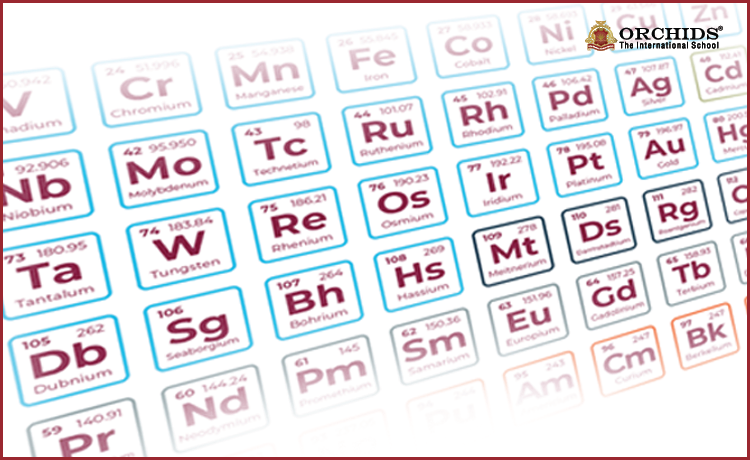
The organisation of Elements in the Periodic Table is such a way that it arranges elements based on :
- Increasing atomic number
- Similar chemical properties are grouped into columns (called groups)
- Periods (rows) showing gradual changes in properties
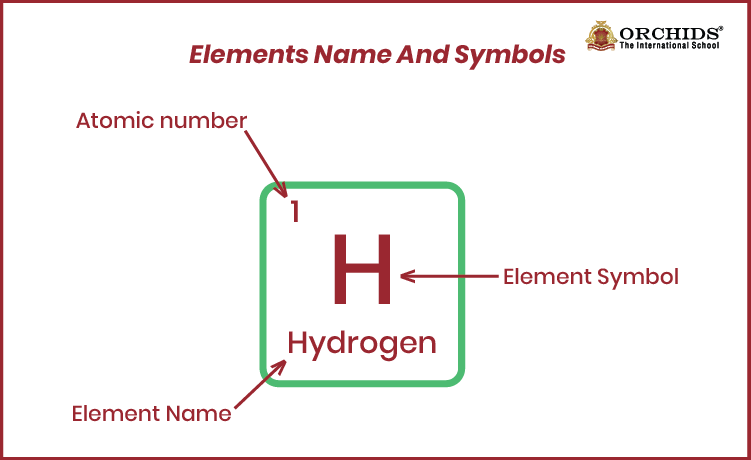
First, let's understand that an element is a pure substance made of only one type of atom.
- Example: Oxygen (O) contains only oxygen atoms.
- Example: Gold (Au) contains only gold atoms.
Next comes how these Chemical Symbols are assigned to Elements?
A chemical symbol is a short, standard abbreviation for an element’s name.
- Written with one or two letters.
- The first letter is always capitalised, and the second letter (if any) is lowercase.
Let's understand with an example:
- H for Hydrogen
- He for Helium
- Na for Sodium (from Latin Natrium)
Symbols often come from Latin or Greek names, making them universally recognised worldwide.
When it comes to identifying so many elements, it was difficult !! So each element is identified by its atomic number and mass number.
Every element is unique because of its atomic number (the number of protons in its nucleus) and has a standard chemical symbol.
Let's have a quick peek at what an Atomic Number is.
As discussed, the atomic number is the key identity of an element.
- It represents the number of protons in an atom’s nucleus.
Example: Hydrogen has an atomic number of 1, meaning it has one proton.
Why it’s important:
- It helps to determine the position of the element in the periodic table.
- Also, it defines the element’s properties and behaviour.
List of 118 Elements, Their Symbols, and Atomic Numbers
|
Atomic Number |
Element Name |
Symbol |
|
1 |
Hydrogen |
H |
|
2 |
Helium |
He |
|
3 |
Lithium |
Li |
|
4 |
Beryllium |
Be |
|
5 |
Boron |
B |
|
6 |
Carbon |
C |
|
7 |
Nitrogen |
N |
|
8 |
Oxygen |
O |
|
9 |
Fluorine |
F |
|
10 |
Neon |
Ne |
|
11 |
Sodium |
Na |
|
12 |
Magnesium |
Mg |
|
13 |
Aluminium |
Al |
|
14 |
Silicon |
Si |
|
15 |
Phosphorus |
P |
|
16 |
Sulfur |
S |
|
17 |
Chlorine |
Cl |
|
18 |
Argon |
Ar |
|
19 |
Potassium |
K |
|
20 |
Calcium |
Ca |
|
21 |
Scandium |
Sc |
|
22 |
Titanium |
Ti |
|
23 |
Vanadium |
V |
|
24 |
Chromium |
Cr |
|
25 |
Manganese |
Mn |
|
26 |
Iron |
Fe |
|
27 |
Cobalt |
Co |
|
28 |
Nickel |
Ni |
|
29 |
Copper |
Cu |
|
30 |
Zinc |
Zn |
|
31 |
Gallium |
Ga |
|
32 |
Germanium |
Ge |
|
33 |
Arsenic |
As |
|
34 |
Selenium |
Se |
|
35 |
Bromine |
Br |
|
36 |
Krypton |
Kr |
|
37 |
Rubidium |
Rb |
|
38 |
Strontium |
Sr |
|
39 |
Yttrium |
Y |
|
40 |
Zirconium |
Zr |
|
41 |
Niobium |
Nb |
|
42 |
Molybdenum |
Mo |
|
43 |
Technetium |
Tc |
|
44 |
Ruthenium |
Ru |
|
45 |
Rhodium |
Rh |
|
46 |
Palladium |
Pd |
|
47 |
Silver |
Ag |
|
48 |
Cadmium |
Cd |
|
49 |
Indium |
In |
|
50 |
Tin |
Sn |
|
51 |
Antimony |
Sb |
|
52 |
Tellurium |
Te |
|
53 |
Iodine |
I |
|
54 |
Xenon |
Xe |
|
55 |
Caesium |
Cs |
|
56 |
Barium |
Ba |
|
57 |
Lanthanum |
La |
|
58 |
Cerium |
Ce |
|
59 |
Praseodymium |
Pr |
|
60 |
Neodymium |
Nd |
|
61 |
Promethium |
Pm |
|
62 |
Samarium |
Sm |
|
63 |
Europium |
Eu |
|
64 |
Gadolinium |
Gd |
|
65 |
Terbium |
Tb |
|
66 |
Dysprosium |
Dy |
|
67 |
Holmium |
Ho |
|
68 |
Erbium |
Er |
|
69 |
Thulium |
Tm |
|
70 |
Ytterbium |
Yb |
|
71 |
Lutetium |
Lu |
|
72 |
Hafnium |
Hf |
|
73 |
Tantalum |
Ta |
|
74 |
Tungsten |
W |
|
75 |
Rhenium |
Re |
|
76 |
Osmium |
Os |
|
77 |
Iridium |
Ir |
|
78 |
Platinum |
Pt |
|
79 |
Gold |
Au |
|
80 |
Mercury |
Hg |
|
81 |
Thallium |
Tl |
|
82 |
Lead |
Pb |
|
83 |
Bismuth |
Bi |
|
84 |
Polonium |
Po |
|
85 |
Astatine |
At |
|
86 |
Radon |
Rn |
|
87 |
Francium |
Fr |
|
88 |
Radium |
Ra |
|
89 |
Actinium |
Ac |
|
90 |
Thorium |
Th |
|
91 |
Protactinium |
Pa |
|
92 |
Uranium |
U |
|
93 |
Neptunium |
Np |
|
94 |
Plutonium |
Pu |
|
95 |
Americium |
Am |
|
96 |
Curium |
Cm |
|
97 |
Berkelium |
Bk |
|
98 |
Californium |
Cf |
|
99 |
Einsteinium |
Es |
|
100 |
Fermium |
Fm |
|
101 |
Mendelevium |
Md |
|
102 |
Nobelium |
No |
|
103 |
Lawrencium |
Lr |
|
104 |
Rutherfordium |
Rf |
|
105 |
Dubnium |
Db |
|
106 |
Seaborgium |
Sg |
|
107 |
Bohrium |
Bh |
|
108 |
Hassium |
Hs |
|
109 |
Meitnerium |
Mt |
|
110 |
Darmstadtium |
Ds |
|
111 |
Roentgenium |
Rg |
|
112 |
Copernicium |
Cn |
|
113 |
Nihonium |
Nh |
|
114 |
Flerovium |
Fl |
|
115 |
Moscovium |
Mc |
|
116 |
Livermorium |
Lv |
|
117 |
Tennessine |
Ts |
|
118 |
Oganesson |
Og |
Importance of Learning Element Names, Symbols, and Atomic Numbers
- It builds a strong foundation for chemistry studies for students.
- It is considered to be essential for research and experiments, and helpful for scientists.
- For the industry, ithelps in material identification, safety, and product design.
As discussed above, the elements of the periodic table are like the alphabet of the chemical world; each one has its name, symbol, and atomic number, forming the basis for everything around us. By learning them, you gain the key to understanding chemistry and the material universe.
Frequently Asked Questions on Elements
1. What are some questions to ask about elements?
You might ask about an element’s origin, where it occurs naturally, how it reacts with other substances, and its role in everyday life.
2. Why are elements important in day-to-day life?
Elements are essential for life; they make up the air we breathe, the water we drink, the food we eat, and even the structure of our bodies.
3. What is the most interesting element in chemistry?
Many people find carbon fascinating because it can bond in countless ways, forming the foundation for all living things on Earth.
4. What are elements used for in chemistry?
In chemistry, elements are used to create compounds, study reactions, and develop new materials for industries like healthcare and technology.
5. What is the Element Definition?
The Element Definition is that it’s a pure substance made of only one type of atom, such as oxygen, copper, or gold, each with unique characteristics.
6. Can you give some Element Examples?
Element Examples include oxygen for breathing, iron for construction, silver for jewellery, and helium for inflating balloons.
Science isn't just a subject, it's the way of seeing the world. Curious how Orchids The International School teaches it that way? Talk to our admissions team.
Admissions Open for 2026-27
What type of concept pages would you prefer?
CBSE Schools In Popular Cities
- CBSE Schools in Bangalore
- CBSE Schools in Mumbai
- CBSE Schools in Pune
- CBSE Schools in Hyderabad
- CBSE Schools in Chennai
- CBSE Schools in Gurgaon
- CBSE Schools in Kolkata
- CBSE Schools in Indore
- CBSE Schools in Sonipat
- CBSE Schools in Delhi
- CBSE Schools in Rohtak
- CBSE Schools in Bhopal
- CBSE Schools in Aurangabad
- CBSE Schools in Jabalpur
- CBSE Schools in Jaipur
- CBSE Schools in Jodhpur
- CBSE Schools in Nagpur
- CBSE Schools in Ahmednagar
- CBSE School In Tumkur











Orchids The International School is one of India's leading chains of CBSE and ICSE schools, with 110+ schools across the country.