

Ammonium Sulphate (NH₄)₂SO₄
Ammonium Sulphate; Ever noticed how white granules spread across farmlands are silently enhancing food production? That’s ammonium sulphate at work! This magical inorganic compound is not just a nitrogen-rich fertiliser but also an excellent helper in industries, water treatment, and even labs.
The article provides insights into its structure, how it’s made, its unique chemical behavior, and the many ways it supports everyday life.
Table of Contents
- What is Ammonium Sulphate and Its Structure
- Ammonium Sulphate Synthesis
- Properties of Ammonium Sulphate
- Ammonium Sulphate Applications
- Facts to Learn: Ammonium Sulphate
- Frequently Asked Questions On Ammonium Sulphate (NH₄)₂SO₄

What is Ammonium Sulphate and Its Structure
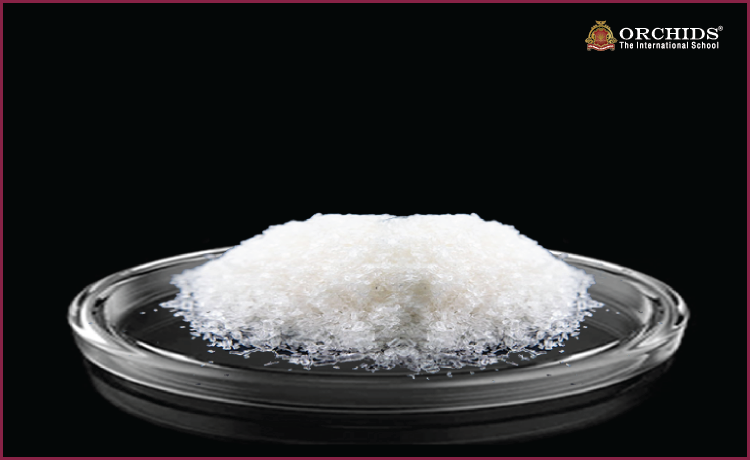
Ammonium Sulphate in chemistry is the key to many reactions and serves many applications in agriculture and industry. Recognised by its white, crystalline appearance, it is mostly used as a fertiliser, supplying essential nitrogen to crops.
The fact that Beyond farming, it has many applications that will be discussed here and how these make it a multi-purpose chemical.
Interestingly! The crystalline ionic structure of Ammonium sulphate is composed of two positively charged ammonium ions (NH₄⁺) and one negatively charged sulphate ion (SO₄²⁻).
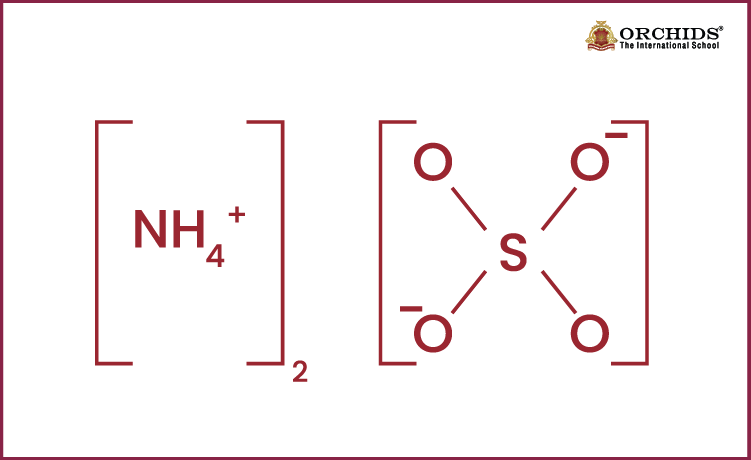
Overview of Structure:
-
Each sulphate ion (SO₄²⁻) has a tetrahedral structure, with a central sulfur atom bonded to four oxygen atoms.
-
Ammonium ions (NH₄⁺) are also tetrahedral, with nitrogen at the center surrounded by four hydrogen atoms.
-
The compound forms a stable lattice because the positive and negative ions are strongly attracted to each other.
-
Its high water solubility ensures that nitrogen is quickly available to the soil when applied as a fertiliser.
Fun Fact: This strong ionic structure gives ammonium sulphate high stability, making it less likely to absorb moisture compared to other nitrogen fertilisers.
Ammonium Sulphate Synthesis
When it comes to the preparation of Ammonium sulphate, it can be prepared both industrially and in laboratories.
Let's Discuss!
The most common industrial method is the neutralisation of ammonia with sulphuric acid.
The Chemical Reaction involved is :
Steps of Preparation:
-
Firstly, Neutralisation takes place as Ammonia gas (NH₃) is bubbled through dilute sulphuric acid (H₂SO₄). This then produces an aqueous solution of ammonium sulphate.
-
The process carried out is the Crystallisation, where the solution is concentrated through evaporation. Upon cooling, white crystalline ammonium sulphate is formed.
-
Lastly! Crystals are separated, dried, and processed into granules or powder for easy handling.
Industrial Insight: Large-scale production often uses gaseous ammonia from fertiliser plants and sulphuric acid from lead chamber processes.
Secondly,In the laboratory, one method involves reacting a solution of ammonium carbonate with finely powdered gypsum. This reaction produces ammonium sulfate along with calcium carbonate as a byproduct:
Properties of Ammonium Sulphate
Ammonium sulphate has been identified by physical and chemical characteristics that make it highly useful.
Physical Properties:
-
Chemical Formula: (NH₄)₂SO₄
-
Molar Mass: 132.14 g/mol
-
Appearance: White crystalline solid
-
Density: 1.77 g/cm³
-
Solubility: Highly soluble in water; insoluble in alcohol and acetone
Chemical Properties:
-
Ammonium Sulphate shows Thermal Decomposition on strong heating, it decomposes to produce ammonia (NH₃), nitrogen (N₂), sulphur dioxide (SO₂), and water vapour.
The reaction taking place during the first stage of heating is represented as:
-
Reaction with the Base of Ammonium Sulphate leads to the release of ammonia gas, often used in laboratory tests for ammonium salts.
-
It is Non-Combustible as it does not burn but may release toxic fumes of SO₂ and NH₃ on heating.
Ammonium Sulphate Applications
Ammonium sulphate is an important compound used for multipurpose applications such as in agriculture, industry, and research.
-
In Agricultural Fertiliser, it supplies 21% nitrogen and 24% sulphur to crops to improve crop yield and nourishment. Also, it is ideal for alkaline soils as it helps in lowering the soil pH.
-
In the Food Industry, Ammonium Sulphate works as a food additive (E517) to regulate acidity in bakery and dough products.
-
Ammonium sulphate is crucial and well-known in water treatment by removing impurities and softening water in certain industrial processes.
-
Industrial Applications in the manufacturing of flame retardants and fireproofing chemicals, Ammonium Sulphate make the process at ease.
Did You Know? Ammonium sulphate is sometimes mixed with ammonium nitrate to produce slow-release fertilisers, enhancing crop yield and minimising the loss of nitrogen.
Facts to Learn Ammonium Sulphate
-
Visualise it as small white crystals that nourish crops with nitrogen and sulphur.
-
Remember the formula (NH₄)₂SO₄, where two ammoniums embrace one sulphate.
-
Understand its preparation of how ammonia encounters sulphuric acid in a foamy reaction.
-
Think of how useful they are in everyday lives, such as fertilisers, water purification, food preservatives, and even laboratories.
We have been taught how Ammonium Sulphate, in its steady form, is handy to deal with and has many uses. This compound demonstrates that sometimes the most straightforward chemicals have the greatest impact. The next time you notice those small white grains on a farm, just remember how ammonium sulphate works silently behind agriculture as well as technological advancements.
Frequently Asked Questions On Ammonium Sulphate (NH₄)₂SO₄
1. What is ammonium sulphate used for?
Ammonium sulphate is primarily applied as a fertiliser to provide nitrogen and sulphur to plants, but it also has uses in food, water treatment, and laboratory experiments.
2. Is ammonium sulphate safe to handle?
Yes, it's safe in general if used properly. Don't inhale the dust or heat it in enclosures, as it will emit irritating gases.
3. Why do farmers like ammonium sulphate?
Farmers prefer it because it not only provides nitrogen to crops but also sulphur, which aids in the formation of protein and increases crop yield.
4. Is ammonium sulphate suitable for use in food?
Yes, in extremely small quantities! It is employed as a food additive (E517) to regulate acidity in baked products and dough conditioners.
5. Is ammonium sulphate toxic to the environment?
It is less harmful than some fertilisers, but excessive use will cause soil acidification and nitrogen runoff, so it has to be used judiciously.
Science isn't just a subject, it's the way of seeing the world. Curious how Orchids The International School teaches it that way? Talk to our admissions team.
Admissions Open for 2026-27
What type of concept pages would you prefer?
CBSE Schools In Popular Cities
- CBSE Schools in Bangalore
- CBSE Schools in Mumbai
- CBSE Schools in Pune
- CBSE Schools in Hyderabad
- CBSE Schools in Chennai
- CBSE Schools in Gurgaon
- CBSE Schools in Kolkata
- CBSE Schools in Indore
- CBSE Schools in Sonipat
- CBSE Schools in Delhi
- CBSE Schools in Rohtak
- CBSE Schools in Bhopal
- CBSE Schools in Aurangabad
- CBSE Schools in Jabalpur
- CBSE Schools in Jaipur
- CBSE Schools in Jodhpur
- CBSE Schools in Nagpur
- CBSE Schools in Ahmednagar
- CBSE School In Tumkur











Orchids The International School is one of India's leading chains of CBSE and ICSE schools, with 130+ schools across the country.