

Base: Meaning, Characteristics and Types Explained with Examples
Bases are chemical substances that play a vital role in chemistry and daily life. They increase the concentration of hydroxide ions in water and neutralise acids, making them essential in chemical reactions.
They play a crucial role in neutralising acids, maintaining pH balance, manufacturing essential products, and supporting numerous chemical reactions. Common substances such as soap, toothpaste, baking soda, and antacids are all examples of bases used in everyday life.
This article aims to explain the bases clearly, including their types, general properties and practical applications.
Table of Contents
- What is a Base
- General Properties of Base
- Chemical Reactions of Base
- Applications of Base in Daily Life
- Frequently Asked Questions on Base

What is a Base
A base is a substance that can accept protons (H⁺ ions) or release hydroxide ions (OH⁻) in water.
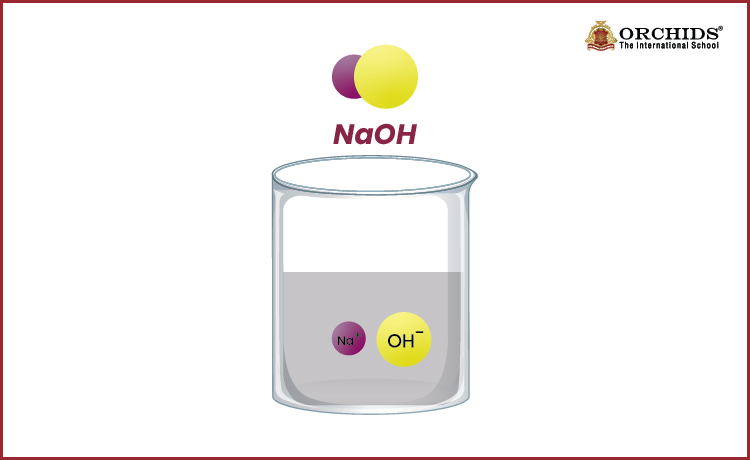
The fact that Bases are the chemical opposites of acids; they neutralise acids and form salts and water.
But the question is, how is alkali different from bases?
Alkalis are bases that dissolve in water, producing hydroxide ions.
Key points about Alkali:
- All alkalis are bases, but not all bases are alkalis.
- Alkalis are often salts of alkali metals (Na, K) or alkaline earth metals (Ca, Mg).
- Some bases, like ammonia (NH₃), produce OH⁻ in water but are not traditional alkalis.
Some Common alkalis are :
- Sodium hydroxide (NaOH)
- Potassium hydroxide (KOH)
- Calcium hydroxide (Ca(OH)₂)
- Magnesium hydroxide (Mg(OH)₂)
Next is that Base possesses several physical and chemical properties which make it easy to distinguish them from others.
Read More: Acid and Base Differences
General Properties of Base
Bases have distinct physical and chemical properties:
Physical Properties:
- They have a bitter taste (e.g., soap, baking soda).
- When the base is in contact, it feels slippery in concentrated solutions.
- It is observed that its aqueous solutions have a pH > 7.
Chemical Properties:
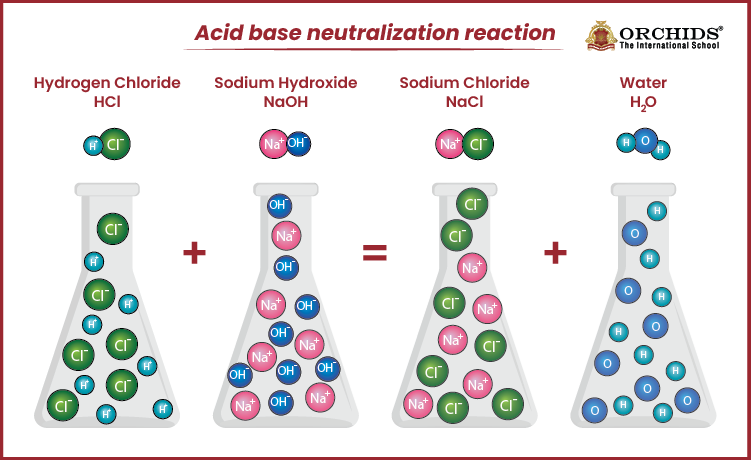
- It can neutralise acids to form salts and water.
- The fact that it turns red litmus blue, methyl orange yellow, and phenolphthalein pink, which confirms the presence of a base.
- Bases can be strong (like NaOH, KOH) or weak (like NH₃). They are used widely in labs, industries, and households.
Base dissociation in water:
- It can be caustic in concentrated form, damaging skin and organic matter.
- It has great characteristics that it conducts electricity when molten or dissolved due to ionisation.
Chemical Reactions of Base in Chemistry
- Neutralisation Reaction:
- Reaction with metals:
Some bases react with metals like aluminium:
- Reaction with acids (salt formation):
Applications of Base in Daily Life
Bases are all around us, making life easier in many ways:
- The most common and noticeable things in households like Soaps, detergents, and baking soda (NaHCO₃) are common bases that help in cleaning and cooking.
- The daily medication, such as Antacids like magnesium hydroxide, eases acidity, while toothpaste with mild bases protects our teeth.
- In Industry, they use bases such as sodium hydroxide, which are used in making paper, textiles, soaps, and in treating acidic waste.
- In the Agriculture sector, lime (Ca(OH)₂) is used to reduce soil acidity, improving crop growth.
Also Read: Acid, Bases and Salts
As we learned how bases are essential in chemistry, from balancing acids to enabling industrial, agricultural, and household applications. Understanding their types, properties, and reactions allows us to see their importance beyond theory. Whether it’s alkalis like NaOH in cleaning or NH₃ in fertilisers, bases influence daily life and science.
Frequently Asked Questions on Base
1. What is Base Meaning?
A base is a substance that releases hydroxide ions (OH⁻) when dissolved in water. It neutralises acids and increases the pH of a solution.
2. What are Base Examples?
Base examples include sodium hydroxide (NaOH), calcium hydroxide (Ca(OH)₂), and ammonia (NH₃).
3. What are 5 facts about bases?
Bases feel slippery, taste bitter, turn red litmus paper blue, react with acids to form salts, and can conduct electricity in water.
4. What is the use of base?
Bases are used in cleaning agents, soap making, water treatment, and neutralising acidic soils in agriculture.
5. What are the 7 types of bases?
Bases can be categorised as alkali, metal oxide, metal hydroxide, metal carbonate, metal bicarbonate, organic base, and amphoteric base.
6. Why is a base called a base?
It is called a base because it forms the foundation for salts when reacting with acids, acting as the chemical "base" in neutralisation.
7. What is the common name of the base?
The common name for a base is an alkali, especially when it is water-soluble and produces hydroxide ions.
8. Why is a base applied to?
Bases are applied to neutralise acids, adjust pH in soils, and treat acidic waste in industrial and environmental processes.
9. How do bases affect everyday life?
Bases are present in soaps, detergents, antacids, and cleaning agents, making daily chores easier and maintaining hygiene.
Science isn't just a subject, it's the way of seeing the world. Curious how Orchids The International School teaches it that way? Talk to our admissions team.
Admissions Open for 2026-27
What type of concept pages would you prefer?
CBSE Schools In Popular Cities
- CBSE Schools in Bangalore
- CBSE Schools in Mumbai
- CBSE Schools in Pune
- CBSE Schools in Hyderabad
- CBSE Schools in Chennai
- CBSE Schools in Gurgaon
- CBSE Schools in Kolkata
- CBSE Schools in Indore
- CBSE Schools in Sonipat
- CBSE Schools in Delhi
- CBSE Schools in Rohtak
- CBSE Schools in Bhopal
- CBSE Schools in Aurangabad
- CBSE Schools in Jabalpur
- CBSE Schools in Jaipur
- CBSE Schools in Jodhpur
- CBSE Schools in Nagpur
- CBSE Schools in Ahmednagar
- CBSE School In Tumkur











Orchids The International School is one of India's leading chains of CBSE and ICSE schools, with 110+ schools across the country.