

Uses of Alloys: Applications and Importance in Everyday Life Explained
Alloys are formed when two or more metals or a metal and a non-metals are mixed to create a material with superior properties. Interestingly, Pure metals often cannot handle high pressure, heat, or wear, which makes them unsuitable for daily and industrial use.
This article primarily focuses on the uses of alloys in everyday life and the its chemistry, ranging from utensils and jewellery to vehicles, machines, aeroplanes, and electronic devices.
Table of Contents
- What Are Alloys and Its Types
- Common Uses of Alloys in Daily Life
- Frequently Asked Questions on Uses of Alloys

What Are Alloys and Its Types
An alloy is a mixture created by combining a metal with one or more other elements to improve its physical or chemical properties. These added elements can increase hardness, prevent rusting, improve heat resistance, and make the material more workable.
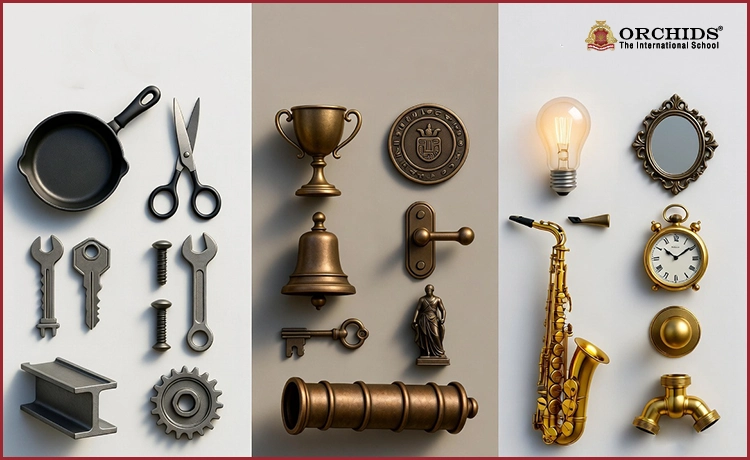
For example, pure iron rusts easily, but adding carbon forms steel, a strong and versatile alloy used in buildings, tools, and machines.
But the question is, why are pure metals rarely used?
The fact that by mixing metals in suitable ratios, we create alloys that are far stronger and more durable, making them ideal for construction, cooking, transportation, industry, and household items.
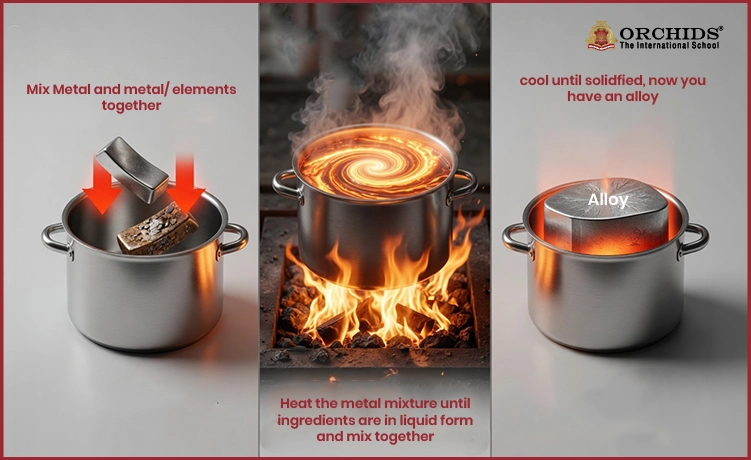
Pure metals are often not suitable for practical use because they may have:
- Low strength
- Softness
- High reactivity
- Poor corrosion resistance
- Limited lifespans
Learn more: Alloys Meaning
Let's have a short overview of types of alloys based on how they form solid solutions:
1. Substitutional Alloys, In these alloys, atoms of one metal replace atoms of another metal in the crystal structure.
Example: Brass (a mixture of copper and zinc) is used in locks, taps, and decorative pieces.
2. Interstitial Alloys, Smaller atoms fit into the gaps between larger metal atoms.
Example: Steel (Iron + Carbon).
Only small atoms like carbon, hydrogen, nitrogen, and boron can create interstitial alloys.
Depending upon Binary, Ternary, and Complex Alloys
- Binary alloy: Contains two elements
Example: Bronze (Copper + Tin) - Ternary alloy: Contains three or more elements
Example: Duralumin (Al + Cu + Mg + Mn) - Superalloy: Contains many alloying elements (up to 10)
Example: Nickel, Cobalt, Chromium, Molybdenum, etc
Used in: Jet engines, turbines, ovens, rockets
These alloys are engineered for extreme temperature, pressure, and mechanical stress.
Common Uses of Alloys in Daily Life
Alloys are part of almost everything we use. They make products stronger, safer, lighter, and longer-lasting.
Alloys in Kitchen & Household Items
- Stainless steel that we use, likeSpoons, plates, pressure cookers, gas stoves, and refrigerators
- Aluminium alloys: Pressure cookers, pans, lunch boxes
- Nichrome are used inheating elements in irons, toasters, and room heaters
Alloys in Jewellery
- The most common and noticeable jewellery is Pure gold is too soft, but it is mixed with copper or silver to make stronger gold jewellery that doesn’t bend easily
Alloys in Electronics & Machinery
- Steel & nickel alloys are used in washing machine tubs, turbines, and grinding blades
- Copper–nickel alloys, such as Coins, electrical parts, and high-strength machine components
Alloys in Construction & Transportation
- Steel that is used in Buildings, bridges, tools, and railway tracks
- Aluminium alloys used in Aeroplane bodies, car frames, and cycle parts
- Bronze is used in the preparation of Medals, idols, and sculptures
Alloys in the Medical Industry
- It is used in stainless steel for surgical tools as it is Rust-free and easy to sterilise
Alloys in the Automobile Industry
It is used in steel, aluminium alloys, bronze, and nickel alloys and is Essential for engines, gears, frames, and brake systems
Uses of Aluminium Alloys
|
Alloy Type |
Applications |
|
Pure aluminium |
Cans, foils, caps, signs |
|
Al + 1% Mn |
Utensils, roofing sheets |
|
Al + 2.5-4.5% Mg |
Boats, food containers |
|
Al + 1% Mg |
Decorative items |
|
Al (10% Si + 2.5% Cu) |
Car engine blocks |
|
Al + 0.5% Mg + 0.4% Si |
Extruded profiles |
|
Al + 0.7% Mg + 0.4% Si |
Boat masts |
|
Al + 1.2% Mg + 5.5% Zn |
Vehicle bumpers |
Some Common Examples of Alloys and Their Components:
1. Steel
Components: Iron + Carbon
Uses: Buildings, vehicles, tools
2. Stainless Steel
Components: Iron + Carbon + Nickel + Chromium
Uses: Utensils, surgical tools, appliances
3. Brass
Components: Copper + Zinc
Uses: Locks, doorknobs, instruments
4. Bronze
Components: Copper + Tin
Uses: Statues, medals, coins
5. Duralumin
Components: Aluminium + Copper + Magnesium + Manganese
Uses: Aircraft and aviation parts
6. Nichrome
Components: Nickel + Chromium
Uses: Electric heaters, coils
7. Amalgam
Components: Mercury + Silver + Tin + Copper + Zinc
Uses: Dental fillings
8. Stellite
Components: Cobalt + Chromium + Tungsten + Carbon
Uses: Cutting tools, blades
Read More: Gold
Till now, we have learned how Alloys have transformed modern life by giving us materials that are stronger, more durable, and more efficient than pure metals. From the utensils we use every day to the aircraft that fly across the world, alloys play a key role in almost every industry.
Frequently Asked Questions on Uses of Alloys
1. Why are alloys important in day-to-day life?
Alloys are important because they make everyday objects stronger, safer, and longer-lasting. Many common itemsfrom utensils to vehicles, depend on alloys in daily life.
2. What are the main uses of alloys?
The main alloy uses include making machines, tools, jewellery, kitchenware, vehicles, and construction materials stronger and more reliable. These alloys uses help improve durability and performance everywhere.
3. What makes an alloy stronger?
An alloy becomes stronger when different metals are mixed to enhance hardness, toughness, and resistance to damage.
4. Where are alloys found in everyday life?
Alloys are found in utensils, mobile phones, vehicles, buildings, jewellery, and even coins.
5. Which alloy is most important?
Steel is considered one of the most important alloys because it is used everywhere in buildings, tools, vehicles, and machines. Its wide applications make it essential in modern life.
6. What is the main purpose of making alloys?
The main purpose of making alloys is to improve strength, reduce corrosion, and enhance heat resistance.
7. What are the benefits of alloy?
The benefits of alloys include better durability, increased strength, and longer life compared to pure metals. These advantages explain the widespread alloys and their everyday uses.
Science isn't just a subject, it's the way of seeing the world. Curious how Orchids The International School teaches it that way? Talk to our admissions team.
Admissions Open for 2026-27
What type of concept pages would you prefer?
CBSE Schools In Popular Cities
- CBSE Schools in Bangalore
- CBSE Schools in Mumbai
- CBSE Schools in Pune
- CBSE Schools in Hyderabad
- CBSE Schools in Chennai
- CBSE Schools in Gurgaon
- CBSE Schools in Kolkata
- CBSE Schools in Indore
- CBSE Schools in Sonipat
- CBSE Schools in Delhi
- CBSE Schools in Rohtak
- CBSE Schools in Bhopal
- CBSE Schools in Aurangabad
- CBSE Schools in Jabalpur
- CBSE Schools in Jaipur
- CBSE Schools in Jodhpur
- CBSE Schools in Nagpur
- CBSE Schools in Ahmednagar
- CBSE School In Tumkur











Orchids The International School is one of India's leading chains of CBSE and ICSE schools, with 110+ schools across the country.