

What is Calcium Hydroxide (Ca(OH)₂)? Formula, Structure and Uses
Calcium hydroxide, also known as slaked lime or hydrated lime, is a white, powdery compound that plays a crucial role in various industries, agriculture, and healthcare. Interestingly! Known for its mild alkaline nature, this compound is one of the oldest yet most useful chemicals studied in chemistry.
This article provides insights into what calcium hydroxide is, its preparation, its physical and chemical behaviour, and the applications it serves in our daily lives.
Table of Contents
- What is Calcium Hydroxide and Its Structure
- Chemical Properties of Calcium Hydroxide
- Preparation of Calcium Hydroxide
- Uses of Calcium Hydroxide
- About Safety and Environmental Aspects of Calcium Hydroxide
- Frequently Asked Questions on Calcium Hydroxide

What is Calcium Hydroxide and Its Structure
Calcium hydroxide is an inorganic compound with the chemical formula Ca(OH)₂. When it comes to its appearance, it is a soft white powder or colourless crystal, slightly soluble in water, producing a solution called limewater.
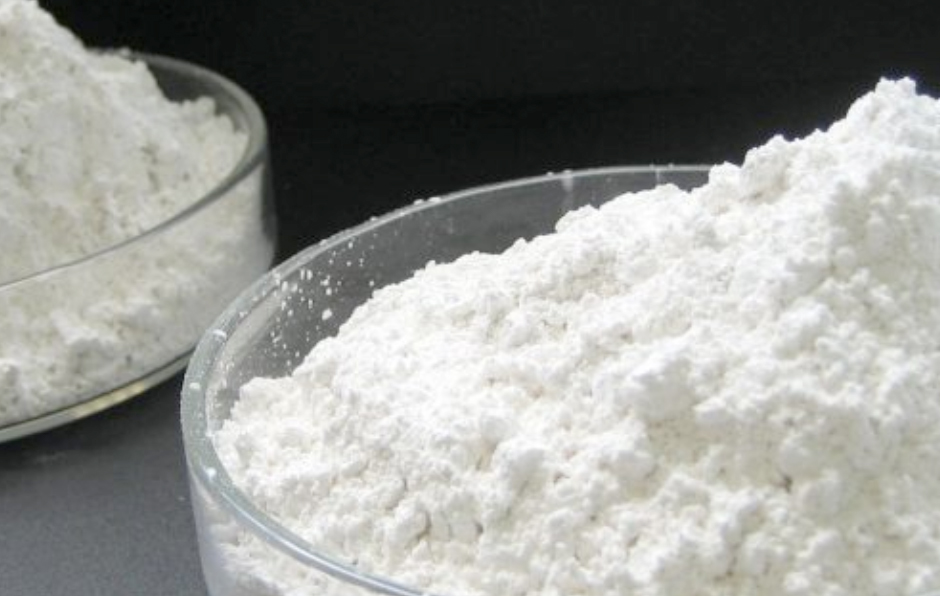
Let's discuss what the Structure of Calcium Hydroxide looks like!!
The structure of calcium hydroxide is ionic. It consists of one calcium ion (Ca²⁺) strongly bonded with two hydroxide ions (OH⁻). On observation the ions form a crystalline lattice, giving it a solid appearance.

When dissolved in water, it partially dissociates to release Ca²⁺ and OH⁻ ions, which makes the solution alkaline.
This ionic structure explains why calcium hydroxide reacts readily with acids, carbon dioxide, and certain metals.
Calcium Hydroxide possesses physical properties that help us to identify it. Below are some presented in tabular form:
|
Property |
Description |
|
Appearance |
White powder or colourless crystals |
|
Solubility |
Slightly soluble in water, soluble in glycerol and acids |
|
Density |
2.21 g/cm³ |
|
Melting Point |
580 °C (decomposes to CaO and water vapour) |
|
Limewater |
A saturated solution in water that acts as a moderate base |
Chemical Properties of Calcium Hydroxide
Reaction with acids: It neutralises acids to form salts and water.
Reaction with carbon dioxide
It forms insoluble calcium carbonate (basis of the limewater test).
Reaction with metals (like aluminium)
It dissolves some metals in water to form complex salts and hydrogen gas.
Preparation of Calcium Hydroxide
Calcium hydroxide is prepared both industrially and in laboratories.
Industrial Preparation
It is produced by adding water to calcium oxide (quicklime). This process is called slaking of lime and is highly exothermic
Laboratory Preparation
It can be prepared by dissolving calcium salts (like calcium chloride) in water and then adding sodium hydroxide solution.
Uses of Calcium Hydroxide
Calcium hydroxide has a wide range of applications in industries, medicine, and everyday processes:
- It is used as a clarifying and flocculating agent in Water and Sewage Treatment.
- Calcium Hydroxide is essential in the Kraft process to convert wood into pulp in the paper industry.
- It isinvolved in the carbonation process for refining sugarcane and sugar beets and making it beneficial in the Sugar Industry.
- Calcium Hydroxide contributes to ammonia Production and plays a role in the preparation of ammonia.
- In the Food Industry, it is used for pickling cucumbers and processing corn (nixtamalization).
- Its important use of it is in medicine, especially in dentistry, for root canal treatments to fill cavities.
About Safety and Environmental Aspects of Calcium Hydroxide
- Calcium hydroxide is generally safe in controlled amounts but can cause skin and eye irritation due to its alkaline nature.
- When it is Prolonged, inhalation of dust can irritate the respiratory tract.
- Environmentally, it is considered non-toxic and even helpful in reducing acidity in soil and wastewater.
Read More: Calcium Carbonate and Calcium
As we have learned how Calcium hydroxide is more than just a simple white powder; it is a compound with vast significance in both industry and daily life. Its basic nature makes it highly reactive, yet when handled safely, it remains one of the most versatile and valuable compounds in chemistry.
Frequently Asked Questions on Calcium Hydroxide
1. What is Calcium Hydroxide in simple words?
Calcium Hydroxide is a white, powdery or crystalline substance commonly known as slaked lime. It is a strong base used in many industries and daily applications.
2. What is the calcium hydroxide formula?
The calcium hydroxide formula is Ca(OH)₂. It shows that each molecule has one calcium atom bonded to two hydroxide groups.
3. What is calcium hydroxide also known as?
Calcium hydroxide is also called slaked lime or hydrated lime. It is produced when quicklime (CaO) reacts with water.
4. How is calcium hydroxide formed?
It is formed by adding water to quicklime (calcium oxide). The reaction is exothermic, releasing heat and forming Ca(OH)₂.
5. What are the two main uses of calcium hydroxide?
Calcium hydroxide is mainly used in water treatment to remove impurities and in the paper industry during the Kraft pulping process.
6. What happens when calcium hydroxide reacts with water?
When dissolved in water, it forms a slightly basic solution called limewater. This solution is often used to test for carbon dioxide.
Science isn't just a subject, it's the way of seeing the world. Curious how Orchids The International School teaches it that way? Talk to our admissions team.
Admissions Open for 2026-27
What type of concept pages would you prefer?
CBSE Schools In Popular Cities
- CBSE Schools in Bangalore
- CBSE Schools in Mumbai
- CBSE Schools in Pune
- CBSE Schools in Hyderabad
- CBSE Schools in Chennai
- CBSE Schools in Gurgaon
- CBSE Schools in Kolkata
- CBSE Schools in Indore
- CBSE Schools in Sonipat
- CBSE Schools in Delhi
- CBSE Schools in Rohtak
- CBSE Schools in Bhopal
- CBSE Schools in Aurangabad
- CBSE Schools in Jabalpur
- CBSE Schools in Jaipur
- CBSE Schools in Jodhpur
- CBSE Schools in Nagpur
- CBSE Schools in Ahmednagar
- CBSE School In Tumkur











Orchids The International School is one of India's leading chains of CBSE and ICSE schools, with 110+ schools across the country.