

All About Battery Types: Uses, Differences, and Examples
Battery types, each designed for specific uses, range from single-use primary cells to rechargeable secondary cells.
This article provides insights into alkaline, lithium-ion, lead-acid, nickel-cadmium, and emerging sodium-ion batteries. Readers can see how chemical energy is stored and converted into electricity, and know more about chemistry.
Table of Contents
- What is a Battery
- Types of Battery Cells
- Advantages and Disadvantages of Primary Batteries
- Advantages and Disadvantages of Secondary Batteries
- Frequently Asked Questions on Types of Batteries

What is a Battery?
A battery is an electrochemical device that generates electricity through controlled chemical reactions called redox (reduction-oxidation) reactions.
When it comes to how it is made, each battery consists of:
- Anode (Negative Electrode) that releases electrons during oxidation.
- Cathode (Positive Electrode) that gains electrons during reduction.
- An electrolyte is a chemical medium that allows ions to move between the anode and cathode.
Also can check out the page Battery Definition for more details about the topic.
Example of a redox reaction in a zinc-copper battery, an example of a primary battery:
Anode reaction (oxidation):
Cathode reaction (reduction):
Overall reaction:
Electrolyte: Copper sulfate (CuSO₄) facilitates ion flow.
Batteries can power small electronics, emergency devices, or even industrial and large-scale energy systems.
Next, let's discuss battery types in more detail.
Types of Battery Cells
Batteries are classified into Primary (non-rechargeable) and Secondary (rechargeable) cells. This classification depends on whether the battery can be recharged after use or not.
The fact that each type has unique characteristics, applications, and advantages depending on the use case.
Let's discuss first :
1. Primary Batteries (Single-Use)
Primary batteries are designed for one-time use. What happens is that once the chemical energy inside them is depleted, they cannot be recharged.
Interestingly, they are ideal for situations where long shelf life and immediate availability are required.
How They Work:
The chemical reaction in primary batteries is irreversible, meaning the reactants cannot be regenerated by applying electricity.
Electrons flow from the anode to the cathode through an external circuit, generating current until the chemical reactants are exhausted.
Below are some common types of primary batteries:
- Alkaline Battery:
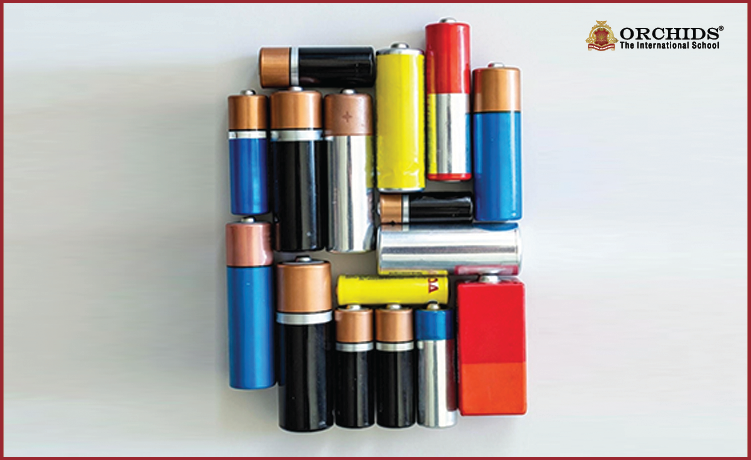
- Electrodes: Zinc anode, manganese dioxide cathode
- Electrolyte: Potassium hydroxide (KOH)
- Applications: Remote controls, clocks, toys, flashlights
- Equation:
- Characteristics: Inexpensive, widely available, long shelf life
- Aluminium-Air Battery:
It produces electricity from aluminium reacting with oxygen in the air.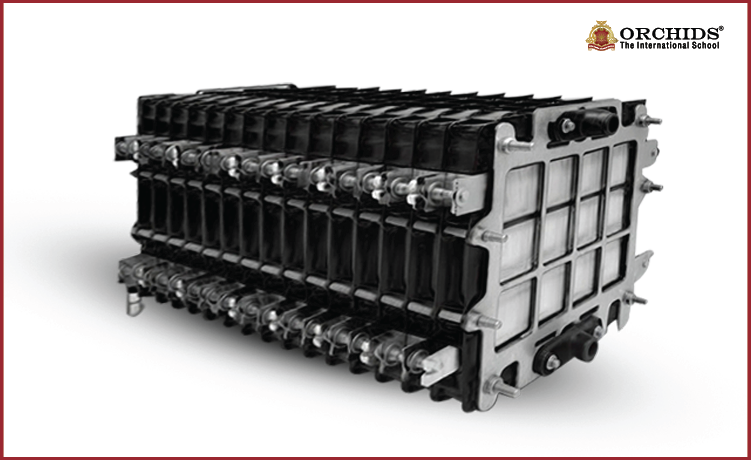
Applications: Emergency power backup, military use
Reaction:
Lightweight and high energy density, but not rechargeable
- Atomic (Nuclear) Battery:
Generates electricity from the decay of radioactive isotopes.-Battery.webp)
Applications:
- It is found in Spacecraft, pacemakers, and remote sensors
- It can last years without recharging due to steady decay
Applications of Primary Batteries:
- Primary batteries are mostly found in portable electronics like watches, calculators, and remotes
- Toys and small electronic gadgets are examples
- It is used as a medical device, such as hearing aids and glucose monitors
- It's observed in emergency backup systems (flashlights, smoke alarms)
- Also majorly contributed to space missions and remote applications
Advantages and Disadvantages of Primary Batteries:
- Ready-to-use, as no charging is required
- It has a long shelf life, which means it can last for years without losing significant capacity
- It has stable power for immediate use as it has a high initial voltage.
- It operates in extreme temperatures, which makes it suitable for harsh environments
- It has low self-discharge, which means it retains charge for a long time
Disadvantages of Primary Batteries:
- It cannot be recharged
- It has a Limited capacity; that is, energy depleted once used
- It also has a major Environmental impact due to the disposal of heavy metals
- The major factor that causes replacement costs to accumulate over time
- When it comes to Performance gradually declines with age
Next, Let's Discuss the Secondary Batteries
2. Secondary Batteries (Rechargeable)
Unlike Primary batteries, Secondary batteries are rechargeable and can be used multiple times by reversing the chemical reactions using an external electrical current.
But the question is, how do they work?
During discharge, electrons flow from the anode to the cathode through the circuit.
What is observed? When connected to a charger, the reactions are reversed, restoring the original chemical composition and allowing repeated use.
Below are some examples of each type of secondary battery.
Common Types of Secondary Batteries:
1. Lead-Acid Battery
- Voltage: ~2.1 V per cell
- Invented by: Gaston Planté in 1859
- Applications: Automobiles, inverters, UPS systems, and backup power supplies
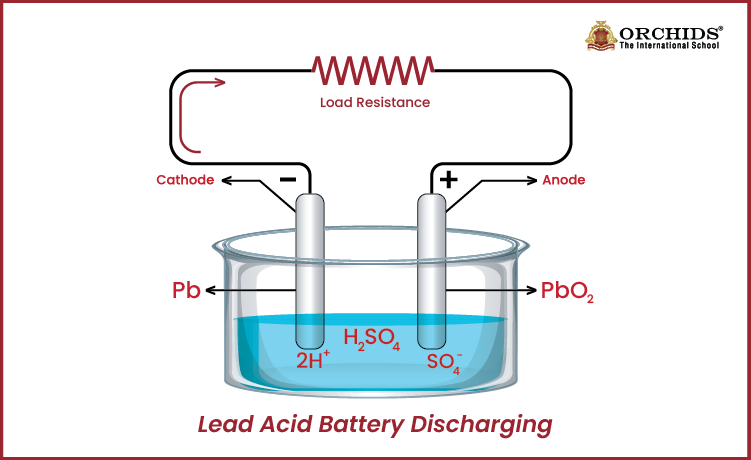
Reaction :
Know More About Lead Acid Battery !!
Lead-acid batteries are one of the oldest and most widely used rechargeable batteries.
The fact that they are known for their high surge current capability makes them ideal for starting vehicles.
However, they are heavy and require regular maintenance to maximise their lifespan. With proper charging cycles, they deliver reliable performance and the best value per kilowatt-hour.
2. Lithium-Ion (Li-ion) Battery
- Voltage: ~3.7 V per cell
- Applications: Smartphones, laptops, power tools, electric vehicles (EVs), aerospace equipment
-Battery.webp)
Reaction :
Know More About Lithium-Ion Battery!!
Li-ion batteries are the most popular modern rechargeable batteries because of their high energy density, lightweight nature, and low self-discharge rate.
They come in various forms (cylindrical, prismatic, pouch) and are widely used in portable devices and high-performance systems like EVs.
They are considered to be more preferable with proper charging and protection circuits; they are also considered safe and long-lasting.
3. Nickel-Cadmium (Ni-Cd) Battery
- Voltage: ~1.2 V per cell
- Cycle Life: ~2000 cycles
- Applications: Older electronics, toys, power tools, portable computers, camcorders
Know More About Nickel-Cadmium Battery!
Ni-Cd batteries are built with nickel oxide hydroxide (cathode) and cadmium (anode), using potassium hydroxide as the electrolyte. 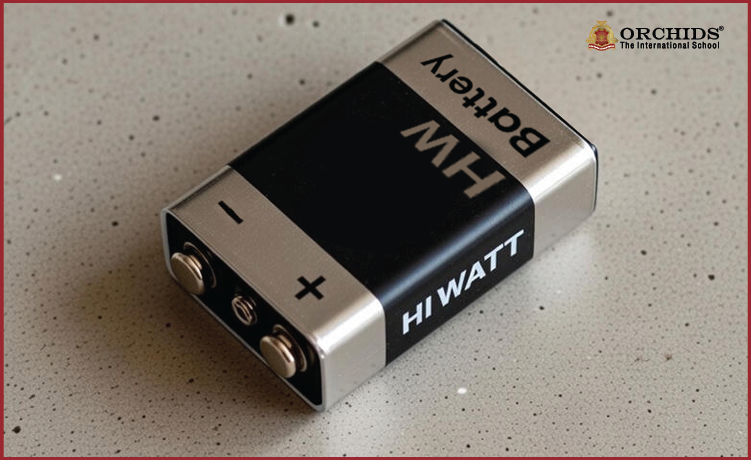
But What Makes it most preferable to use?
They are known for their ruggedness, fast discharge ability, and tolerance to deep discharge.
The fact that while they can be recharged many times, they suffer from a “memory effect” if not fully discharged before recharging.
NiMH and Li-ion are gradually replacing them due to environmental concerns (cadmium is toxic).
4. Nickel-Iron (Ni-Fe) Battery
- Voltage: ~1.2 V per cell
- Applications: Mining, industrial machinery, railroad signalling, and backup systems
Know More About Nickel-Iron (Ni-Fe) Battery!
Ni-Fe batteries, invented by Thomas Edison, are known for their extremely long lifespan (often 20+ years) and ability to withstand harsh environments. -Battery.webp)
They are robust and reliable but less energy-dense compared to modern batteries. Because of their durability, they are still used in specialised industrial fields.
5. Sodium-Ion (Na-ion) Battery
- Status: Emerging technology
- Applications: Large-scale grid storage, renewable energy systems
- Advantages: Affordable alternative to lithium-ion, uses abundant sodium
Know More About Sodium-ion Battery!
Sodium-ion batteries are gaining attention as a sustainable and cost-effective alternative to lithium-ion. While their energy density is lower, they are safer and rely on abundant natural sodium. 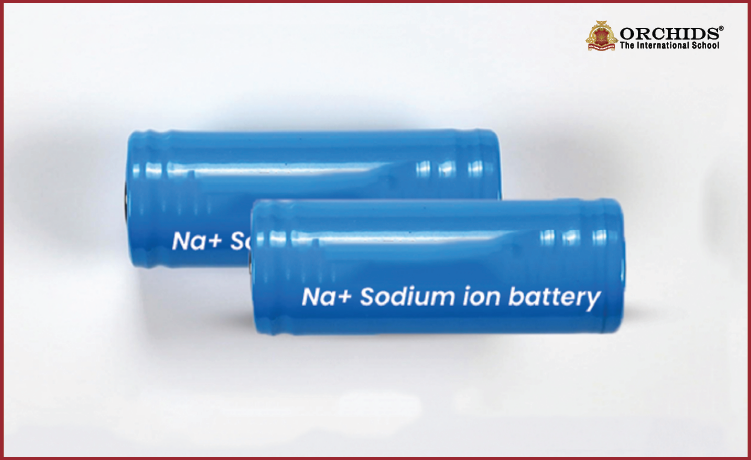
They are expected to play a key role in future energy storage systems, especially for renewable energy integration.
Applications of Secondary Batteries:
- It is observed in consumer electronics like laptops, smartphones, tablets, and cameras
- In the transportation sector, like EVs, hybrid vehicles, e-bikes, scooters
- It is used as a renewable energy storage in solar panels, wind turbines
- Apart from it has application in aerospace and aviation systems, military and defence systems as well as in home energy storage solutions
Advantages and Disadvantages of Secondary Batteries:
- They are rechargeable and reusable
- It is Cost-effective in the long term
- The major thing is that it reduces the environmental impact
- It has a higher energy capacity compared to primary batteries
- It is suitable for frequent and high-demand usage
Disadvantages of Secondary Batteries:
- The major drawback is that it requires charging time
- It has a finite lifespan (limited number of charge cycles)
- It has a higher initial cost and slightly lower initial voltage compared to primary batteries
Let's have a quick overview of both primary and secondary batteries: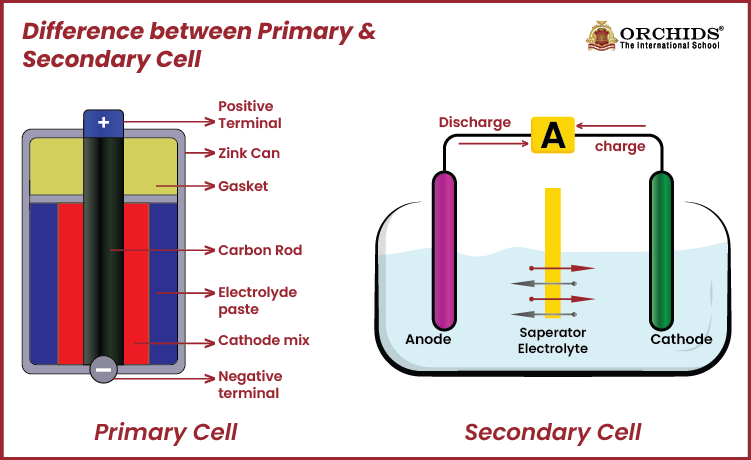
Key Differences Between Primary and Secondary Batteries
|
Feature |
Primary Battery |
Secondary Battery |
|
Rechargeable |
No, single-use |
Yes, multiple-use |
|
Typical Chemistry |
Zinc-carbon, Alkaline, Lithium |
Li-ion, NiMH, Lead-Acid |
|
Voltage |
Fixed ~1.5V |
Varies: Li-ion 3.7V, NiMH 1.2V |
|
Capacity |
Lower |
Higher |
|
Initial Cost ad |
Lower |
Higher |
|
Maintenance |
None |
Requires proper charging |
Read More: Battery Defination
Till now, we have learned how batteries are the backbone of modern life, from small electronic gadgets to electric vehicles and renewable energy systems. Understanding their chemistry, operation, advantages, and limitations helps make informed choices for both personal and industrial applications, ensuring efficiency, safety, and sustainability.
Frequently Asked Questions on Types of Batteries
1. What are the main types of batteries?
Batteries are mainly classified into Primary (non-rechargeable) and Secondary (rechargeable) types. Primary batteries are single-use, while secondary batteries can be recharged multiple times.
2. What are the 4 main parts of a battery?
A battery consists of the anode (negative electrode), cathode (positive electrode), electrolyte, and external connections. These parts work together to generate and deliver electrical energy.
3. Which type of battery is used most?
Lithium-ion batteries are widely used today due to their high energy density, safety, and long lifespan. They power everything from smartphones and laptops to electric vehicles.
4. How many types of cells are in a battery?
A battery can have one or more electrochemical cells, depending on its design and required voltage. Each cell has an anode, a cathode, and an electrolyte.
5. Which metal is used in batteries?
Common metals used in batteries include zinc, lithium, lead, nickel, and cadmium, depending on the battery type and application.
6. What is the full form of typ battery?
The term "typ" in battery specifications usually stands for “typical”, indicating the standard or nominal performance of the battery under normal conditions.
Science isn't just a subject, it's the way of seeing the world. Curious how Orchids The International School teaches it that way? Talk to our admissions team.
Admissions Open for 2026-27
What type of concept pages would you prefer?
CBSE Schools In Popular Cities
- CBSE Schools in Bangalore
- CBSE Schools in Mumbai
- CBSE Schools in Pune
- CBSE Schools in Hyderabad
- CBSE Schools in Chennai
- CBSE Schools in Gurgaon
- CBSE Schools in Kolkata
- CBSE Schools in Indore
- CBSE Schools in Sonipat
- CBSE Schools in Delhi
- CBSE Schools in Rohtak
- CBSE Schools in Bhopal
- CBSE Schools in Aurangabad
- CBSE Schools in Jabalpur
- CBSE Schools in Jaipur
- CBSE Schools in Jodhpur
- CBSE Schools in Nagpur
- CBSE Schools in Ahmednagar
- CBSE School In Tumkur











Orchids The International School is one of India's leading chains of CBSE and ICSE schools, with 110+ schools across the country.