

Electrons
Electrons may seem invisible to the naked eye, but they shape the world in ways we often overlook. These tiny particles contribute so much to the
From powering electricity to forming the bonds that create life, these tiny particles are essential to both science and technology.
This article provides insight into the electrons, their charge, mass, discovery, and more, explained in a clear and structured way.
Table of Contents
- More-Must-Know-Facts-About-Electrons
- Discovery-of-the-Electron
- Electrons-in-Chemistry
- Charge-of-Electrons
- Significance-of-Electrons-in-a-Compound-Formation
- Frequently Asked Questions on Electron

More Must-Know Facts About Electrons
|
Discovery of Electron
The history of the discovery of the electron is an interesting landmark in science.
In 1897, British physicist J.J. Thomson discovered the electron while he was testing cathode ray tubes. Interestingly, he noticed that rays within the tube that the rays consisted of negatively charged particles, now known as electrons.
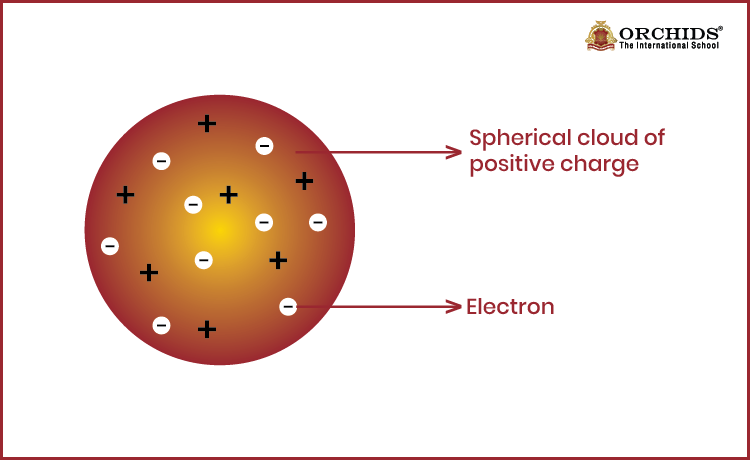
Thomson's discovery confirmed that atoms were not unbreakable "solid balls," as previously believed, but were composed of tiny subatomic particles.were deflected towards a positively charged plate, implying
Then came Robert Millikan's oil drop experiment (1909–1911), which later gave a precise measurement of the electron's charge, confirming and extending Thomson's work.
Electrons in Chemistry
The fact about electrons is that they are the tiniest and most basic particles of matter. An electron is a fundamental subatomic particle with a negative charge and a very small mass, found outside the nucleus of an atom in orbitals.
Interestingly!! Despite being so extremely small, it's always fascinating how electrons have a huge influence on an atom's structure, electricity flow, and even the main contribution to chemical reactions.
Charge of Electrons
Each electron has a negative electric charge, one of its fundamental properties. This is very tiny, but when billions of electrons flow together, they produce electric currents that drive our machines and industries.
The charge of an individual electron is –1.602 × 10⁻¹⁹ coulombs (C).
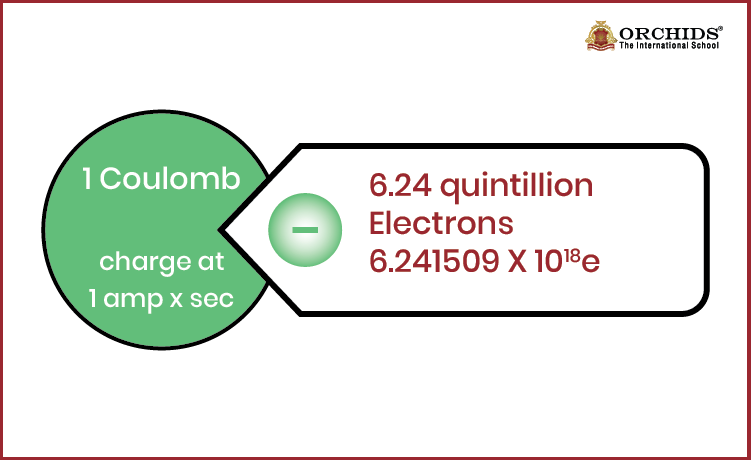
Interestingly enough, the charge of an electron is the same magnitude but opposite in sign to the charge of a proton. That's why atoms are neutral; the overall positive charge of protons offsets the negative charge of electrons.
Without that equilibrium, the whole framework of matter would fall apart. Consider: no atoms, no molecules, no chemistry whatsoever!
Next comes is Mass of Electrons
Despite the criticality of electrons to the structure of atoms, they are remarkably light. The mass of a single electron is about 9.109 × 10⁻³¹ kilograms.
What's interesting and curious is to put that in perspective, a proton is roughly 1836 times heavier than an electron, which is because electrons are so light, their contribution to the overall atomic mass is almost negligible.
However, don’t underestimate them. Despite their tiny mass, electrons are the ones responsible for forming chemical bonds, glue-like, that hold molecules and compounds together.
Significance of Electrons in a Compound Formation
Electrons are small, but they are the actual explanation behind why atoms bond together to form compounds. It's interesting to study how the atoms share, transfer, or shuttle their electrons, which determines how stable they are and what compound they will form.
Without electrons controlling these processes, there would be no water, salt, proteins, or even air that we breathe.
Let's Discuss How Electrons Contribute to Forming Bonds
Valence electrons (electrons in the outermost shell) contribute the most to bonding. Atoms always seek stability, and to achieve that, they either:
- Share electrons; Example: Two hydrogen atoms share electrons with an oxygen atom to create water (H₂O), the life-giving compound.
- Donate electrons; Example: Sodium (Na) donates one electron to Chlorine (Cl), creating table salt (NaCl).
- Accept electrons; Example: When oxygen (O) bonds with magnesium (Mg), the oxygen atom accepts two electrons from magnesium. Together, they form magnesium oxide (MgO), a compound commonly found in minerals and used in ceramics.
- Free Electrons; Example: Copper and iron are examples of metals whose conductivity is due to the free flow of electrons.
Frequently Asked Questions on Electron
1. 1. What are the characteristics of electrons?
Electrons are tiny subatomic particles with a negative charge, extremely small mass, and high speed. Their arrangement around the nucleus decides how atoms bond and react.
2. What is the lifespan of an electron?
Electrons are considered stable particles with an essentially infinite lifespan. They do not decay under normal conditions, making them fundamental building blocks of matter.
3. How are electrons formed?
It's very exciting to know and study that electrons were created during the early stages of the universe after the Big Bang. They can also be produced in nuclear reactions, radioactive decay, and particle collisions.
4. What are the types of electrons?
Electrons are often grouped by their energy levels, such as core electrons close to the nucleus and valence electrons in the outer shell. Valence electrons play the biggest role in bonding.
5. What is the Charge of an Electron?
The charge of an electron is –1.602 × 10⁻¹⁹ coulombs, negative in nature. This opposite charge balances protons, keeping atoms electrically neutral.
Science isn't just a subject, it's the way of seeing the world. Curious how Orchids The International School teaches it that way? Talk to our admissions team.
Admissions Open for 2026-27
What type of concept pages would you prefer?
CBSE Schools In Popular Cities
- CBSE Schools in Bangalore
- CBSE Schools in Mumbai
- CBSE Schools in Pune
- CBSE Schools in Hyderabad
- CBSE Schools in Chennai
- CBSE Schools in Gurgaon
- CBSE Schools in Kolkata
- CBSE Schools in Indore
- CBSE Schools in Sonipat
- CBSE Schools in Delhi
- CBSE Schools in Rohtak
- CBSE Schools in Bhopal
- CBSE Schools in Aurangabad
- CBSE Schools in Jabalpur
- CBSE Schools in Jaipur
- CBSE Schools in Jodhpur
- CBSE Schools in Nagpur
- CBSE Schools in Ahmednagar
- CBSE School In Tumkur











Orchids The International School is one of India's leading chains of CBSE and ICSE schools, with 130+ schools across the country.