

Know About Precipitation: How Rain, Snow, and Hail Form
Have you ever wondered how rain falls from the sky or how snow and hail are formed? This process is called precipitation, an important part of the water cycle. It occurs when tiny water droplets in clouds join together, become heavy, and fall to the Earth. Depending on the temperature, precipitation can occur in different forms such as rain, snow, sleet, or hail.
This article provides insights into precipitation, its types, and how it forms.
Table of Contents
About Precipitation
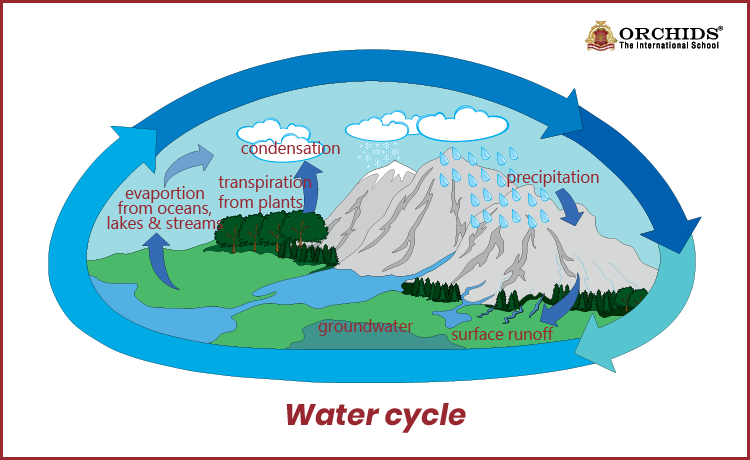
Tiny droplets of water join and form large drops of water. When water droplets become too heavy, they fall on the Earth in the form of rain. If it is very cold, then they fall in the form of sleet, snow or hail. Therefore, rain, hail, snow and sleet are the different forms of precipitation.
What is Runoff and Percolation?
Runoff is stated as the rainwater that, along with the water formed by the melting of snow, hail or sleet, flows down into waterbodies is known as runoff.
Some amount of runoff seeps through the layers of soil and gets stored as groundwater. This process is called percolation.
As we have learned, that how The water cycle is a continuous and essential process that ensures the availability of water on Earth. Processes like precipitation, runoff, and percolation help in the distribution and storage of water in different forms.
Frequently Asked Questions on Precipitation
1. What is precipitation?
Precipitation is the process by which water falls from clouds to the Earth in forms like rain, snow, sleet, or hail.
2. What is the runoff of rainwater?
Runoff is the flow of rainwater over the surface of the land into rivers, lakes, and other waterbodies.
3. What is percolation?
Percolation is the process by which water seeps through the soil and gets stored as groundwater.
4. Why is the water cycle important?
The water cycle helps in recycling water and maintaining balance in nature, which is essential for all living beings.
5. What are the different forms of precipitation?
Rain, snow, sleet, and hail are the different forms of precipitation depending on temperature conditions.
CBSE Schools In Popular Cities
- CBSE Schools in Bangalore
- CBSE Schools in Mumbai
- CBSE Schools in Pune
- CBSE Schools in Hyderabad
- CBSE Schools in Chennai
- CBSE Schools in Gurgaon
- CBSE Schools in Kolkata
- CBSE Schools in Indore
- CBSE Schools in Sonipat
- CBSE Schools in Delhi
- CBSE Schools in Rohtak
- CBSE Schools in Bhopal
- CBSE Schools in Aurangabad
- CBSE Schools in Jabalpur
- CBSE Schools in Jaipur
- CBSE Schools in Jodhpur
- CBSE Schools in Nagpur
- CBSE Schools in Ahmednagar
- CBSE School In Tumkur












Orchids The International School is one of India's leading chains of CBSE and ICSE schools, with 110+ schools across the country.